


On November 15, St. Paul’s O’Shaughnessy welcomes an urgent, deeply intimate intersection of ecological reality and dramatic art with What You Won’t Do for Love. Programmed as a centerpiece of the venue’s ongoing sustainability series for the 2026–2027 season, the production continues vital institutional work: bridging the gap between empirical science and evocative theater, while keeping community environmental stewardship front and center.
The piece originated when theatrical innovators Ravi Jain and Miriam Fernandes approached award-winning geneticist, broadcaster, and author Dr. David Suzuki. Rather than casting him in a classical play, they spent days recording candid conversations with Suzuki and his wife and fellow activist, Tara Cullis. The result is a funny, vulnerable and moving portrait of a partnership spanning five decades of frontline resistance.
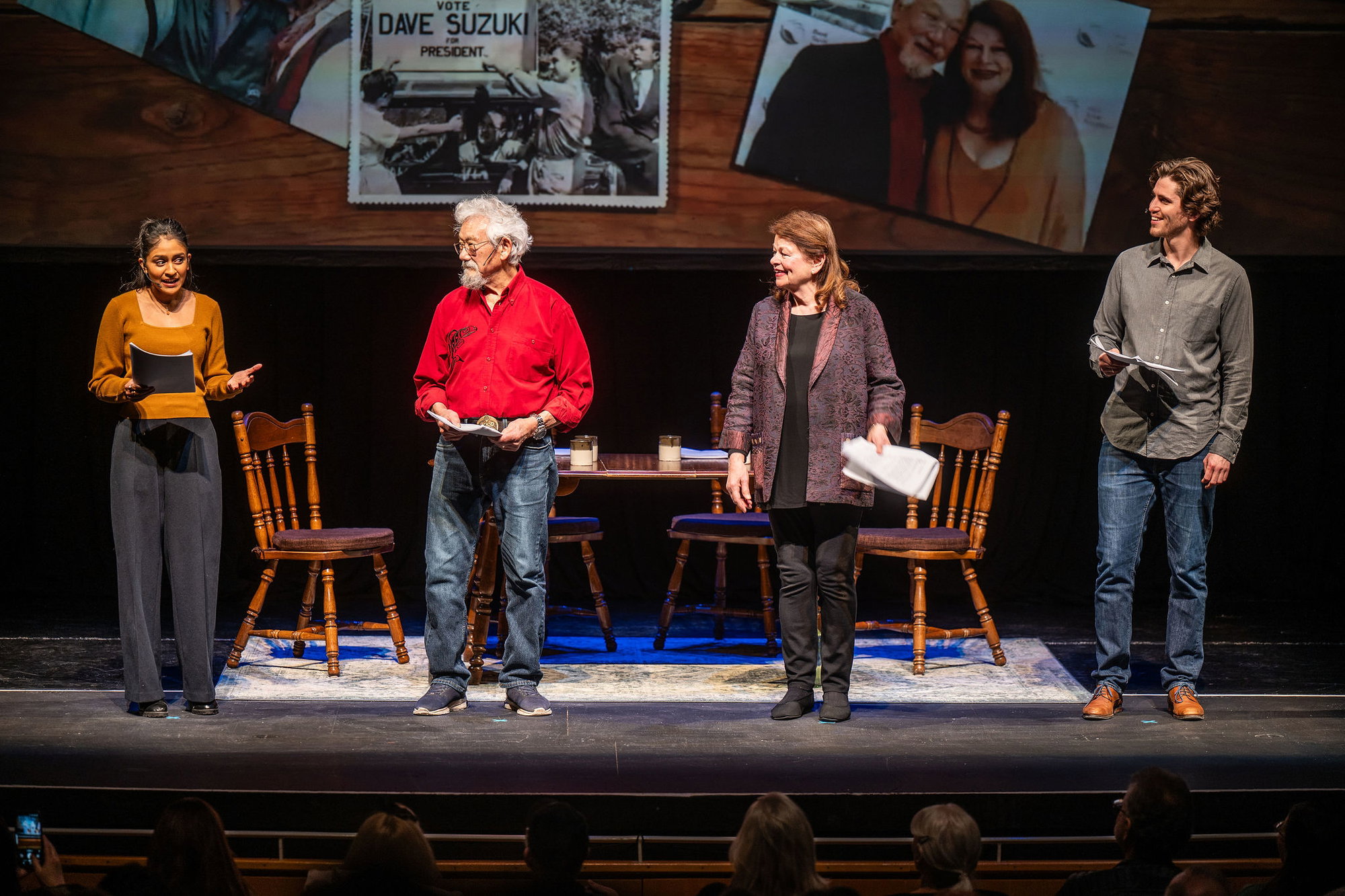
Photo by Dahlia Katz
I connected with Suzuki via Zoom at his home in Canada ahead of their Twin Cities debut. The legendary host of The Nature of Things was sharp, funny, and unsparingly honest. We spoke about the limits of cold data, dismantling public personas, and why the radical intimacy of the stage may be our best chance at collective survival.
Jerrod Sumner (JS): Thank you for this opportunity, David. We will explore the production itself, but I must begin with who you represent to millions: the scientist, broadcaster, and author. When deciding to step onto a stage for this piece, was there a conscious desire to dismantle that iconic persona so audiences would stop tuning out ecological warnings and lean in closer?
David Suzuki (DS): I was searching for a fresh way to communicate. My core message has never wavered: we must take empirical science seriously, especially now amid the noisy flood of misinformation on social media. Where does credible truth reside anymore? Throughout my career across radio, television and more than fifty books, I have repeated that science reveals the true state of our world, yet society continually looks away.
When Ravi Jain from Why Not Theatre first approached me, he actually asked if I would play Galileo. I told him I was too old to memorize a classical script. So, Ravi and Miriam Fernandes spent days recording conversations about our lives and cobbled together a narrative spine. I was stunned to see how well it worked.
What truly astonished me was the actual performance. I have delivered stand-up lectures my entire life; I know how to move a lecture hall to tears. But theater creates a fundamentally different covenant with an audience. During our run in Montreal, the crowd rose for sustained standing ovations after every performance, cheering with an emotional intensity I had never witnessed at a podium. Theater opens people up in ways standard lectures never could.
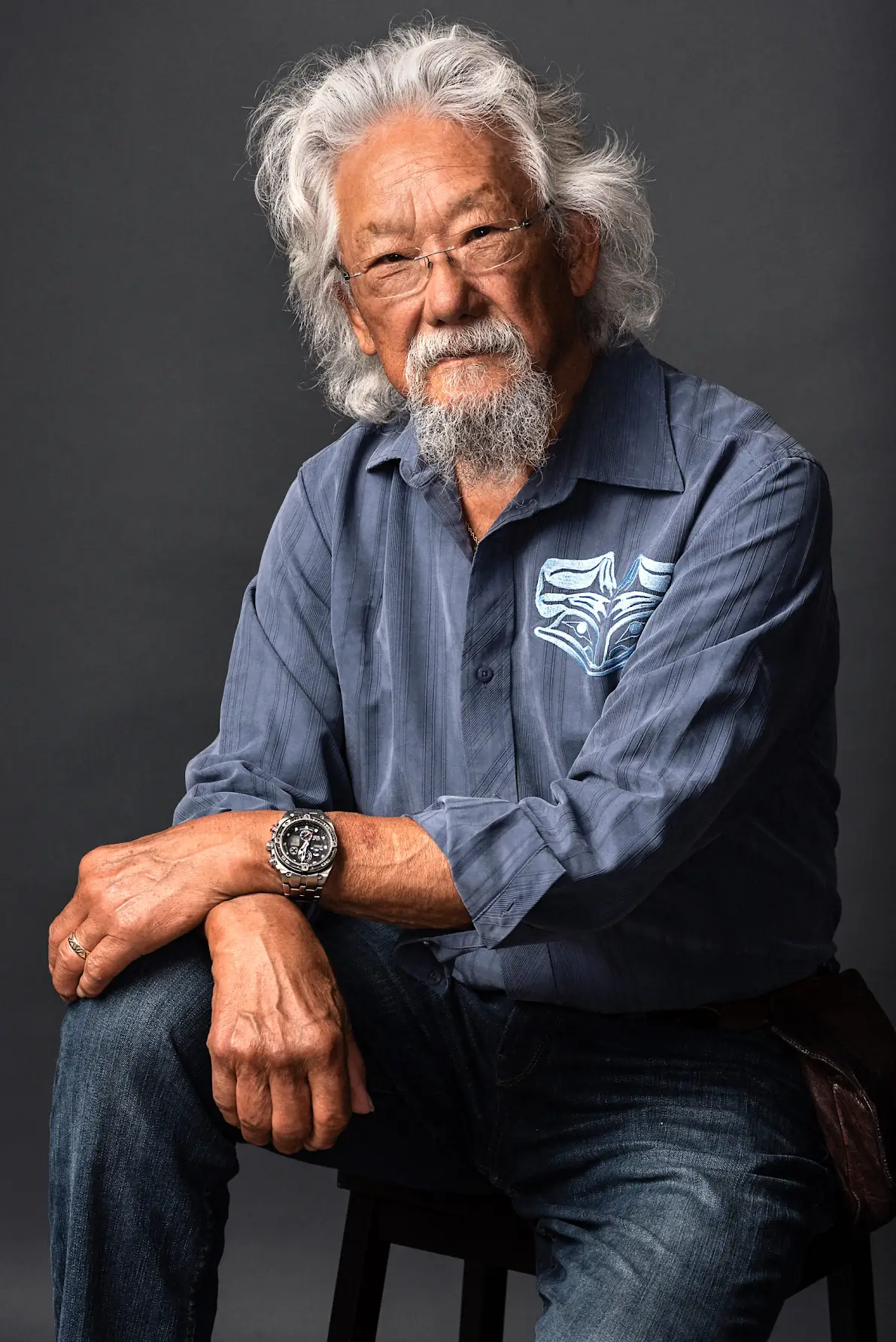
Photo by Jennifer Roessler
JS: Live theater carries an unrivaled intimacy. When attempting to move society toward meaningful transformation, is it easier to achieve that through cold, hard facts or through the heart, shared grief, and vulnerability?
DS: Hard, cold facts clearly have not done the job. In 1992, ahead of the Earth Summit in Rio, 1,500 senior scientists from 71 nations, including over half of all living Nobel laureates, signed the “World Scientists’ Warning to Humanity.” It stated plainly that human beings and the natural world are on a collision course, warning that unchecked practices would render the planet unable to sustain life as we know it.
Twenty-five years later, a second notice was signed by more than fifteen thousand scientists across 184 countries, confirming that conditions had grown substantially worse. Now a third, even more urgent declaration is on the way. The science has been unequivocal, yet we continue to see political leaders dismiss climate change as a hoax while dismantling renewable initiatives and subsidizing fossil fuels. It is a heartbreaking reality: despite decades of explicit scientific warnings, we are in far more perilous shape today than we were in 1992. Facts alone have not shifted the needle.
JS: After a lifetime on the front lines, what is the single, unvarnished truth you believe humanity must confront right now?
DS: Anyone who is a parent, grandparent or expecting a child must understand this: under our current trajectory, the probability of the next generation living out a normal, stable lifespan is diminishing rapidly.
Following the 2015 Paris Agreement, the consensus was clear: do not let global warming exceed 1.5 degrees Celsius above pre-industrial levels, because beyond that threshold lies systemic ecological chaos. For decades, our oceans absorbed immense amounts of heat, creating a temporary illusion of gradual warming. Now, as oceanic heat absorption saturates and terrestrial temperatures climb, research suggests we could approach a 3-degree rise by mid-century. Human civilization has never existed on a planet three degrees warmer. It is simply untenable. We cannot look away anymore. We are in grave danger, and technology alone will not deliver us.
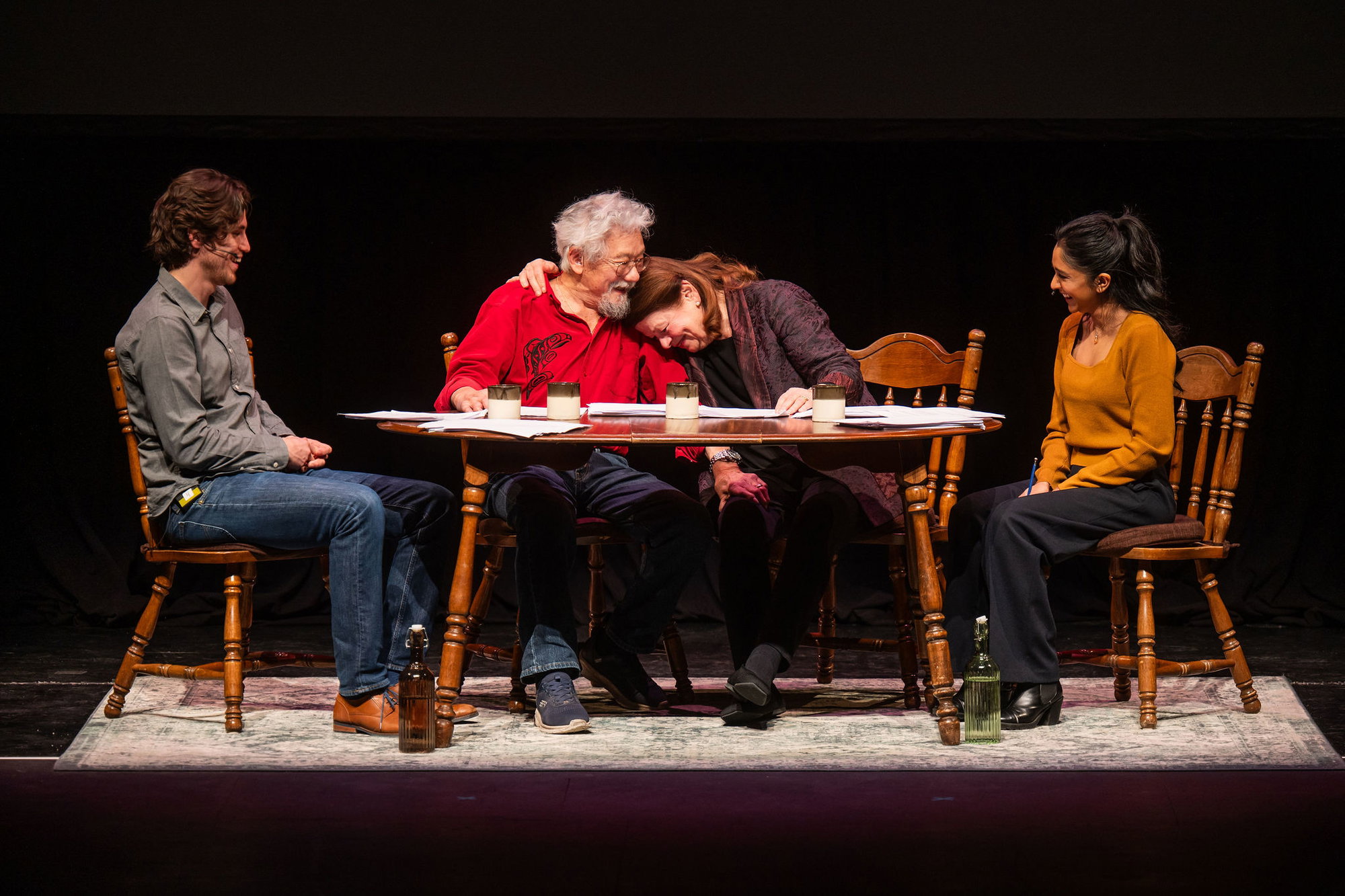
Photo by Dahlia Katz
JS: Turning to the emotional core of the play, what spirit drives What You Won’t Do for Love?
DS: It is the honest chronicle of two partners navigating decades of environmental advocacy, filled with exhilarating highs, fears, and community. Our greatest teachers have always been Indigenous peoples across North America, the Amazon, Australia and Japan. They never surrendered the ancient understanding that humans are merely one strand in an intricate web of kinship with air, water, soil and sunlight.
Every bit of energy in our bodies was once sunlight captured through photosynthesis. Every meal comes from living soil tended by plants and organisms. We are 70 percent water, relying on a delicate hydrologic cycle filtered by forests and fungi. Yet our dominant economic model treats natural systems as valueless until we extract, clear-cut, or pave over them. As Mark Carney noted in his book Values, Wall Street assigns vast economic worth to Amazon the corporation, but the actual Amazon rainforest is awarded zero value until it is logged or mined. Our systems elevate commerce while poisoning the air and soil that sustain our lives.
JS: It is startling to watch these realities addressed so simply through onstage conversation.
DS: It comes down to what we value. The market commodifies nature, but Indigenous traditions recognize the natural world as sacred. When you encounter something sacred, your first response is gratitude. You say thank you, and you move with reverence. That shift in perspective requires love: love of our living planet, love for our neighbors, and love for our children, rather than devotion to quarterly profit.
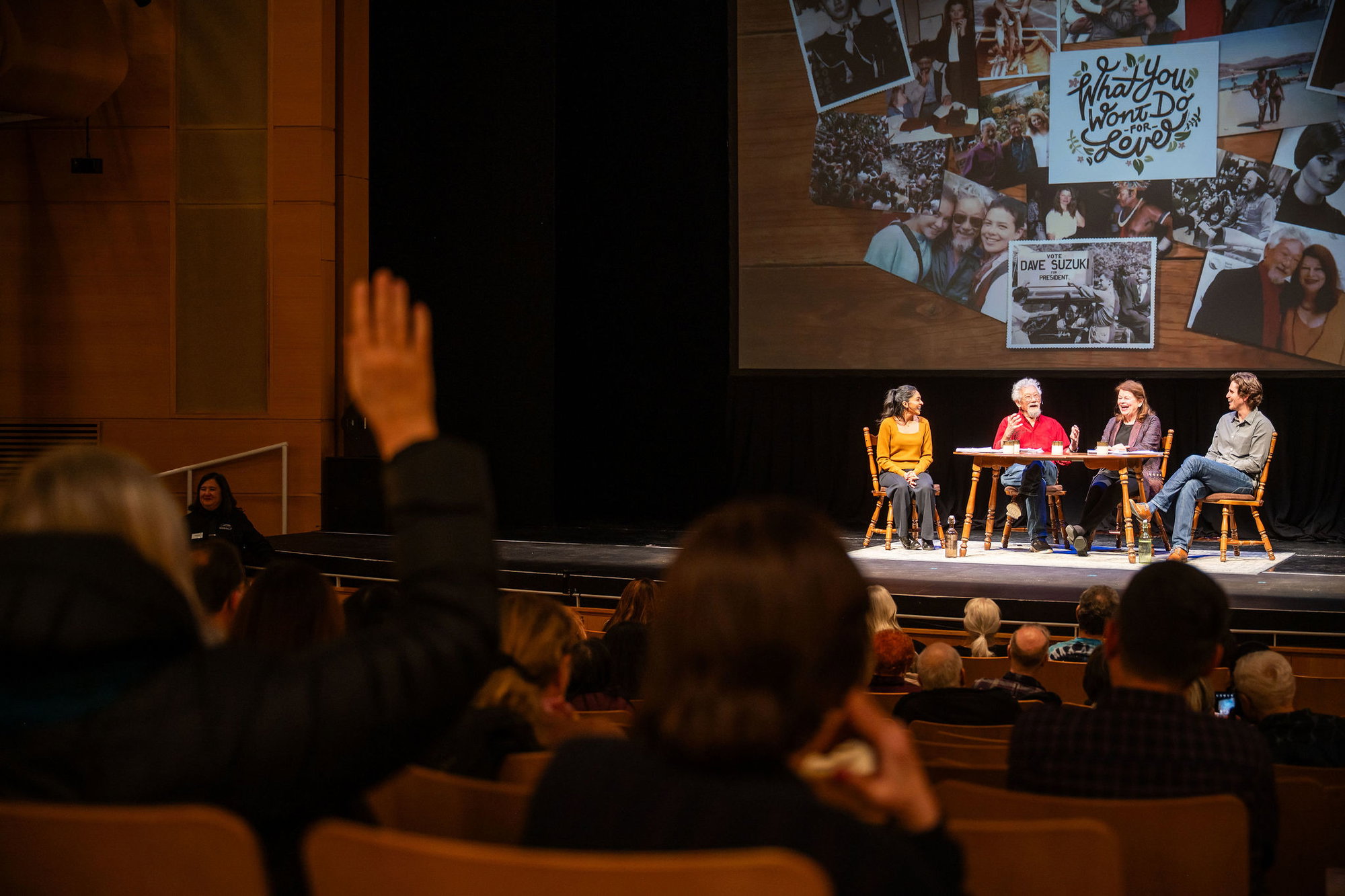
Photo by Dahlia Katz
JS: How do you want the audience to feel when the final blackout arrives at The O’Shaughnessy?
DS: The real heart of the performance is my wife, Tara. She is brilliant, tireless and the bedrock of everything we built, yet figures like her often operate outside the public spotlight. I want the audience to look at what Tara accomplished through dedication to her family and the earth, and think, “I can do something meaningful, too.”
On our Canadian tour, we invited audience members, local mayors and civic organizers to gather the morning after the performance to talk about practical community resilience. We drew inspiration from Finland, where municipal strategies ensure every neighborhood tracks local skills, emergency medical volunteers and water supplies before crises occur. When major disruptions strike, federal relief often arrives slowly. Neighborhoods must become our primary units of survival. Seeing people exchange seeds, share resources, and break out of urban isolation was magnificent. Our rallying cry is simple: stronger together, and later is too late.
JS: Minnesota Monthly is dedicated to the spirit of our state. What does the spirit of Minnesota signify to you as you conclude your American dates here?
DS: Of course you’re right up against us, and a lot of our hockey players are coming from Minnesota. But the thing I am thrilled about is that we’re ending our American part of the tour in Minnesota, which was such an inspiration to see how Minnesotans responded to the ICE reign of terror. And what happened there, I hope, will inspire communities across the United States to get your local community up and saying, “This is our priority.” You get the hell out of here. We can handle this. I was so inspired by Minnesota that I’m honored to get there.