


Did you know First Avenue was once a bus depot and disco club? Or that National Prohibition laws were penned right in St. Paul? Many beloved Minnesota landmarks are well known and established as iconic, but it’s the quirks and crannies of these places that tell a deeper, more meaningful (and sometimes sinister) story.

Photo by Josh Hild/Unsplash
Rhythm and Revelry
Most Minnesotans know the stories of legendary artists who have graced First Avenue’s stage over the years, from Prince to The Replacements and beyond, but the star-studded building has an equally fascinating history itself. The venue was originally built as a Greyhound bus depot in 1937, which was known for its art deco flare and modern amenities. First Avenue’s characteristic black-and-white checkered dance floor is the depot’s original terrazzo flooring. In its early days as a nightclub, the Depot in April 1970, then two years later, a renowned disco chain known as Uncle Sam’s. On New Year’s Eve, 1981, Sam’s became First Avenue.
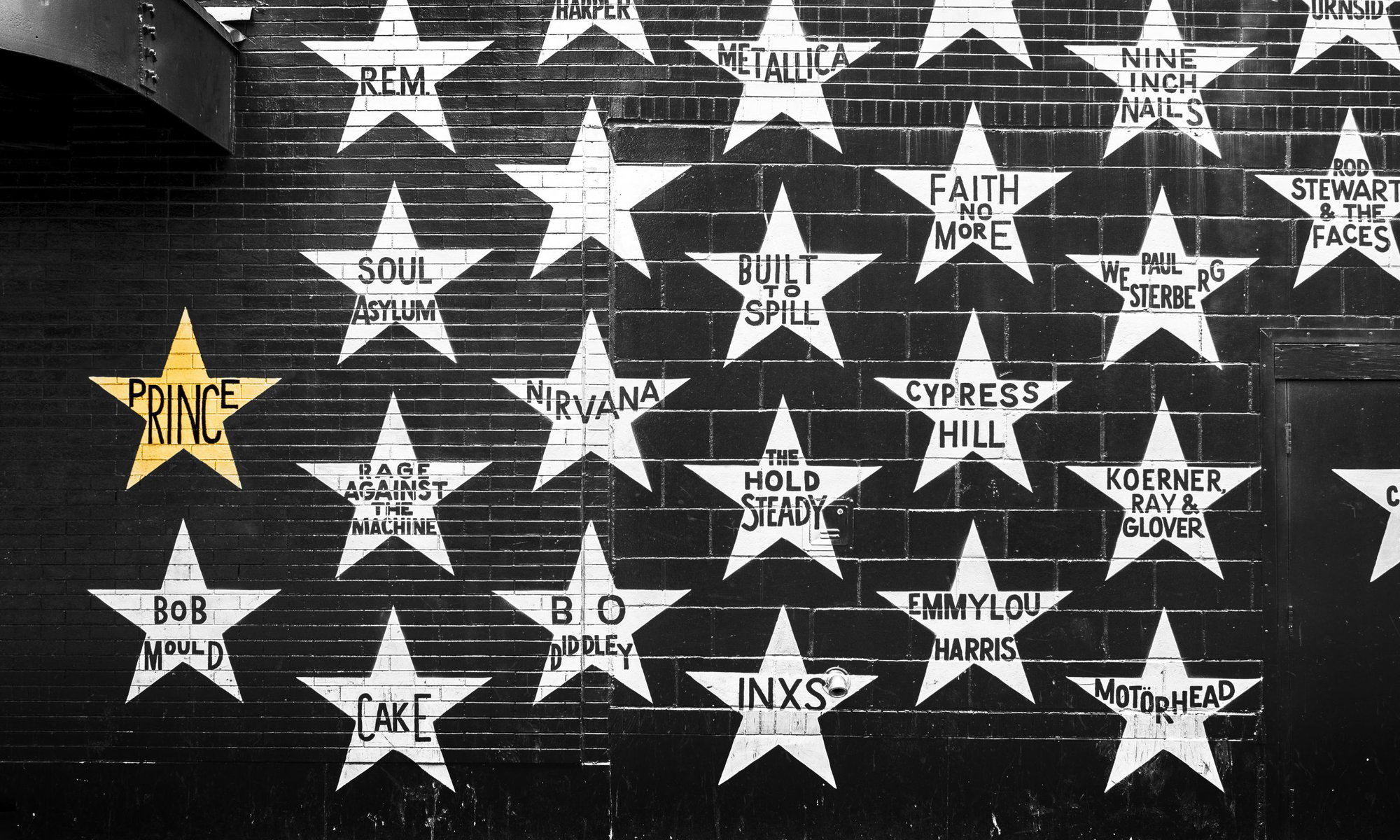
Photo by Nicholas Leiferman
A Titan’s Towering Legacy
The 447-foot, 32-story Foshay Tower is arguably one of the most recognizable buildings in the Minneapolis skyline. In the 1920s, utilities magnate Wilbur B. Foshay had big dreams for the skyscraper—he envisioned an architectural homage to the Washington Monument that would house his company’s headquarters. A true businessman, Foshay wasted no opportunity for free advertising, and embellished all four sides of the tower with his name in bright yellow lights. The building’s ownership has since changed several times, but the 10-foot-tall “FOSHAY” lettering still lights up the heart of downtown from every angle. Foshay hosted a three-day dedication event for the building over Labor Day weekend in 1929, attracting all of Minneapolis’ elite.

Courtesy of Meet Minneapolis
The stock market crash in October 1929 put W.B. Foshay Cos. in bankruptcy, and in May 1934, Foshay was convicted of mail fraud and sentenced to 15 years in Leavenworth Prison. In 2006-2008, the Foshay Tower was renovated and reopened as a 230-room hotel, the W Minneapolis-The Foshay.
Gilded Glory and Grandeur
St. Paul’s Summit Avenue features the longest stretch of Victorian-era homes in the United States (373 mansions, to be exact), and the James J. Hill House is the neighborhood’s crown jewel. Home to the successful railroad tycoon and his family, the 42-room, 36,500-square-foot Richardsonian Romanesque-style mansion took three years to build. More than 300 skilled craftsmen were involved in the construction process, some of whom earned as little as $1.75 per day. The basement housed the hand-pumped bellows for the 1,006-pipe organ in the main-floor, two-story skylit gallery, built for Hill’s magnificent art collection. At the time of its completion in 1891, the house’s total cost was $931,275—equivalent to $22 million today.

Courtesy of MNHS
A Bridge Between
The James J. Hill Stone Arch Bridge (yes, that Stone Arch Bridge) was built in the early 1880s to carry the Minneapolis Union Railroad over the Mississippi River.

Courtesy of MNHS
The Storied Home of a Literary Icon
While the acclaimed author of “The Great Gatsby” once resided on Summit Avenue in St. Paul (now known as the F. Scott Fitzgerald House), the home actually belonged to his parents. Prior to Fitzgerald’s marriage to Zelda Sayre, the bride-to-be had initially broken off their engagement—he was a struggling writer living in New York City, and Sayre was unsure that he could financially support her. Thus, Fitzgerald moved back into his parents’ home (now a National Historic Landmark), where he cooped up in a third-floor bedroom and wrote “This Side of Paradise” within one year.

Photo by Kimmy Tanaka
“Winter Dreams”
Fitzgerald’s story “Winter Dreams” was set in the fictional town of Black Bear Lake, a homage to White Bear Lake where he and Zelda spent the summer of 1922 with their daughter, Scottie.
From Courthouse to Cultural Hub
With its steeply peaked, red tile roof and copper-turned-patina turrets, Landmark Center is an easily recognizable architectural wonder in downtown St. Paul. Upon completion in 1902, the building served as the Federal Court House, Custom House, and U.S. Post Office for the Upper Midwest, and has since transitioned to be a hub of cultural programming. Landmark Center houses a wealth of history and art to enjoy, with multiple museums and exhibit spaces that are free to visit.

Photo by Jim Jerskey
Other past tenants include the Minnesota Museum of Art (now the Minnesota Museum of American Art), which featured a full-size prefab Frank Lloyd Wright house, and a campus of the Saint Paul Conservatory for Performing Artists, where members of the band Hippo Campus once roamed the halls—they even shot a music video in Landmark Center’s main atrium, the Musser Cortile. Even Congressman Andrew Volstead maintained an office on the fifth floor of Landmark Center when he co-authored the 18th Amendment in 1917—aka National Prohibition.

Courtesy of MNHS
Love Gone Sour
In May 1934, Mary Evelyn “Billie” Frechette was tried at Landmark Center for harboring the notorious criminal John Dillinger, with whom she had a romantic relationship.
Stages of Change
Encompassing the historic stretch of Hennepin Avenue once known as “Theater Row,” Hennepin Theatre District harbors the iconic Orpheum (1921), State (1921), and Pantages (1916) Theatres, three historic venues that barely survived the 20th century. The colorful pasts (the Orpheum was once the largest Vaudeville house in the country) and renowned architecture (upon opening, the State Theatre was considered the most technologically advanced theater in the country) of these buildings survived by slim margins, as all three theaters escaped impending demolition at one point during their lifespans.

Courtesy of Meet Minneapolis
The State Theatre, which was restored in 1990, is widely regarded as a catalyst for preservation efforts in Minneapolis, helping to turn the tide against the demolition of historic buildings. The most recent renovation to be completed is that of the Pantages in 2002, which was spearheaded after the city rejected the demolition permit of former owner Tedd Mann in 1996. The project took a valiant effort, reopening at a cost of $9.5 million and incurring more than $20 million in city-issued bond debt.
A Famed Connection
Bob Dylan owned the Orpheum from 1977-1988, saving the theater from imminent demolition.

Courtesy of MNHS
Powering the Past with Grist and Grind
To be Minnesotan is to take pride in the state’s past as the “flour milling capital of the world,” a legacy which is now preserved at the Mill City Museum, an interactive history museum built into the ruins of what was once the world’s largest flour mill. Those who grew up Twin Citian probably remember visiting the iconic site on school field trips, where students would travel through time aboard the “Flour Tower” elevator and participate in baking and water labs. But very few know that, running alongside this flour milling past is a completely alternate plotline, one that generated valuable psychological research during World War II. Mill City Museum’s site manager Dave Stevens offered us a window into this hidden past.

Courtesy of MNHS
Shaping History
“In 1943, psychologist B.F. Skinner, who began his career at the University of Minnesota, was working with General Mills, which held numerous defense contracts during World War II. On the top floor of the Unity Building (now the Washburn Lofts, next to Mill City Museum) Skinner and a team of graduate students were employed by the War Department on a project teaching pigeons to guide bombs to their targets. While Skinner’s team waited to hear whether the War Department would implement the project, they taught the pigeons tricks, like bowling. In the process, Skinner discovered the principle of “shaping,” a technique which breaks tasks into smaller parts and rewards successes. This has many practical applications today, from animal training to computer based instructional methods, and it all started on a Minneapolis rooftop.”–Dave Stevens
An Unintentional Time Capsule
Located within the historic silica mining caves of the St. Paul, the Wabasha Street Caves holds stories that still echo throughout its hollowed, underground space. While today a popular wedding venue, the site has a long and complicated history littered with crime, gambling, and ghosts.

Courtesy of MNHS
In the 1930s Prohibition era, the Wabasha Street Caves was home to the Castle Royal Nightclub, where legend has it a group of St. Paul gangsters executed the ultimate murder coverup—the victims of which many believe still haunt the caves today. Minnesotan author Ryan Jacobson’s book, “Minnesota Hauntings,” details one such account, which occurred at a wedding held at the caves. Upon the end of the ceremony, the bride’s nephew Charlie expressed how much fun he had “playing with the gangster men.” Later, when going through wedding photos, the bride and groom stumbled upon an image of Charlie playing poker with three blurry, barely visible figures.

Courtesy of Visit Saint Paul
A Nefarious Hideout
The Castle Royal Nightclub opened its doors in 1933 and was a frequent haunt for mobsters John Dillinger, Baby Face Nelson, and Machine Gun Kelly.
Spires Reaching Skyward
Perched dramatically atop Summit Hill as if a gatekeeper to the city, many a Minnesotan has glimpsed the dome-topped, Beaux-Arts marvel that is the Cathedral of Saint Paul. But how many know that this mighty structure’s first version was an 18- by 25-foot log cabin built in 1840? Or that there are over 5,970 organ pipes located inside the building? Or that not one, but two Roman Catholic Popes have made visits to the Cathedral in its lifespan? (As did President John F. Kennedy in 1962.) The Cathedral of Saint Paul has seen many stories throughout its 184-year history, and it continues to maintain a special place of prestige among the Catholic churches of America.

Courtesy of Visit Saint Paul
An Answer to Broadway’s Disenchantment
The nationally recognized Guthrie Theater, with its steel, blue-plated exterior and amber-tinted, cantilevered observation box, is nothing short of “a miracle.” Or at least, that’s what LIFE Magazine called it in1963, following the success of its debut production of “Hamlet,” a performance which founder Tyrone Guthrie later recalled that “even the audience had stage fright” for. Fittingly, the final production performed at the Guthrie’s original location on Vineland Place was also “Hamlet,” the Shakespeare classic serving as both the introduction and farewell to the historic structure.
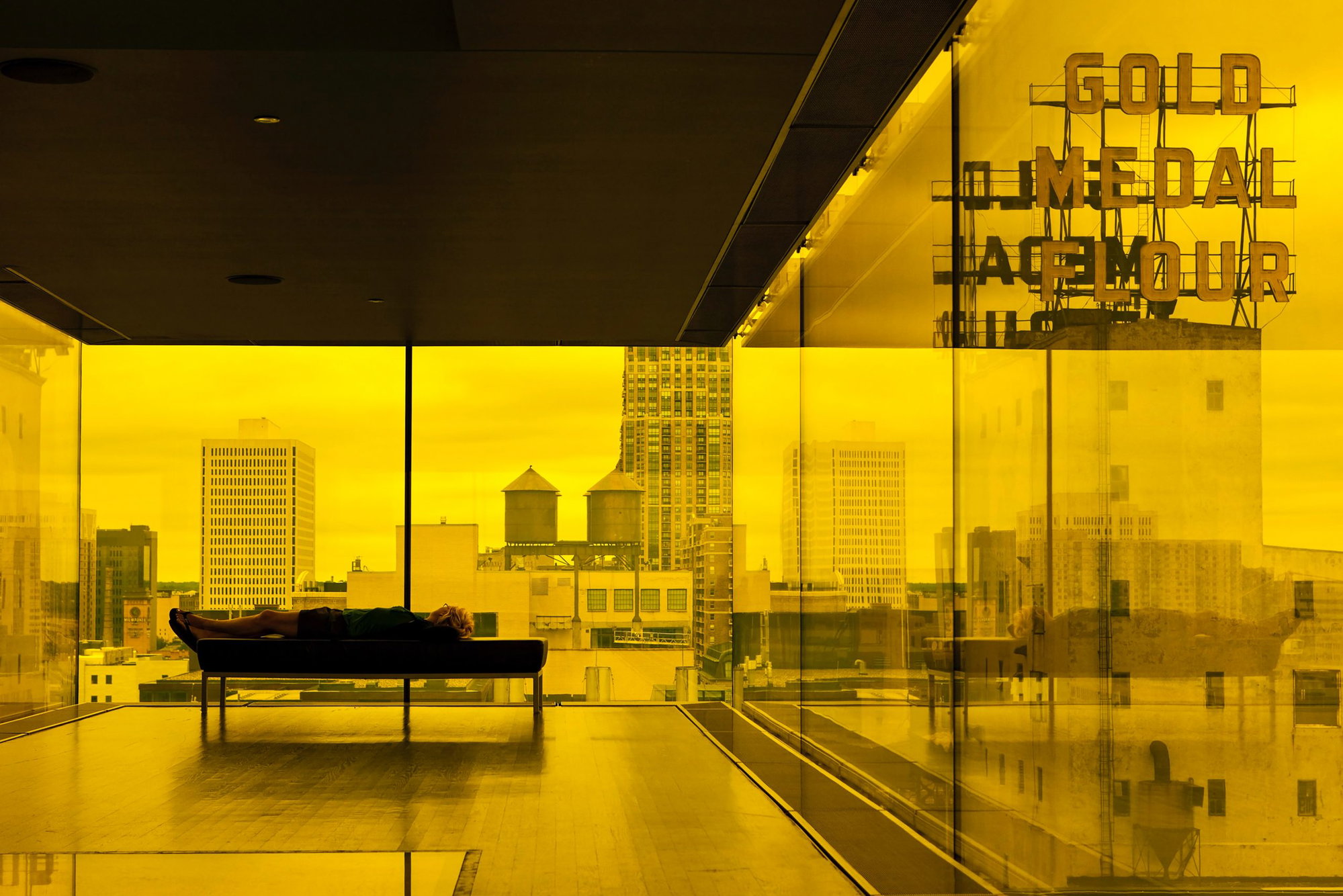
Photo by Mick Haupt
Always Sunny in Minneapolis
Pritzker Prize-winning architect Jean Nouvel wanted the amber observation box to mimic a sunny day, no matter the time of year (especially amid the frigid Minnesota winters).
The Kid’s Journey Comes to Life
Paisley Park is not just any estate—it’s the iconic realm of the legendary musician Prince. This extraordinary complex, once a bustling hub of creativity and innovation, has been transformed into a captivating museum that offers an intimate glimpse into the world of a musical genius. Visitors to Paisley Park are not merely spectators; they are invited to step into the very heart of Prince’s artistic universe, where every corner tells a story of passion, innovation, and unyielding dedication to the craft. Marvel at the vast collection of personal artifacts, from his flamboyant costumes and glittering awards to his meticulously crafted instruments. Every exhibit is a testament to Prince’s unparalleled creative process and his monumental contributions to the world of music.

Courtesy of Paisley Park/NPG Records
Love Symbol #2
A year after Prince’s death, Pantone, in collaboration with his estate, created a royal shade of purple named Love Symbol #2 in his honor.
A Storied Saga
The Glensheen Mansion stands as a testament to the opulence and grandeur of the early 20th century. This 39-room Jacobean-style estate, built in 1905-1908 for the wealthy Chester and Clara Congdon family, cost $854,000 to build (equivalent to about $34.5 million today). Chester made his millions by helping pioneer the mining industry in northern Minnesota—which caught attention from the likes of fellow businessmen Andrew Carnegie and J.D. Rockefeller. Chester died in 1916, and Clara lived in the home until her death in 1950. Today, visitors can tour Glensheen and marvel at the mansion’s ornate details, from the hand-carved woodwork to the intricate stained-glass windows. Beyond the lavish interiors, the estate boasts sprawling gardens, a private beach, and a carriage house that all contribute to the property’s enchanting ambiance.

Courtesy of Glensheen Mansion/University of Minnesota
A Tragic Ending
In 1950, Elisabeth Congdon inherited Glensheen and the Congdon fortune from her mother. Later in June 1977, Elisabeth and a nurse, Velma Pietila, were murdered in Glensheen.
Minnesota’s Medical Dynasty
The Mayowood Historic Home is a 23,000-square-foot, 38-room home that was built in 1910 by Dr. Charlie Mayo, co-founder of the renowned Mayo Clinic, and his wife, Edith. Notably, the home was constructed using concrete, a first-of-its-kind building material in the region. Visitors can explore the home’s history as a hub of hospitality (where VIP guests were frequently entertained) and many original Mayo family artifacts that tell the story of their world travels, including Chippendale chairs, Limoges china, a Louis XV desk, a Belgian lace fan that belonged to Empress Josephine, Waterford crystal chandeliers, a Louis XV desk, Chinese scrolls (circa 1725), and more. Outside, the grand terrace overlooks the Zumbro River, and the property boasts beautiful botanical gardens and an Oriental Tea House.

Courtesy of Mayowood
A Grand Entrance
The entrance of the living room is outlined by a carved 17th century doorframe, which came from a castle in Germany.
Beacon on the Bluff
The construction of Split Rock Lighthouse was prompted by the fury of a November gale in 1905, which wreaked havoc and caused the wreckage of 29 ships along the Lake Superior coastline. Early 20th-century American novelist James Oliver Curwood proclaimed, the North Shore of Lake Superior was “the most dangerous piece of water in the world.” Perched atop a 130-foot cliff, Split Rock Lighthouse was officially commissioned in 1910, and until the Lake Superior International Highway was built in 1924, lighthouse keepers and their families could only access the site by water. Split Rock only had five keepers in its lifetime, from 1910 until 1969 when it was decommissioned from service.

Courtesy of MNHS
When the Gales of November Came Early
Held annually in November, the Edmund Fitzgerald Ceremony at Split Rock Lighthouse commemorates the 1975 sinking of the SS Edmund Fitzgerald, honoring the lives lost and paying tribute to the crew members of the ill-fated ship.