

Courtesy of Washington County Historical Society
Minnesota has plenty of ghost stories. Some have been passed down for generations. Others come from hotel employees, homeowners, or visitors who swear they saw—or heard—something they can’t explain.
Whether you believe in ghosts or not, there’s no denying the paranormal has found an audience. Across Minnesota, investigators spend nights inside old hotels, theaters, schools, and former hospitals, documenting strange sounds, unexplained shadows, and stories that have lingered for generations. It’s a fascination Ron de Beaulieu explores in her forthcoming book, “Haunted Minneapolis,” which was released in early September.
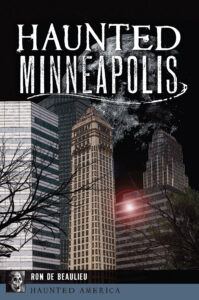
“I think when people have a strong feeling about a place, they expect there to be something dramatic attached to it. A haunting is dramatic,” says de Beaulieu. “So, when a ghost story arises about that place, it spreads more easily and takes root in the public imagination.”
Some places have become legends in their own right. Forepaugh’s in St. Paul is reportedly haunted by the spirits of original owner Joseph Forepaugh and his mistress, Molly, a maid whose tragic story has fueled ghost tales for generations. The Calumet Hotel in Pipestone is another favorite among paranormal investigators, where visitors have reported flickering lights, phantom footsteps, and sightings of a ghostly figure wearing an old-fashioned bowler hat. Even First Avenue has its own ghost stories. Staff and concertgoers have long traded tales of unexplained footsteps, strange noises, and a mysterious woman said to appear in or near the women’s restroom before vanishing onto the dance floor.
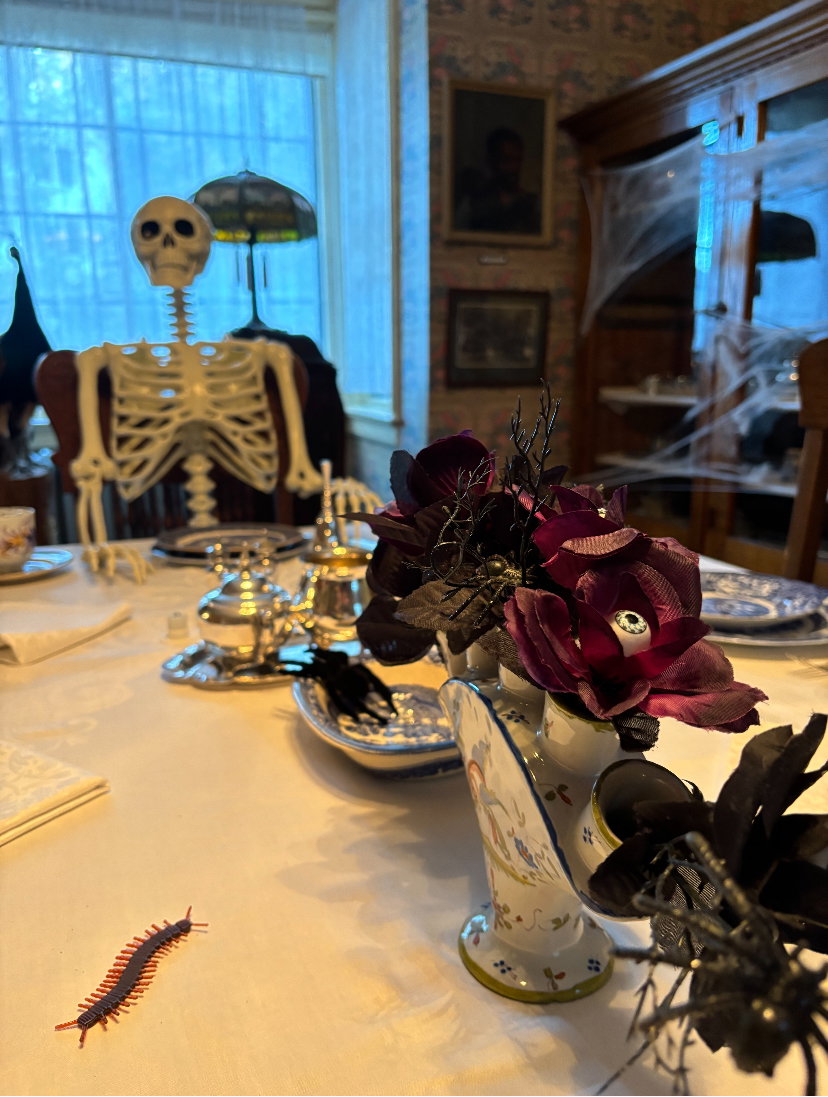
But ask local investigators where to go, and they’ll often point you somewhere less obvious. “Last year, the Warden’s House in Stillwater contacted us to collaborate,” says Jenny Melton, paranormal researcher and investigator with the Twin Cities Paranormal Society. “We have investigated there three times, and every time, we have had some pretty crazy stuff happen.” The group shares its findings via public presentations at the museum—the next one will be held in October. Melton also recommends the Anderson House in Wabasha, an old hotel she describes as having “a ton of history.”
For spirit sleuths, an investigation is less about chasing ghosts than about documenting the unexplained. A typical night might involve infrared cameras, audio recorders, motion sensors, and hours of reviewing recordings afterward. Most unusual sounds or movements end up having perfectly ordinary explanations. The interesting cases are the ones that don’t.
“We are a scientific team who look for natural explanations before considering the paranormal,” says Melton. “We have definitely caught things that make us go ‘Hmmm…’ but it really takes a lot for us to say, ‘Yeah, we think this place is haunted!’”

The locations themselves are often just as interesting as the stories. Historic hotels, Victorian homes, abandoned schools, old hospitals, and century-old theaters all carry layers of history. Whether or not you believe they’re haunted, they’re places where generations of Minnesotans lived, worked, celebrated, and grieved—and sometimes that’s enough to make them feel a little different after dark.
The Turnblad Mansion is a perfect example. Now home to the American Swedish Institute, the Minneapolis landmark has become the subject of countless eerie tales. “I’ve heard a number of stories about paranormal activity in this building,” de Beaulieu says. “Some of it is ambiguously strange, like a piano that plays by itself or sudden and unexplained chilliness. But some of it was really startling, like a dark cloud that appeared inside the ballroom and flowed through a guy who was working there.” Unlike many haunted locations, she says, there isn’t an obvious tragedy to explain the stories. “No one died there, or anything like that. It’s a mystery!”
If you’re curious about Minnesota’s paranormal side, investigators recommend starting with public tours or historic sites that welcome visitors rather than exploring abandoned buildings on your own. Many of the state’s best-known haunted locations also happen to be rich in local history. One of de Beaulieu’s top local recommendations is Mill Ruins Park in downtown Minneapolis, where visitors can learn about the flour milling industry that shaped the city. “It’s a really cool place, especially if you love history,” she says. While the rebuilt Washburn “A” Mill is now home to Mill City Museum, de Beaulieu says many of the modern-day reports of apparitions linked to the victims of the devastating 1878 explosion have instead been centered at nearby Mill Ruins Park—a surprising twist, given the tragedy occurred at the mill itself.
Whether you leave believing in ghosts or simply with a deeper appreciation for Minnesota’s history, that’s part of the draw. The state’s haunted places remind us that every landmark has stories worth preserving—even if some remain impossible to explain.