


For over 160 years, Mayo Clinic in Rochester has led the way in developing and refining surgical techniques, procedures, and instruments adopted by surgeons around the world. This tradition of innovation continues today as Mayo invents and adapts modern technologies to improve patient outcomes.
Smarter Diagnostics, Enhanced by AI
Mayo Clinic is pioneering the use of artificial intelligence (AI) to extract and interpret data from PET and MRI scans in powerful new ways, helping doctors pinpoint disease earlier, make more informed treatment decisions, and enhance the pre-op experience for patients. Researchers are also developing digital biomarkers for early disease detection, predicting complications before surgery, and personalizing treatments.
“What’s unique about Mayo Clinic is that we have clinical expertise, AI scientists, and a high volume of patients with high-quality data for conditions ranging from the most common to the most complex, all under one roof,” says Dr. Cornelius Thiels, associate chair of innovation for Mayo Clinic’s Department of Surgery. “This allows us to identify high-impact clinical needs, develop the AI architecture, and implement these models into practice in ways that would otherwise take years in a more fragmented environment.”
Creating Custom 3D Models
Mayo’s team routinely creates custom, 3D-printed anatomical models and guides to help with presurgical planning and completion of complex operations. These 3D-printed models seamlessly translate virtual surgical planning into the operating room, allowing doctors to execute advanced procedures with the highest level of precision, accuracy, and quality.
Dr. Kyle Ettinger, an oral and maxillofacial surgeon and director of innovation at Mayo Clinic, says that virtual surgical planning, 3D printing, and guided surgery are critically important for reconstruction in head and neck surgeries, where the results are highly visible and the structures being reconstructed have a multitude of functional purposes. “Studies have shown that utilizing these technologies leads to better functional and aesthetic outcomes, fewer complications, and more predictable surgery,” he explains. “And Mayo is unique in its ability to efficiently create custom-designed 3D-printed models in-house through our own internal anatomical modeling program.”
Bringing AR Into the OR
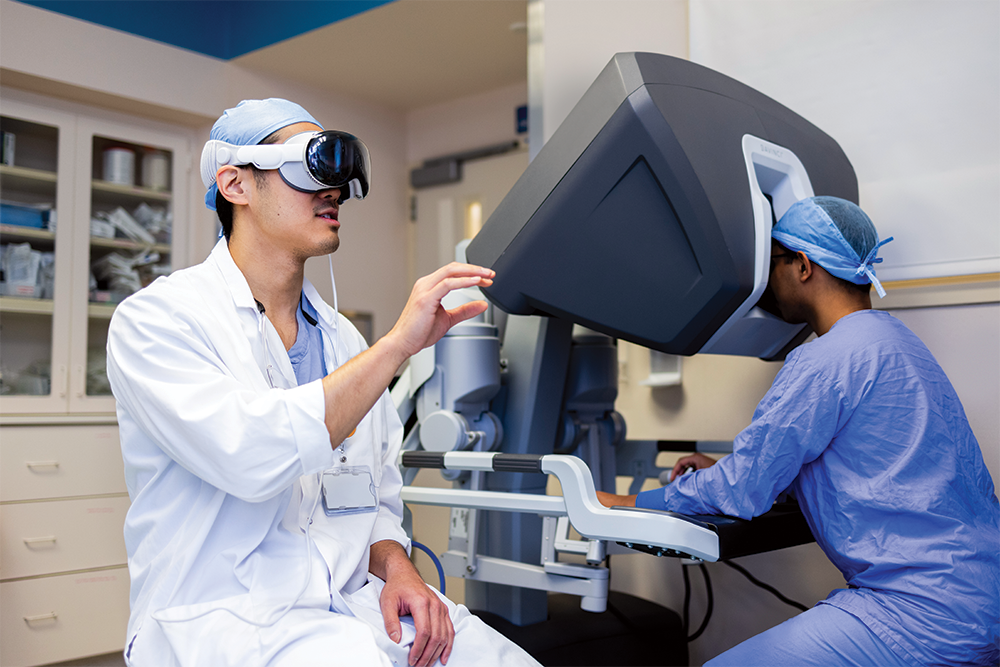
Mayo Clinic’s Department of Surgery collaborates with leading med-tech innovators to develop cutting-edge solutions that may not be available elsewhere. For instance, virtual reality is already being incorporated into surgical planning at Mayo Clinic, allowing surgeons to essentially “rehearse” surgeries beforehand. The team is also working toward regular use of augmented reality (AR) in the operating room during surgery. This technology superimposes digital information—such as anatomical guides or real-time imaging—directly into the surgeon’s field of vision, helping them navigate procedures with additional precision and confidence.
Improving Outcomes Through Innovation
All this innovation benefits patients by enabling things like faster recoveries, fewer complications, and longer-lasting results.
“In the end, regardless of what the innovation is, it must help us safely meet the needs of patients,” says Dr. Thiels. “This can mean helping surgeons innovate around a single patient with a unique need, or scaling a drug developed in the lab to benefit many patients—both are equally important in my mind.”
To learn more or to request a surgical consultation at Mayo Clinic, call 507-792-8058.