

On stage now through Oct. 18 at Theater Latté Da, Paula Vogel’s Tony-winning masterpiece “Indecent” resurrects the astonishing, turbulent trajectory of Sholem Asch’s 1907 Yiddish play, “The God of Vengeance.” The narrative traces the work from its revolutionary European debut to its controversial 1923 Broadway bow, where a tender love story between two women sparked moral outrage, censorship, and the arrest of its entire company. Vogel crafts a brilliant theatrical history lesson, reminding us that art is both a radical act of political courage and a fragile mirror to society’s shifting anxieties. Framed through the eyes of an itinerant troupe of ghosts accompanied by Klezmer melodies, the play explores artistic truth, anti-Semitism, and identity across continents. The production lands as a potent testament to cultural survival, proving that great storytelling can outlast the regimes and prejudices that seek to extinguish it.
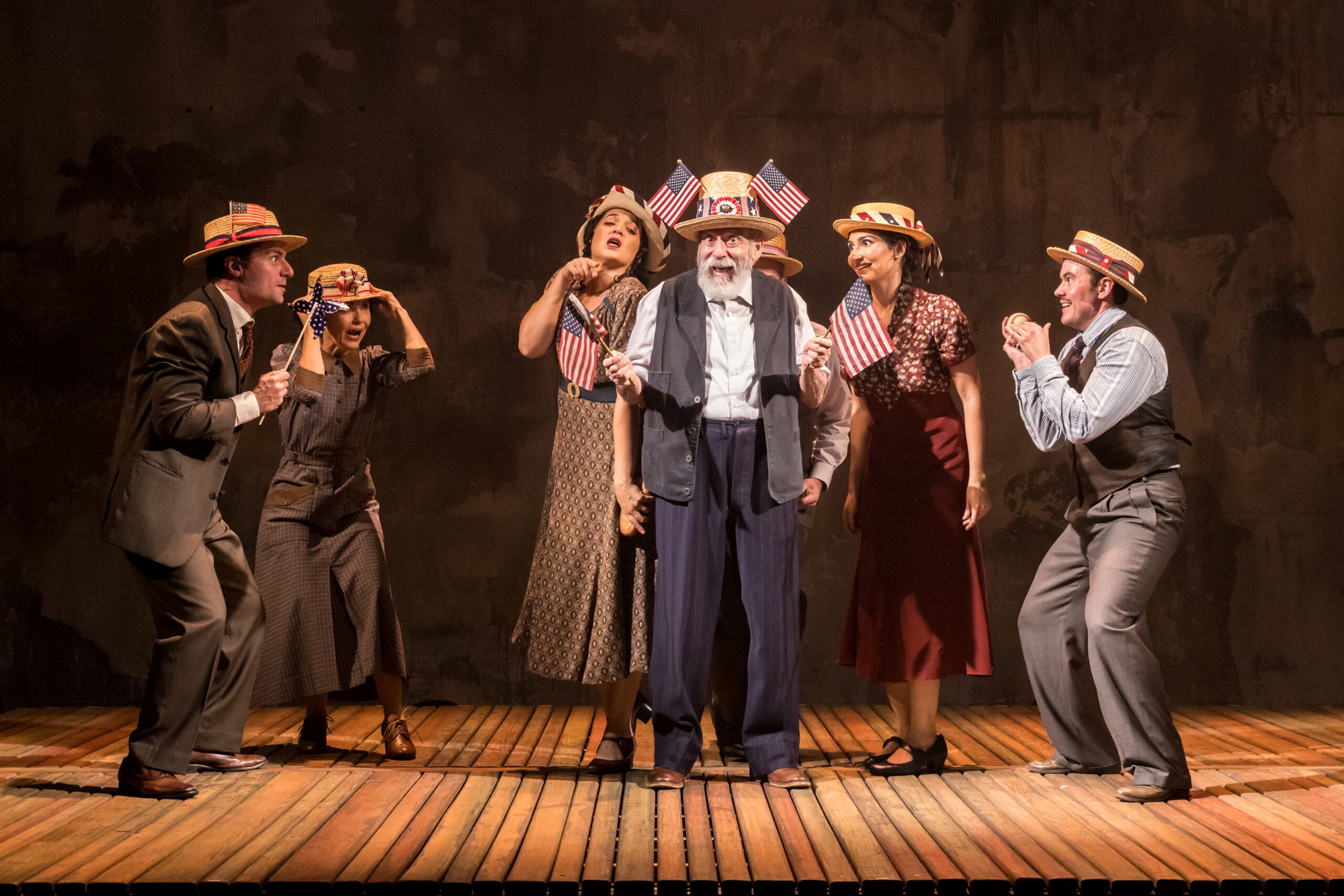
Photo by Dan Norman
I must confess that I had never seen the play prior to this staging and was largely unfamiliar with Asch’s underlying saga, which only made Vogel’s exquisite script all the more staggering as a personal revelation. Her writing does not merely recount a timeline; it unearths a searing reflection on world history and theatrical heritage that demands our complete attention.
From the opening swirl of ash and violin, the production immediately pulls you into its orbit and never lets up, marching briskly through decades of passion and peril toward a hypnotic, devastating conclusion. When the final blackout falls, and the house lights gently come back up, you do not simply grab your coat and chatter your way into the lobby. This rare, vital work of art insists you sit quietly in your seat for a long moment, catching your breath and reflecting on what it truly means to bear witness.
This company of actors within a troupe of actors tackles the layered material with striking grace, emotional transparency, and uncanny theatrical discipline. While deliberate flashes of levity offer welcome relief, this ensemble inherently understands the grave historical weight it carries. From the opening welcome, August Forman as Lemml, the devoted stage manager, anchors the entire production as our gentle master of ceremonies, guiding us through the troupe’s decades-long odyssey. Forman’s performance radiates pure, wide-eyed wonder as Lemml discovers the sacred sanctuary of the footlights and the transcendent power of great art; it stands effortlessly as one of the most endearing, heartbreaking portrayals seen on a Twin Cities stage all year.
Tackling dozens of roles across generations and geographies, this tight-knit ensemble functions with breathtaking synchronicity. While each performer is afforded distinct moments of brilliance, the true magic lies in watching them shed and inhabit characters with fluid, blink-of-an-eye precision. They deliberately remind us of the mechanics of theater without puncturing its illusion, never rushing ahead or anticipating the next line. What emerges is an evening of astonishingly authentic, grounded performances that hold the Ritz Theater in absolute stillness.
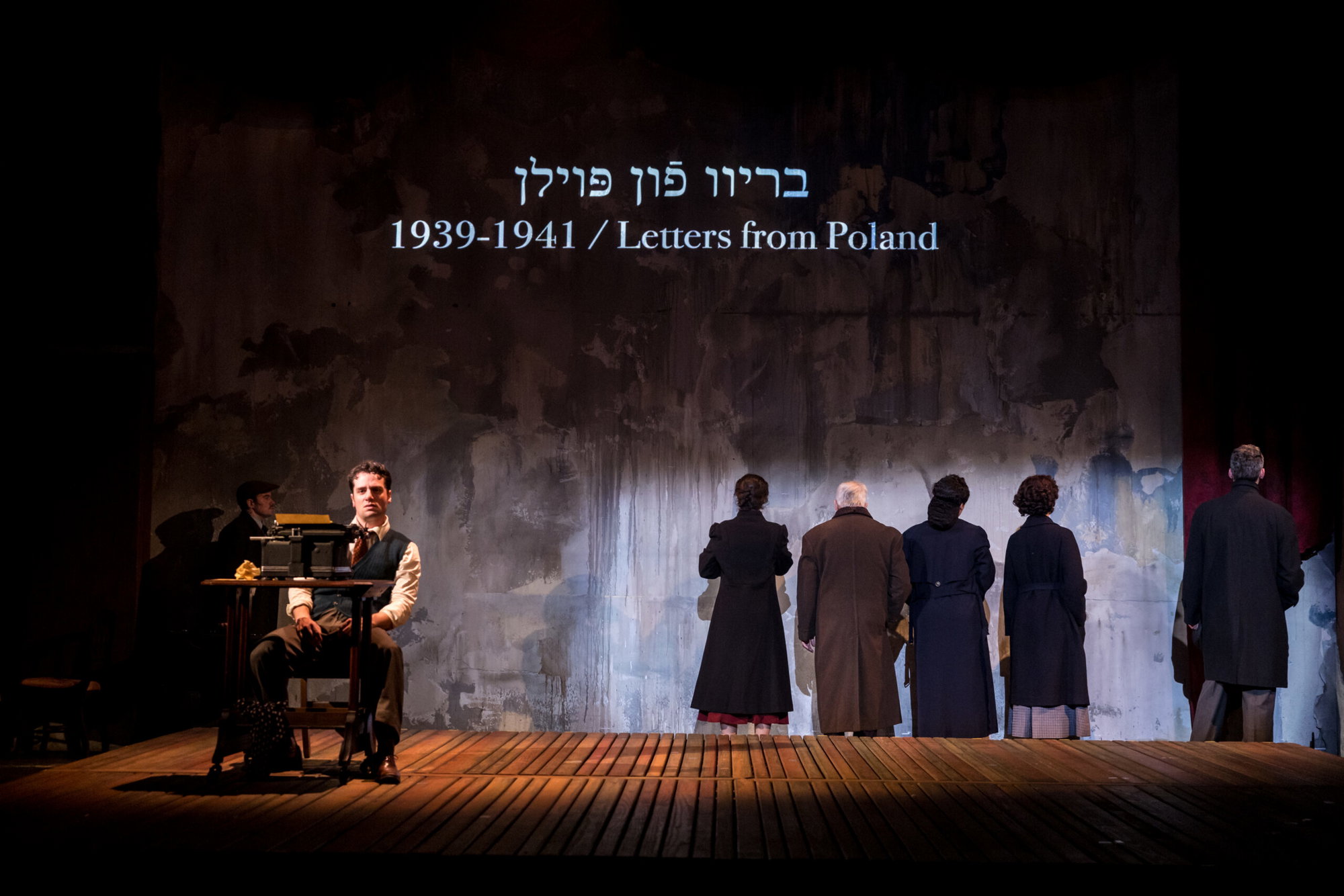
Photo by Dan Norman
Complementing the acting company in roles entirely their own, the on-stage Klezmer musicians weave a rich, evocative sonic tapestry that deepens every beat of the narrative. Their strings and reeds pulse like a living heartbeat, providing both a cultural anchor and an emotional undercurrent to the unfolding drama.
The design aesthetic mirrors this specific, fragile corner of history with remarkable grit and sensory detail. From the heavy, weathered traveling coats and vintage luggage to the sharp, defiant shock of striking red in key costume pieces, the visual language grounds these wandering souls in a tactile past that feels eerily familiar to modern memory.
Director Pirronne Yousefzadeh handles the complex material with exquisite restraint, refusing to ever let the evening languish into an academic lecture. Instead, she coaxes deeply nuanced, vulnerable work from an ensemble simply playing working actors who dared to love a play. It is a stunning, essential triumph not to be missed for its incandescent performances and urgently compelling storytelling.