

Courtesy of Sacred Blossom Farm
Tucked into the hills of the Driftless region near Eau Claire, Wisconsin, one farm is putting a new spin on the area’s agricultural history—and inviting visitors to get their hands in the dirt (literally).
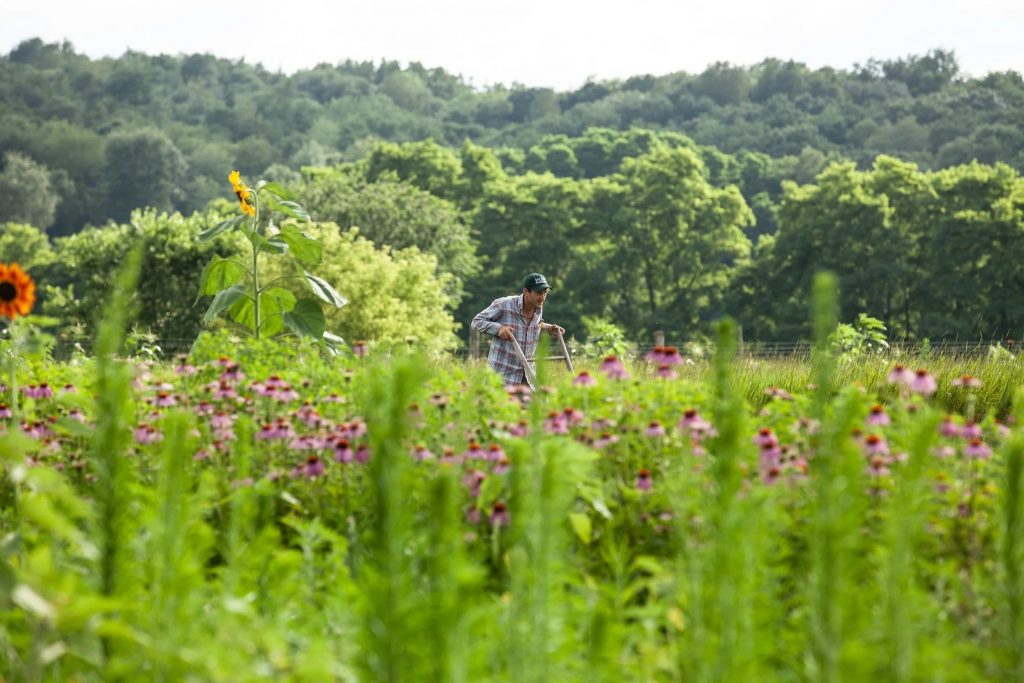
Sacred Blossom Farm has been a destination for foodies and the farm-curious since 2016, and this summer, it’s opening its gates for two weekends of open house farm tours. “We’re inviting the public to our farm near Eau Claire, where we grow and wild-harvest over 25 herbs during the most beautiful weekends of the year,” says Joe Smith, Sacred Blossom’s sales and marketing manager. Most of the herbs will be in full bloom, just about ready for the season’s harvest.
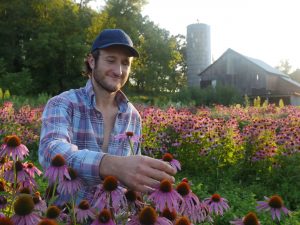
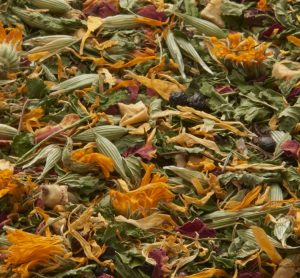
Unlike most farms in the region, which focus on dairy or vegetables, Sacred Blossom has always specialized in herbs. Owner and founder Tony DiMaggio started the enterprise in 2016 on rented land after spending several years learning from mentors and traveling the world. “His dream was to farm for health—his health, the health of the land, and the health of the customers,” Smith says. “After apprenticing at several farms around the globe, he decided that growing farm-fresh herbal teas would be the best avenue for fulfilling that dream.” Sacred Blossom’s herbs and herbal tea blends are grown with regenerative, small-scale practices that avoid pesticides, herbicides, flavor additives, and other no-gos. There’s everything from peppermint and raspberry leaf to ashwagandha and echinacea—plus signature tea blends for sleep, immunity, and other health goals. (Teas and herbs are sold on the farm’s website and in most Whole Foods locations and local co-ops in Wisconsin and Minnesota.)
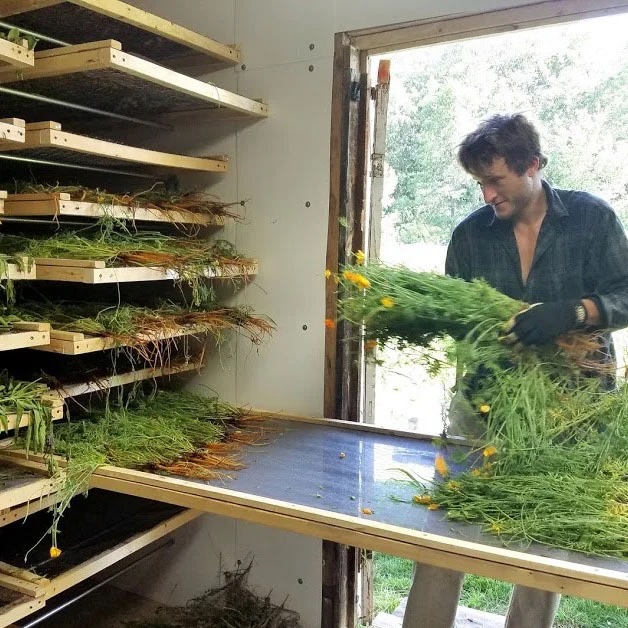
Each herb variety is dried slowly at a specific temperature (not left to scorch in the sun or blasted with hot air, which is typical at large-scale tea production facilities), then are de-stemmed and cut by human-operated machines. DiMaggio, Smith, and their team of part-time workers and volunteers are also working on innovative polyculture systems, inter-seeding, new weeding tools, pig tillage, and all kinds of other low-impact farming systems. “We try to minimize inputs, tractor usage, shipping, and packaging,” DiMaggio says.
Courtesy of Sacred Blossom Farm
Because the farm operates with minimal staff, opportunities for the public to visit are limited to the summer open farm weekends. This year, on July 11-12 and 18-19, visitors can take guided tours, sample fresh herbal teas, wander the fields, pastures, and woods, connect with other “herbal enthusiasts,” as the farm calls them, and check out other local vendors. As Joe Smith says, Sacred Blossom Farm doesn’t operate in isolation but is part of a longstanding network and community of local and regional producers, co-ops, and more. “I’d like to expose our attendees to the region’s bounty,” he says—especially since some visitors make the trek from as far as Iowa and Chicago.
“This year, we’re looking forward to walking our herb fields with our community of herbal enthusiasts,” Smith says. “Some people show up having been fans for years, [and] others are just discovering our farm, but it’s always a delight to offer people the opportunity to connect with the beauty of this place. Everyone knows it’s important to connect with where food comes from, but for us as farmers, connecting with our fans is just as important.”
Sacred Blossom Farm, W355 State Road 121, Mondovi, Wisconsin. RSVPs requested for 2026 Open Farm days. sacredblossomfarm.com