


Robert Burns famously wrote a version of the phrase “The best-laid plans of mice and men often go awry” in 1785. He could have written that in 2026, with or without Google Maps.
Recently, I decided to test my planning abilities and bike camp from Carlton, Minnesota, through Duluth and to Two Harbors, taking in the fall colors. Along the way, I learned about perseverance and how to embrace what happens when plans don’t quite work out.
My adventure started with my friend Tim at Jay Cooke State Park, approximately 17 miles south of Duluth. We enjoyed admiring the Saint Louis River, which features a massive suspension bridge over craggy rocks and raging whitecaps.
“I suppose we better get everything ready,” I told my friend of 15 years.
The Bike Camping Proposition
Similar to backcountry camping, you pedal for an afternoon or even all day, stay the night in a tent or cabin, then head home the next morning. While you are highly dependent on the bike, it also means you get both a workout and the freedom to explore.
(For the purists, bike camping usually means sleeping in a tent, but it can also mean staying at a camper cabin. I’ve done both but prefer sleeping in a real bed.)
Tim and I packed minimally—each with a few pieces of clothing, food for two quick meals, our water thermoses, phone chargers, and a book or two. The more you carry on the bike, the more you weigh yourself down, which leads to pedaling harder.
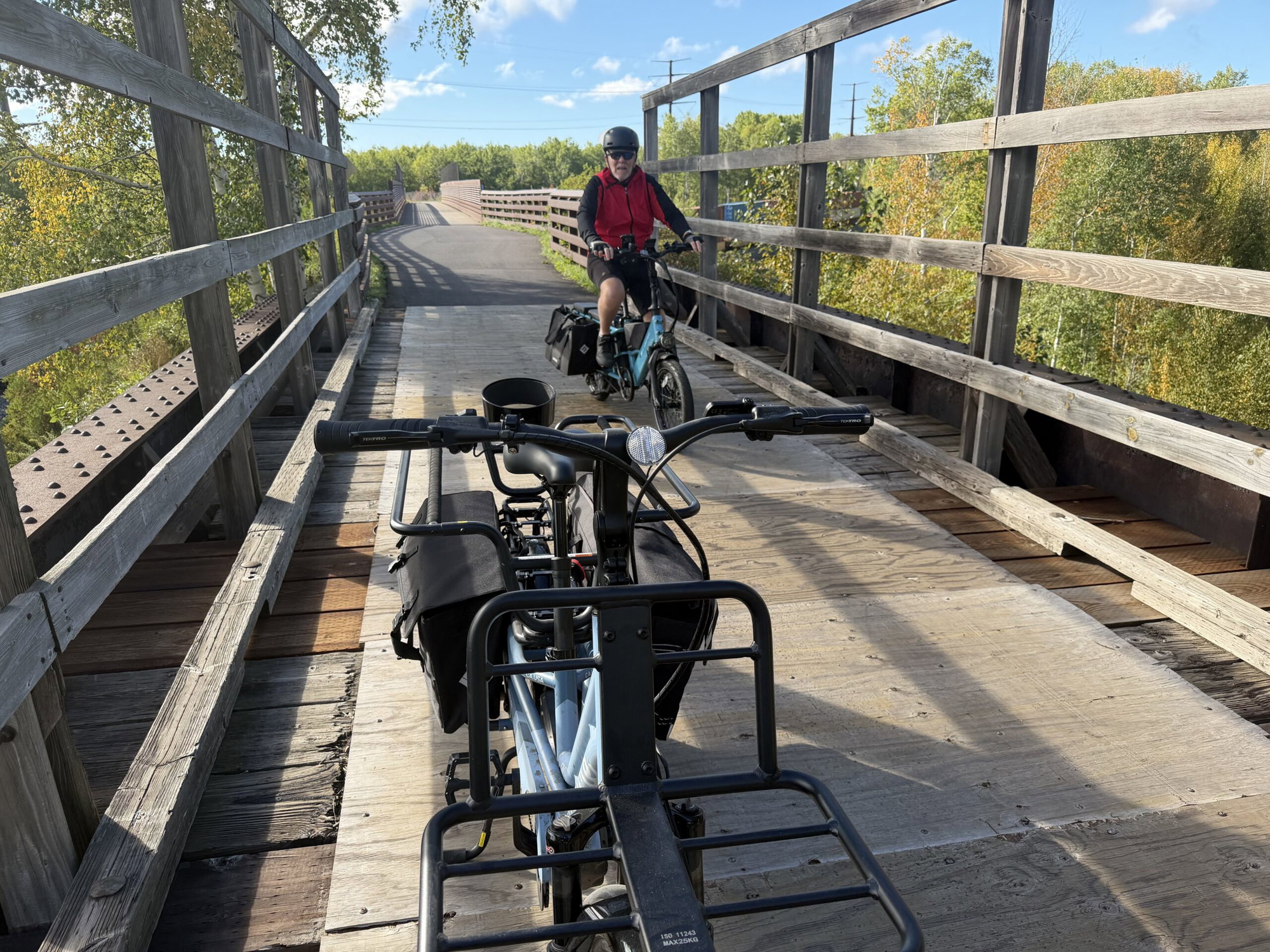
Fortunately, we had longtail electric cargo bikes with side panniers to store the gear. I rode an Xtracycle Swoop ASM, and Tim used a Lectric XPedition2. At 65 pounds each, the bikes are quite heavy, though luckily the electric power typically makes pedaling easier.
Both bikes have digital gauges displaying the current battery level, with the Lectric bike using green bars to show the charge level and the Xtracycle showing miles remaining. That range indicator was our first sign of trouble.
Getting to the Cabin
From Jay Cooke, we headed north on the Munger State Trail toward a brand-new North Shore luxury resort called The Harbors, situated 27 miles north of Duluth. The resort offers A-frame cabins, glamping tents, and entire homes situated right on Lake Superior.
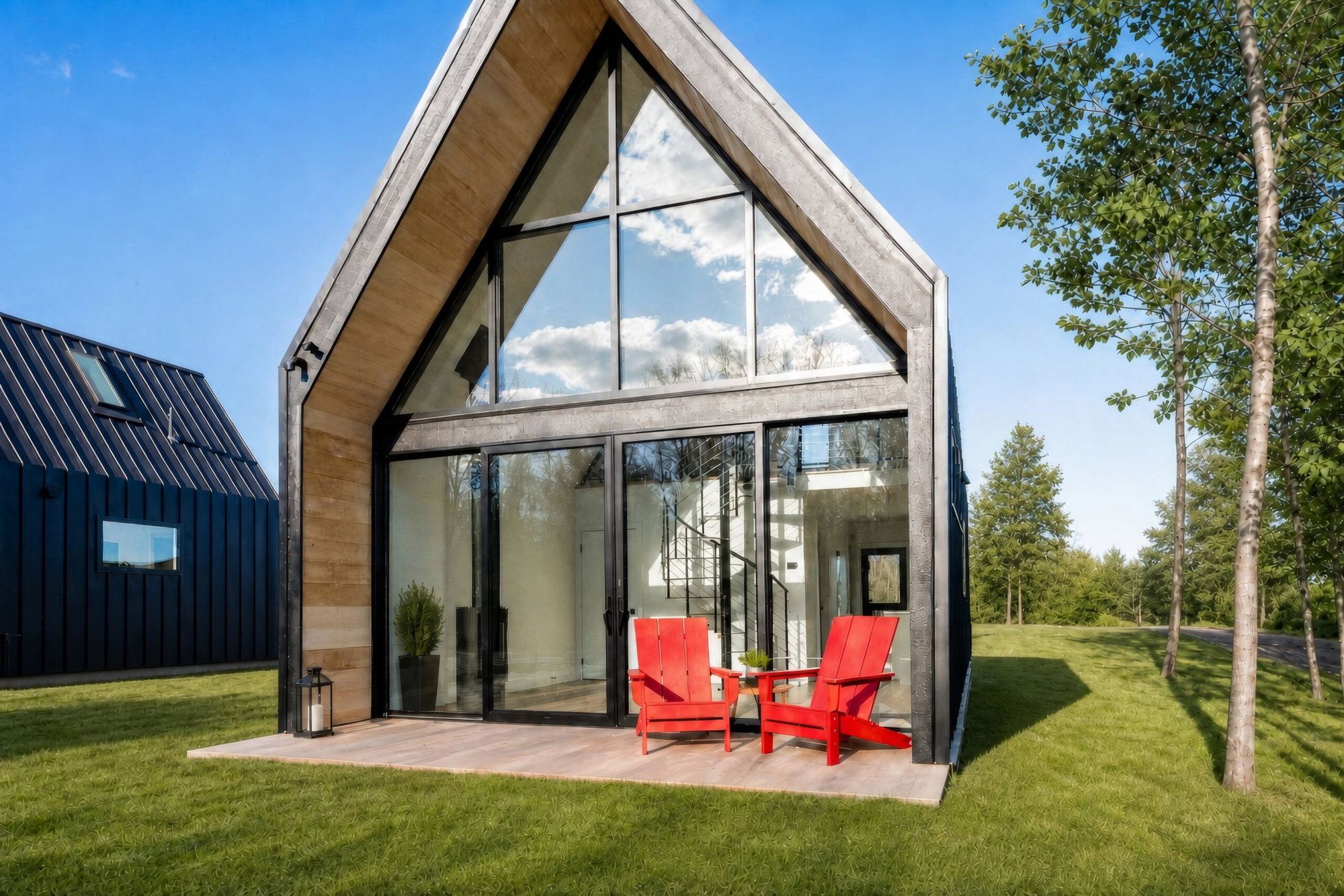
Courtesy of The Harbors.
As we pedaled along, gliding up small hills and down steep embankments, I could sense a growing concern. The Xtracycle range started displaying 80 miles remaining at first, with almost no pedal assist. Electric bikes typically allow you to adjust how much the battery has to work, and the range depends on the cargo and even if you’re biking into the wind—which we were. Admiring the fall colors, pedaling over bridges, and stopping to watch a train pass right next to me, I noticed my bike losing power faster than expected.
“I’m only showing 22 miles left,” I said to Tim as we came to a halfway point about eight miles from Duluth. I’ve biked hundreds of miles on a normal bike and own a non-cargo electric bike. I’d previously tested the Xtracycle on a 50-mile bike ride, and it worked well. My plans were foolproof—or so I thought.
I dropped to level one minimal assist, but that didn’t help much. The bike’s load was so heavy, I needed to use level two to keep moving. “That looks like too much work,” Tim said, noticing how the Xtracycle wasn’t handling our long route. Tim, meanwhile, was gliding along with almost full bars on his equally heavy cargo bike. By the time we arrived in Duluth, the Xtracycle Swoop ASM lost all battery power. Dead on arrival.
“Well, you can’t leave me stranded here,” Tim joked. I offered to use the Lectric XPedition2 to bike back to the car, but we decided to stick together. We caught an Uber back to Jay Cooke, which—as lifelong campers and cyclists—felt like failure.
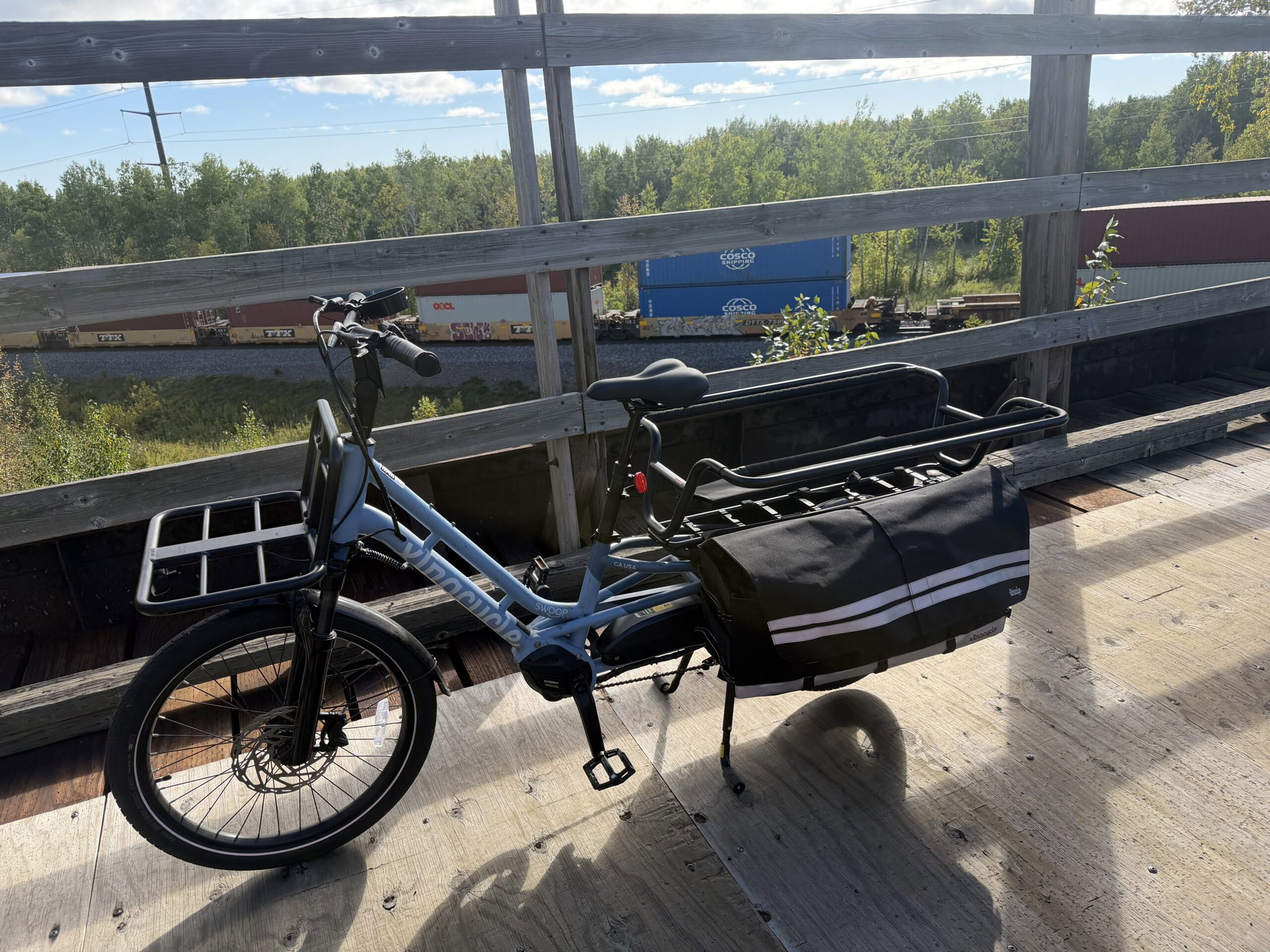
Photo by John Brandon
After dinner, Tim loaded the dead bike in his truck and headed to The Harbors cabin. I used the Lectric XPedition2 to bike the remaining 27 miles along Scenic 61, a two-hour trip at roughly 20 miles per hour. It’s an official bike route, but a quick word of caution: you are sharing the road with cars, even if it is a scenic route.
Was the trip a total failure? Not really. As I pedaled, sticking close to the shoulder while absorbed by the Lake Superior views and the brisk fall air, I was reminded of another famous quote. Winston Churchill once said: “Success is stumbling from failure to failure with no loss of enthusiasm.” That was felt in my bones and deep down in my soul.
I learned that not every electric bike will last as long as the specs indicate and that bike camping depends on how much battery assist you use, your gear, and even your own weight. It’s also important to keep up your enthusiasm, because you can always learn something new.
At The Harbors, we were thankful for a two-bedroom cabin, where we munched on chips and talked about life plans. In the morning, we headed to Cedar Coffee Company in Two Harbors for a breakfast sandwich and some coffee before perusing the adjoining bike shop. Its sister company is famous for making cycling bags.
After a full charge, I used the Lectric Xpredition2 to bike back to Duluth on Scenic 61, then to my own car at Jay Cooke, enjoying the fall colors once again. In the end, embracing change is not in my DNA, but it led to a few surprises. My bike camping trip didn’t pan out as I hoped, but I learned to enjoy the ride—even if your route changes a few times.
Another Way to Bike Camp
The term “bike camping” doesn’t always mean biking dozens of miles, camping overnight, then returning to your parked vehicle. While that was the case for my Duluth and Two Harbors trip, bike camping doesn’t have to involve a long route.
You can camp with a bike or bike to a camp—both of which are valid activities.
On a cool August evening, my wife Rebecca and I traveled to Crosby, Minnesota—this time by car—to camp with our bikes and stay at Cuyuna Cabins. The property is close to a charming downtown area and offers a few overnight options, including a mirror cabin situated on five acres.
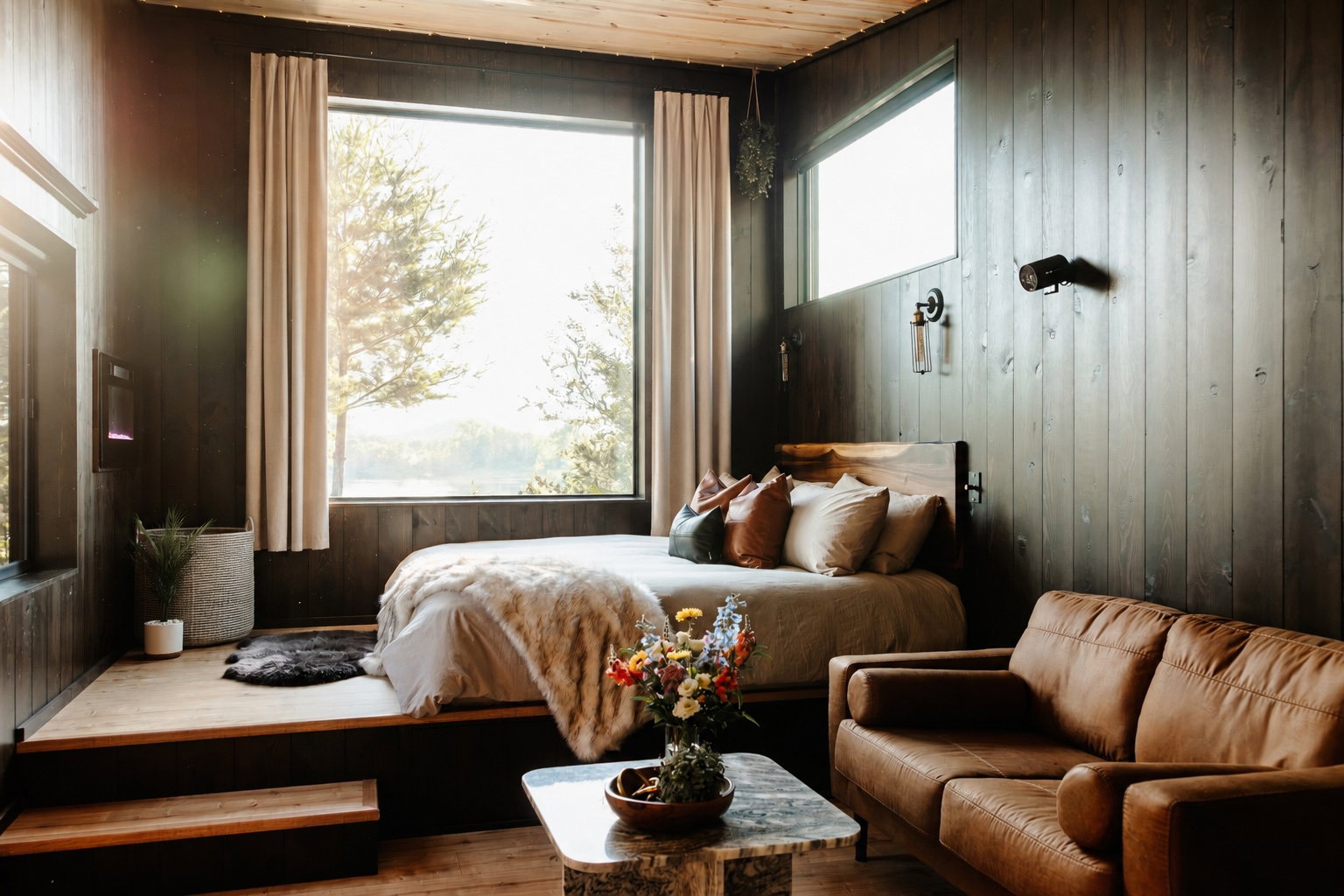
Courtesy of Amber Bauer
We stayed in a lakefront cabin that offers a full outdoor hot tub, stargazing net, and private fire pit (wood included). Nestled in front of an iron mine lake, the cabins look like tiny homes. Inside, there is a king-size bed, electric fireplace, full kitchen with a stove and refrigerator, bathroom, and a home theater projector.
That morning, we pushed off on our standard touring bikes along a gravel road. Just down a hill from the cabin is Cuyuna Lakes State Trail, an eight-mile fully paved trail that winds around 15 iron pit lakes and a few natural lakes. It also intersects with Cuyuna Country State Recreation Area. Since the area is intended for mountain biking (there are 50 miles of single-lane dirt trails), we stuck to the paved trail.
After our quick 16-mile jaunt, we stopped at Burritos California in Crosby to share a plate of nachos. Later, we biked to Ironton, biking a few miles on city streets to visit High Wheel Confectionery.
“What’s your best bakery item?” I asked the smiling college-age clerk. She pointed at a sugary “cruffin” (a croissant-muffin). I bought two for the road.
We biked back to the Cuyuna Cabins for a late check-out, happy the bikes relied on human power. Cuyuna Cabins is also one of our new favorites, and we are eager to return soon to rest—and disconnect.
No matter how you do it, bike camping—or camping with bikes—is an excellent way to embrace solitude and explore. The path isn’t always straight, but it’s certainly filled with wonder.