

Courtesy of Exhibition Hub/Fever
I should probably begin with a disclaimer: I am a “Titanic” person. And yes, I mean the movie. I’ve watched James Cameron’s 1997 film more times than I could reasonably count, know an embarrassing amount of trivia, and will absolutely stop what I’m doing if I stumble across a documentary about the ship. So, when “Titanic: An Immersive Voyage” opened in Minneapolis, there was very little chance I was going to pass up the opportunity to see it.
My husband and I visited last weekend with complimentary VIP tickets, and while I expected to enjoy the spectacle of it all, I was surprised by what stayed with me most.
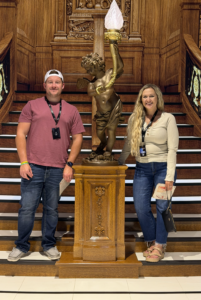
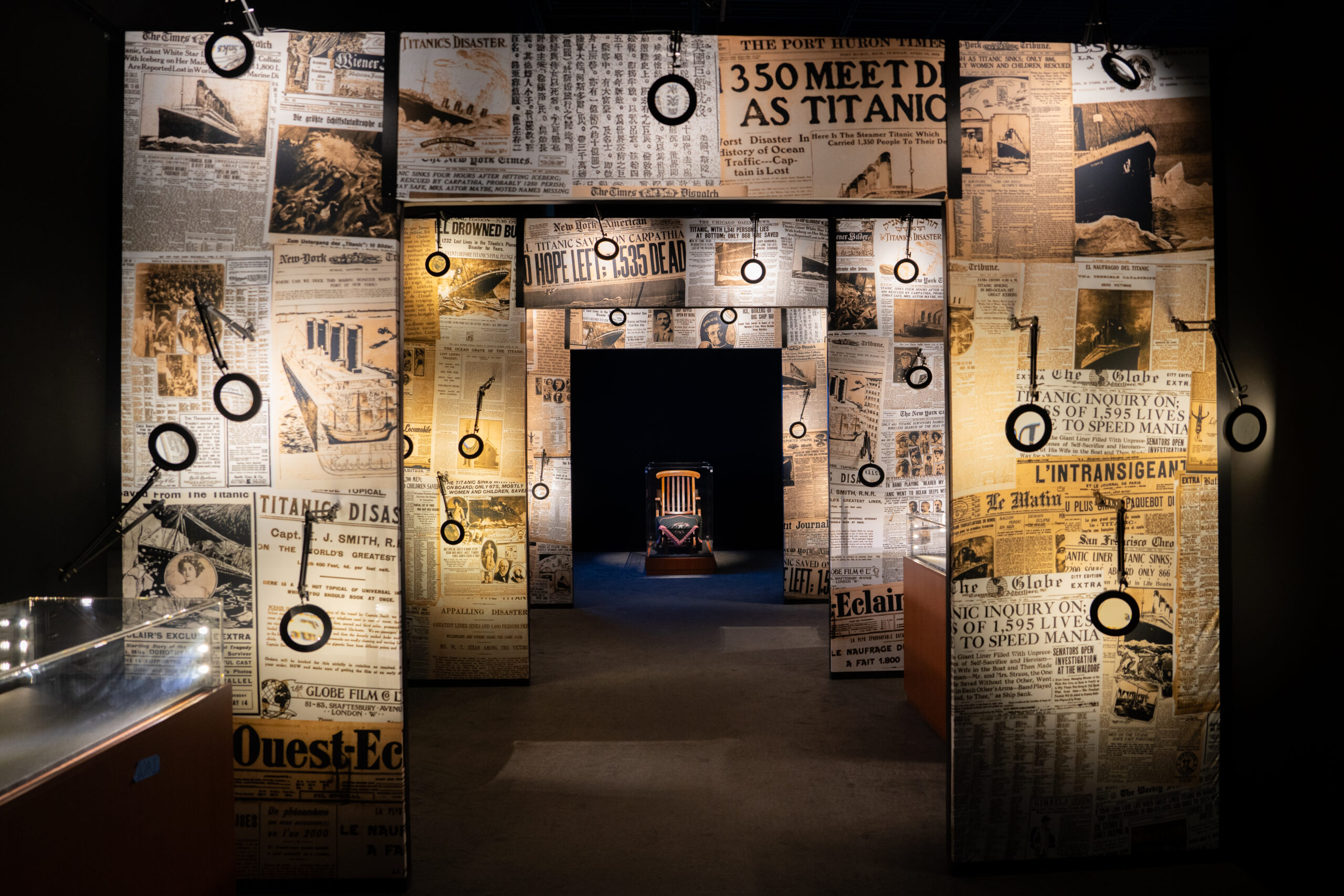
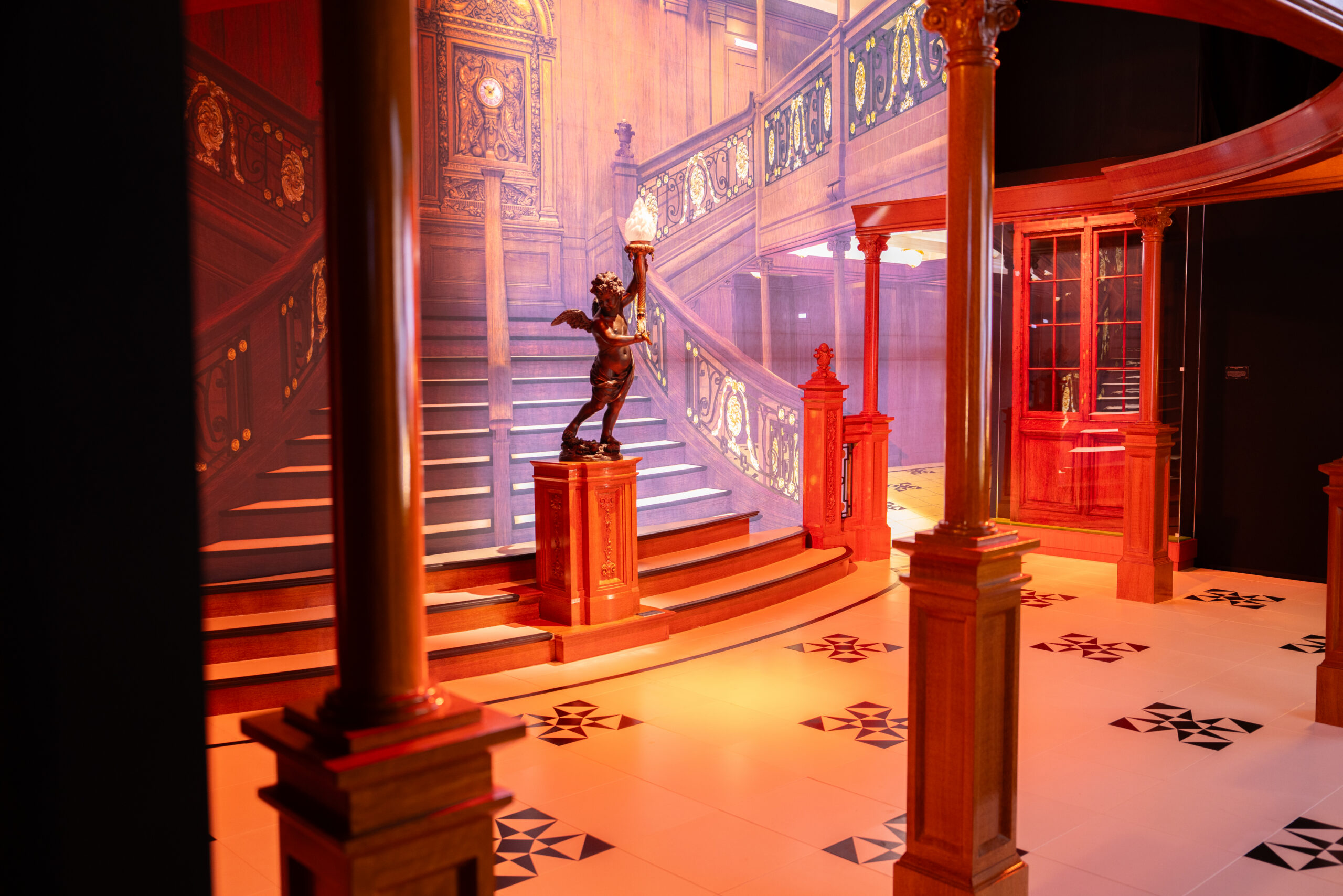
The exhibit is beautifully and thoughtfully put together, with more than 300 artifacts, life-size room recreations, 3D environments, video animations, and immersive galleries that move visitors through the Titanic’s creation, voyage, sinking, and aftermath. There are plenty of familiar touchstones—including a full-scale recreation of the Grand Staircase—but this isn’t simply an opportunity to walk through a real-life version of the movie set.
In fact, the best parts have very little to do with Jack and Rose.
A Ship Full of People
What “Titanic: An Immersive Voyage” does especially well is pull the focus away from the ship itself and toward the people who occupied it. We tend to know Titanic through numbers: more than 2,200 people aboard, roughly 1,500 lives lost. But statistics have a way of creating distance. Here, passengers and crew members become individuals again. They had names and families, jobs, and plans. Many weren’t boarding the most famous ship in history; they were simply going somewhere. That distinction matters.
LaKendra Tookes, host for Exhibition Hub, told Minnesota Monthly that spending time with those stories changed her own perspective on Titanic. “What this exhibition reinforces is that it was never just about a ship—it was about thousands of individual dreams, decisions, and lives,” Tookes says. “Spending time with the passengers’ stories adds an entirely different dimension.”
There are even connections to Minnesota. Some passengers were Scandinavian immigrants headed here to begin new lives, including 19-year-old Norwegian Peter Søholt, who was bound for Minneapolis but did not survive. Anna Kristine Salkjelsvik, 21, was traveling from Norway to join her sister in Proctor; she survived. John Pillsbury Snyder, grandson of the Pillsbury Company founder, and his wife, Nelle, were first-class passengers—and both survived the sinking.
Those are the details that make a 114-year-old story suddenly feel less distant.
Courtesy of Exhibition Hub/Fever
Then There’s the VR
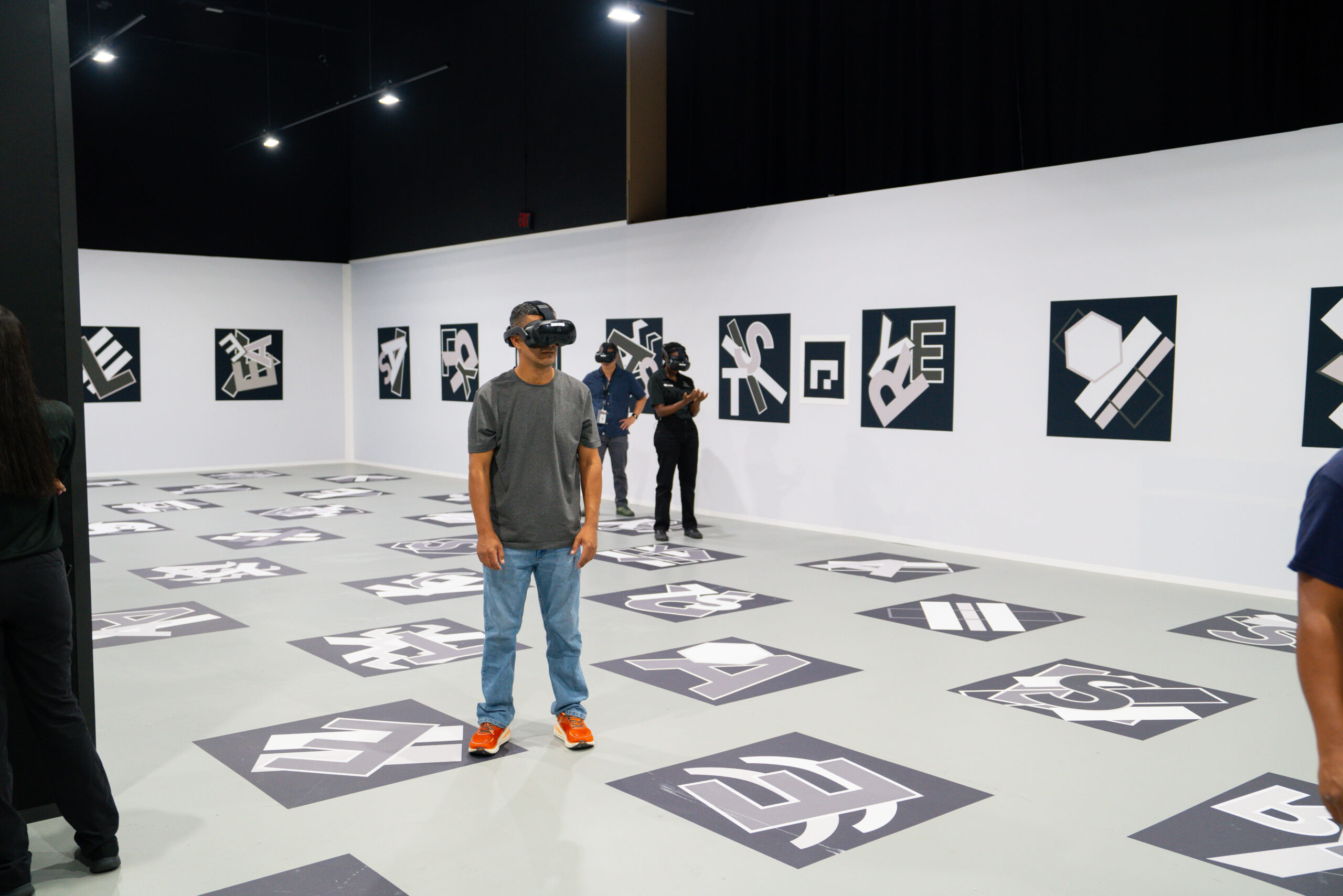
As much as I appreciated the artifacts and storytelling, however, there is one part of the experience my husband and I were still talking about afterward: the virtual reality experience. We waited about 30 minutes to get into the VR area during our Saturday visit. Once we put on the headsets, it became pretty easy to understand both the wait and the rave reviews.
You’re transported aboard a virtual submersible descending more than 2.5 miles beneath the surface of the North Atlantic toward the Titanic wreck site. And then you see it.
Looking up at the wreckage from the ocean floor and navigating around and through the site is eerie, fascinating, and incredibly well executed. There are moments when your brain knows perfectly well that you’re standing in a room in Minneapolis—and moments when it temporarily forgets.
For someone who has seen countless photographs and videos of the wreck, experiencing its scale this way was something entirely different. The technology doesn’t feel tacked on for novelty’s sake. Instead, it gives context to something that is nearly impossible to comprehend from photographs alone.
That balance between spectacle and substance is intentional. “The technology does not replace the history,” Tookes says. “It helps people experience it in a way that feels immediate, memorable, and deeply human.”
Courtesy of Exhibition Hub/Fever
Worth the Voyage
Plan more time than you think you’ll need. The official estimate is about 60 to 90 minutes, but between reading the passenger stories, exploring the recreated spaces, and potentially waiting for VR, Titanic enthusiasts could easily linger longer. And yes, there is a very large gift shop waiting at the end, with plenty of opportunities for fellow Titanic obsessives to leave with a souvenir.
But don’t rush through the quieter parts to get to the technology. Tookes offers similar advice: “Take your time and let yourself become immersed in the stories.” It’s easy to be captivated by the scale and technology, she says, “but the heart of the exhibition is the people.”
The sinking of the Titanic has been retold so many times—and through so many books, films, and documentaries—that it can begin to feel almost like mythology. “Titanic: An Immersive Voyage” succeeds when it strips some of that away.
The ship is impressive. The VR is unquestionably the star of the show. But the people are the reason the story still matters. And more than a century later, they’re the part worth remembering.
“Titanic: An Immersive Voyage” is at 501 Royalston Ave. in Minneapolis. The exhibition runs through November 2026 and is open to all ages, although the VR experience is not recommended for children younger than 6 or people with epilepsy because of strobe lights.