

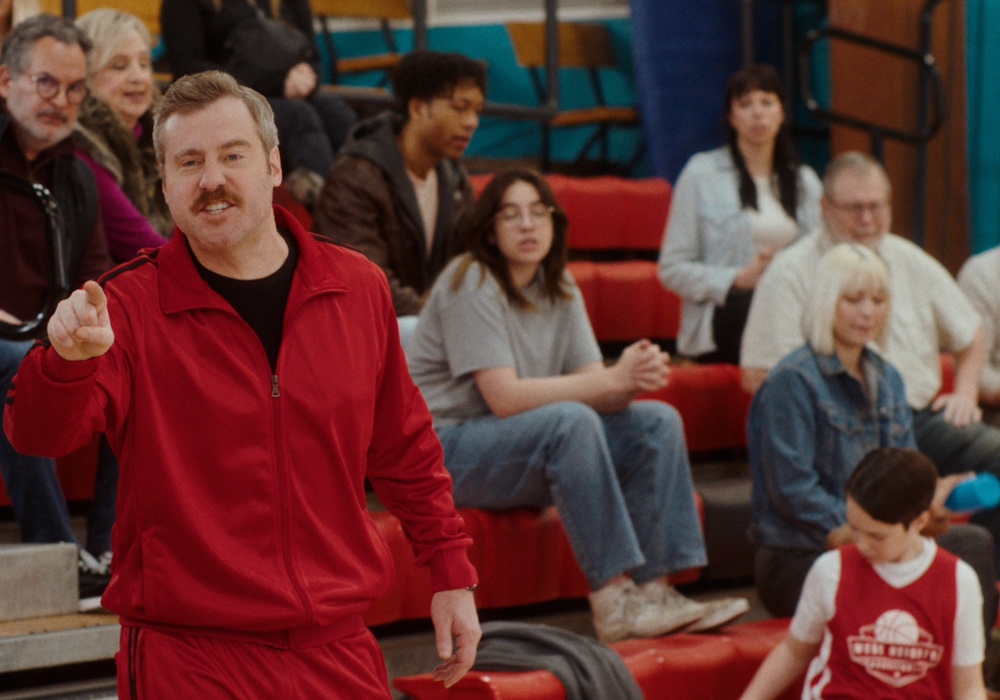
Written and directed by Andrew Jack Zuckerman, a Minnesota native, “Good Sport” is a heartfelt and hilarious feature, capturing the absurdity, chaos, and community of youth sports. The film follows a hungover father navigating his ex-wife’s remarriage while coaching a chaotic youth basketball game. “Good Sport” will have a special theatrical run at the Edina Theatre, featuring daily screenings through August 20 and live post-screening Q&As with the cast and crew. Minnesota Monthly spoke with Zuckerman and actress Sari Lennick to explore the heartfelt humor, local roots, and youth sports that brought this homegrown feature to life.
Jerrod Sumner (JS): In your own words, how would you describe “Good Sport” and the chaotic world Pat navigates on his particularly rough day?
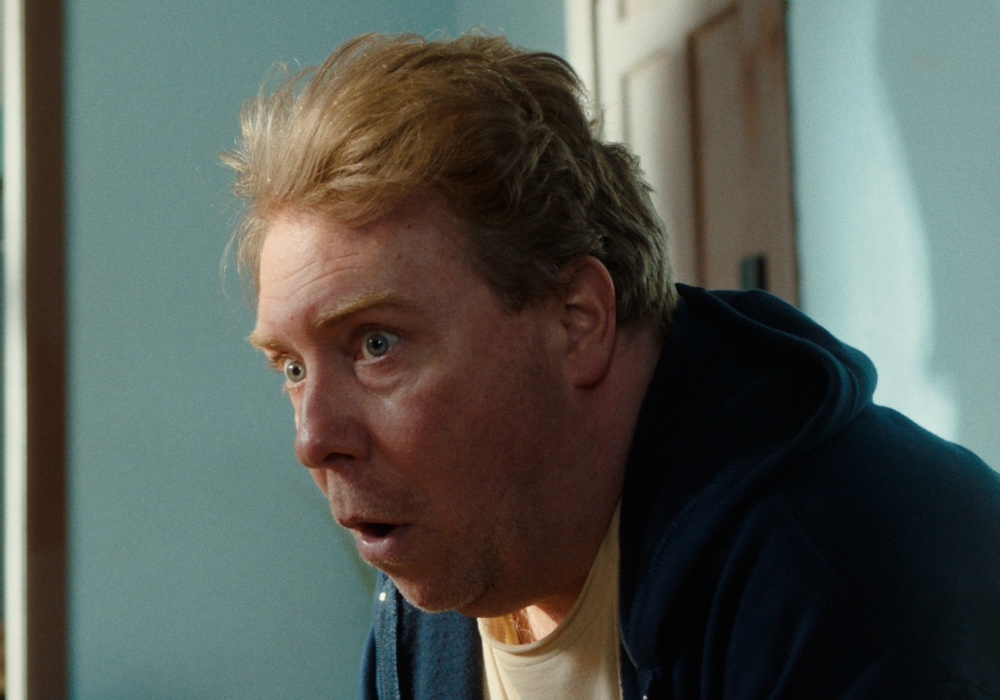
Andrew Jack Zuckerman (AJZ): “Good Sport” is a youth sports comedy very much inspired by “Hoosiers” and “The Mighty Ducks,” alongside early 2000s raunchy comedies. At its heart, it follows Coach Pat as he navigates a chaotic day while his life seems to be falling apart. His ex-wife is getting remarried, and ultimately, he is just trying to reconnect with his son and be a good dad.
JS: Sari, would you tell me a bit about the character you play? How do you balance the raw, messy comedy with genuine heart when capturing the high-stakes absurdity of youth sports?
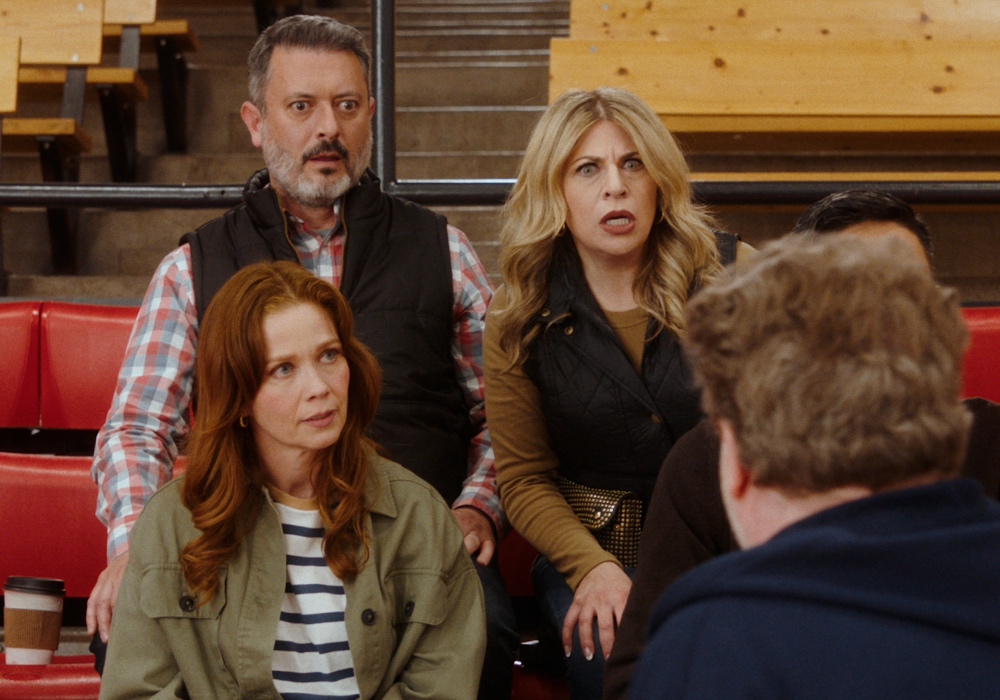
Sari Lennick (SL): Pat is the lead character, and he is coaching his son’s team when all the parents show up to the game. I play one of them, specifically, quite the tiger mom. I am representing all the tiger moms out there. Through the years at my own son’s sporting events, I’ve met many of these parents, both moms and dads. You might have someone you are normally hanging out with, having a normal cup of coffee outside of school, but the moment you get to a basketball game, they lose their minds and act like full-scale lunatics.
You can probably tell my character is intense all day, not just at the sporting event, but you really get a full sense of her tiger mom nature on this particular day. One of the coolest things about our movie is that it takes place in real time over the course of this basketball game. You see all of us, the good, the bad, and the ugly, unfold right alongside our kids’ game. You are right there with us through all the behavior, the shenanigans of the coaches and parents, our interactions with the kids, and how the kids interact with one another. It offers a hilarious glimpse into the absolute madness of youth sports.
JS: Was there a specific real-life moment, a chaotic Saturday morning gym experience, or a particular character study that planted the seed for “Good Sport?” How did the idea evolve from that initial spark into a full-length feature film?
AZ: The spark actually came from wanting to do something low budget, which naturally leads you to a single-location concept. Usually, that entails just two people, but this quickly expanded into an entire game filled with characters, so it didn’t really help our budget constraints.
Before I started writing, I was reflecting back on my own youth sports days. I vividly remember pitching during a baseball game when a mother started screaming at the coach from the stands, yelling, “He’s tired, he’s tired!” I was probably only twelve at the time. I remember standing there thinking, “This is crazy. Why is a grown adult yelling at a child?”
It really shook me, and I desperately wanted to be taken out of the game because I was so shocked and upset. That memory planted the initial seed to make something about youth sports. It is a genuine problem that needs to be discussed. Youth sports should be entirely about the kids, it should be a growth experience where children can have fun and learn. Instead, it has become all about the parents and the immense pressure placed on kids. They are just children. They aren’t heading to the NBA next week. It’s a very topical issue that deserves to be examined.
While there are other youth sports movies out there, we haven’t seen this side of it explored in a truly grounded way. This film really dives headfirst into the pure absurdity of it all. Honestly, it’s not meant to be a strict satire, but at the same time, it’s not all that far from reality.
SL: I don’t think it is either. I based the character on real people I have actually witnessed, including one who literally carries a bag of wine in her purse while screaming at players. It is sadly very, very real. For those of us who have sat on the sidelines as parents at our kids’ games, this is entirely authentic. The emotions of the kids are entirely real, too, and those emotions are only heightened because you have all this insane behavior happening on the sidelines.
What I love about what Andrew did with this movie is that he redeems the characters. Without giving away the ending, even though I behave quite horribly, and I am often used to playing characters who behave horribly, Andrew gives us a reason. You actually get to see why she is the way she is. As an actress who frequently plays over-the-top, often cruel characters, I never consider them cruel when I am defending them and playing them; I always have to figure out for myself why they are the way they are. What is so wonderful and magical about this script is that Andrew defended her. He gave her a reason to be the way she is. You get to see the heart behind all these people and understand why this mess happened the way it did.
JS: Working within an authentic, locally produced environment brings a special kind of chemistry to a set. How did collaborating with Andrew and the rest of the cast help you tap into the specific humor and emotional truth of your character?
SL: Making this movie was the most fun because, first of all, we got to work with all these kids, so it felt like one big family. All their parents were there on set, which meant we quickly became friends with them, too. We had this wonderful little group of actors, and every single night we would go back to the bar by the Mall of America to have drinks. It turned into this massive, growing table of people involved with the movie, and we would sit and talk for hours before starting the whole thing over again early the next morning.
Because the film takes place over the course of a single day, we wore the exact same costumes for all fourteen days of shooting. It was the ultimate Groundhog Day experience—you couldn’t even remember what happened on any specific day. It felt like being at the best never-ending summer camp, only it just didn’t stop for two weeks.
Later on, we came back to do some pickups and shoot all the sequences with the kids playing basketball. We had to wait for the local middle school to finish out their school year before we could use their gym. Coming back together for that was incredible. Imagine the best party you’ve ever been to, and someone looks at you and says, “We’re going to do it all over again with the same music and the same people, only this time you get a nap.” You’re wearing the same clothes and saying the same words, but you wouldn’t change a thing.
Some movies can feel like a real slog, some are just fine, and others leave you saying, “Holy moly, do you remember that time?” This was definitely the latter. We still all text about it today. We grew so close to the kids and to each other, and what Andrew managed to pull off in just fourteen days is pretty extraordinary. It is a wonderfully complete, hilarious, and delightful movie. When we premiered at the Minneapolis-Saint Paul International Film Festival, our family and friends were completely blown away. Fourteen days of shooting under pressure yielded something truly special, and we are all so proud of it.
JS: Tell me what the takeaway is. How do we want people to feel when they see your film? What’s that one moment you can’t wait for the audience to experience?
AJZ: There is something truly special about the ending. What I tried to replicate when writing this was the conventional structure of traditional sports movies. Usually, you recognize the familiar beats, you have the underdogs who make a comeback at the end, and you know how the formula goes. But standard sports movies typically take place over the course of an entire season, whereas I wanted to compress that emotional arc into the span of a single game.
I don’t want to give anything away, but I just love the way it concludes. Mostly, it’s because the ending features this big montage where we really let the kids play. We get to watch the actual game unfold and experience it genuinely. During production, there was something so fun about letting the kids play for fifteen straight minutes while we captured a real-time game with two cameras on the sidelines. Even as the editor, cutting that sequence together was so much fun because it feels completely authentic. The whole thing is real. The ending is exciting, it’s very funny, and that’s when everything truly comes together.
SL: I completely agree. You are building up tension the entire time because you desperately want to know how everything resolves, not just the outcome of the game, but the personal conflicts of these people. Since it takes place in real time during a basketball game, that tension builds right up until the final whistle, leading into this wonderful explosion of everything that has led up to it.
JS: Independent filmmaking comes with its fair share of compromises and resource constraints. Looking back on the journey of bringing “Good Sport” to the screen, what has been the most valuable lesson you have learned about staying relentlessly true to your artistic voice when the odds are stacked against you?
AJZ: It goes back to when we first wrote it. Pitching this movie sounded completely insane on paper: you have twelve kids and a real-time basketball game. Most people would look at that and say it simply isn’t going to work. But shooting here in Minnesota made me feel completely comfortable. I just trusted that it would happen, that it would work, and that we would find the right cast.
Our biggest hurdle was figuring out how we were going to find twelve kids to play this game while fully fleshing out the characters we needed. We held massive open auditions, and it felt like every boy aged ten to thirteen in the Twin Cities came out. We ended up finding this extraordinary group of boys. Once we found them, I knew this movie was going to work. The kids were incredibly professional and wonderful to work with, I honestly couldn’t have asked for a better group, and they truly made this movie happen.
Shooting locally in Minnesota was a game-changer. Our producer, Dylan Orth, actually went to the middle school we filmed in. Because of those local connections, we were able to secure the school for a very reasonable budget. If we had tried to shoot this in Los Angeles, for example, closing down a school for production would have been prohibitively expensive. So many practical elements just fell into place and worked in our favor by shooting right here in Minnesota.
JS: “Good Sport” was written, directed, and filmed entirely within the state using local talent. In what ways does Minnesota’s unique culture, sense of humor, and community vibe actively bleed into your characters and the way you choose to make movies?
AJZ: For me, youth sports are just so massive here. It was a huge part of my growing up; I was in four different sports in middle school, playing basketball and baseball and everything in between, and so were all my friends. That was simply the rhythm of life here. That environment is really why this movie came to be, just from being deeply involved in that community and observing the parents and the kids firsthand.
SL: Coming back to the filmmaking side of things, there is this incredible, fiercely talented, and passionate independent film community here. I genuinely believe that part of that stems from the Coen brothers, who gave everyone here the belief that it can actually happen, that you can make your own movies on your own terms. That mindset is uniquely Minnesota.
As a transplant, I also credit Minnesota as the place where all my dreams came true. I know that might sound silly, but I have said it so many times. I grew up in Miami, went to college in Los Angeles, and attended grad school in New York. Whenever I go back to speak to the students at my old grad school every couple of years, I always tell them: you never know where it is going to happen, where things are going to click, or where your path will take hold. I moved to Minnesota, and all my dreams came true. I credit this state as the place where I learned my craft. I became a film actress here in a role I would have never even secured an interview for in L.A. or New York, just like I would have never had the opportunity to audition for the Coen brothers nineteen years ago if I were still in either of those cities. It happened here because, at that point in my career, those doors wouldn’t have been open to me elsewhere. I became a mom here, I became a yogi here, and I started making art here. I credit Minnesota with having the resources, the talent, the community, and the safety to allow me to try everything, things I don’t know I ever would have dared to try in any other place I’ve lived.
AJZ: I completely agree. I feel very safe shooting a movie here, though that might just be because I grew up here and know the terrain. There is something wonderful about being able to drive just five minutes to wherever I need to shoot a scene. Whenever I write scripts, I am constantly picturing real locations right here in this state. It feels comfortable and secure. Plus, people are exceptionally enthusiastic about movies being shot here and are always willing to help. Honestly, there are so many things we were able to pull off just because we were shooting right here in Minnesota.