

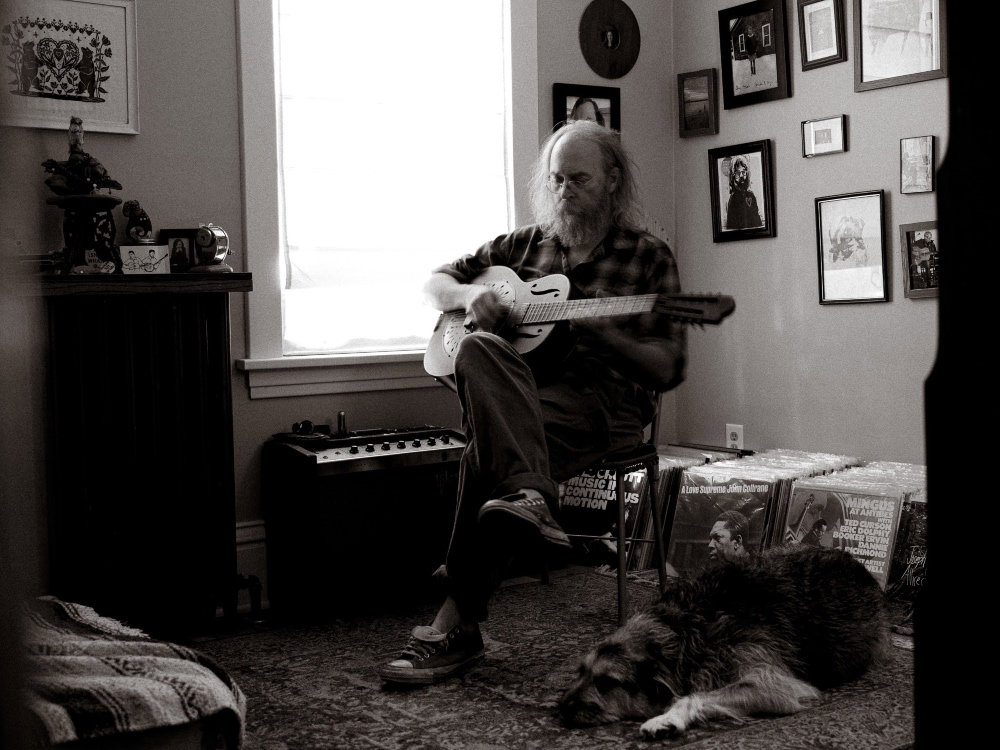
Photo by Shelly Mosman
When Minnesotan Musician Charlie Parr thinks about the state of the world today, he thinks of the Great Depression and claustrophobia. He thinks about the tiny, helpless, and meaningless things we all do every day.
But he also thinks of empathy, love, and “neighboring.” He says that, back when he was growing up in Austin, Minnesota, his mother used the word “neighbor” like a verb. “She’d say, ‘We’re neighboring down the street.’ Meaning, you know, ‘I went down the street to have coffee with so-and-so,’” Parr says.
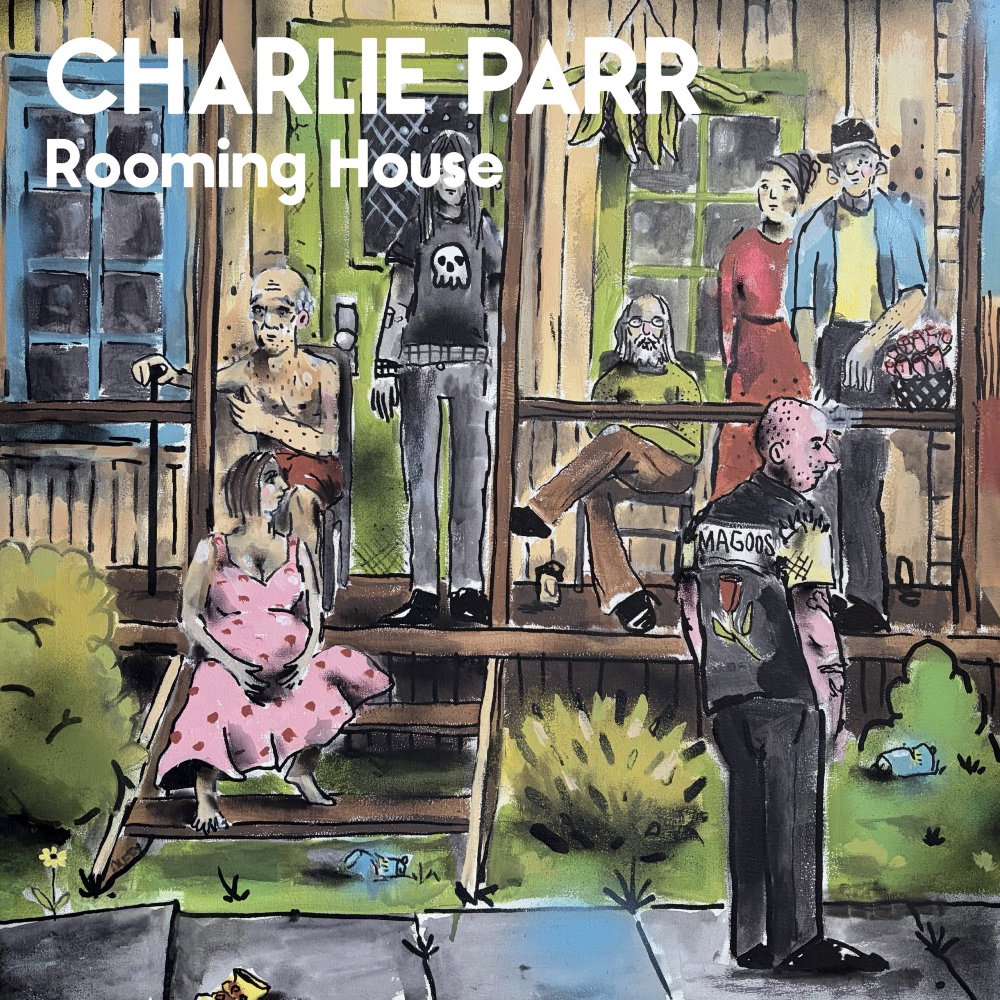
Later in her life, Parr’s mother was diagnosed with Parkinson’s. She was living with Parr’s sister, and she often lamented that lost community—the lack of neighboring. These are the themes Parr tackles in his newest album, “Rooming House,” releasing on Oct. 16.
“There’s an amazing kind of sense of community when you have to share a kitchen and share bathrooms and common spaces with people who are initially strangers,” Parr says. The eponymous song of the album is a misty, nostalgic tune about living in a rooming house, preparing fish with the other people living there and getting food poisoning from it. It almost makes you wish you were there, curled up on the kitchen floor sick from some fish, knowing everyone else feels exactly the way you do.
Parr’s parents were born in the 1920s and lived through the Great Depression and the Dust Bowl. He says that he remembers his parents would leave the glassware upside down in the cabinets long after the Dust Bowl out of habit; if you left them right-side-up back then, they’d be full of dust and sand when you went to grab one. Parr says that, growing up, the Dust Bowl was “this kind of constant companion in the room,” and that he learned about the Great Depression before most other major historical events because his parents’ formative years were heavily influenced by it.
Though the Great Depression and the Dust Bowl have long since passed, there is no shortage of struggle and hardship today. Much of the album is about the material struggles of people just trying to get by today. He wrote in a reflection accompanying the album that the Great Depression feels claustrophobic to him because of his mother’s stories.
The album’s name comes from Parr’s time living in rooming houses in Minneapolis in his late teens and early twenties and the community he found there. To his recollection, Parr moved to Minneapolis in ’82 or ’83 to a rooming house behind the Mixed Blood Theatre. He lived in rooming houses until he got married and moved into an apartment with his wife.
Songs like “(what’s so funny about) Universal Healthcare” and “Bank Robber” are based off of Parr’s experience as an outreach worker in Hennepin County during this time. He provided sleeping bags, clean socks, stocking caps, food, and other essentials to people sleeping on the street, an experience that left a profound impact on his life. “We live in such a wealthy, technologically advanced country, and it’s apparently okay to let people live outside and be hungry and be sick and not try to offer, you know, the basic kinds of care to people,” he says. This album, Parr’s outreach work, and much of his personal philosophy, it seems, are focused around this idea of caring for people.
Parr, who himself has been diagnosed with clinical depression, says there are things people are struggling with that, as he writes in his reflection, you can’t point to on your body. “People make assumptions about the state of your health based on the fact that you’re, you know, ambulatory—You’re walking around, you’re doing okay—without taking the time to find out,” Parr says. “That’s where, sometimes, the whole thing breaks down because people don’t have the patience sometimes to sit down and listen to people when they’re suffering.”
He met people who would intentionally get sent to jail so there, at the very least, they would be warm and could see a doctor. This is confronted in “(what’s so funny about) Universal Healthcare” when our singer says, “Well, one thing has led to another, and I know I should get to a doctor, but I ain’t got a dime, and they ain’t got the time,” later singing, “So I pack a bag with all of my things. I wrote a note for the bank down the street that says, ‘Give me a buck and call the cops.’” Parr is self-admittedly a lyric-heavy songwriter, “(what’s so funny about) Universal Healthcare” being a shining example, and this album, which he recorded last winter, started out as a short story. As the story got longer and more complex, he decided to turn it into an album. He still plans to finish the story, which shares the name of the album, and self-publish it as a short novel. Parr wrote the album “The Last of the Better Days Ahead” in a similar fashion, releasing a book of the same name.
In the reflection Parr wrote to accompany the album, he ends the five-pages of prose with “There is only one thing. Is that naïve? I don’t care. There is only one thing.”
What is that one thing? Well, perhaps predictably, that one thing is love.
“I’m not a physicist, but I think, you know, everything is basically compiled of the same things; it just manifests itself in different ways. You know, atoms and molecules and all that kind of stuff. I think that’s probably how it is. I don’t know for sure. But, you know, as I’m writing the record and I’m thinking about ideas like that. In the record, the thing that binds everybody else together, the thing that always is there is love,” Parr says.
Parr also mentions how small and insignificant his album is in the grand scheme of things in his reflections, as well as most things people do day to day. However, he paradoxically finds great meaning in these tiny, insignificant things. It’s really all we’ve got.
“You can go through your whole life thinking that, you know, something big and earth shattering is going to be something that you’ll come across at some point, and it’s going to be incredibly important, but I don’t know if that’s actually the way that life is. I haven’t seen that yet myself, anyway,” Parr says. “It seems to me now, especially at 60 years old, that it’s these small, little, tiny things that I need to pay attention to and appreciate in order to find meaning in life, and it’s not gonna be some giant epiphany.”
Parr will be performing his new album on Oct. 15 at Electric Fetus in Minneapolis. He also has a show at the State Theatre on Oct. 30.