

On a Thursday afternoon at Amore Coffee in West St. Paul, the line was about six deep. A woman near the front turned and smiled when someone at the back of the line called her name and waved. Another woman piped up and said, “That’s the kind of place this is. You always know somebody.”
That’s the shorthand definition of a “third place”—somewhere that’s familiar and comfortable, a place where community thrives and where it’s not at all unusual to know somebody. (If this reminds you of the sitcom “Cheers,” it’s true that the fictional Boston bar was the perfect example of a third place.)
The late urban sociologist Ray Oldenburg, who received a Ph.D. from the University of Minnesota, first coined the phrase. Oldenburg defined a third place as “social surroundings that are separate from the two usual social environments of home (the ‘first place’) and work (the ‘second place’).”
“Third places are anchors of community life, facilitating and fostering broader and more creative interactions with others,” he wrote in his book, “The Great Good Place,” published in 1989. In Oldenburg’s view, third places are crucial for healthy social engagement.
Nate Storring is the co-executive director of the Project for Public Spaces, a national organization that advocates for “placemaking” and community. Storring says suburbanization had a negative impact on third places in the mid-20th century. “It’s zoning that separates our homes, our workplaces, and our downtowns. It’s highway construction after World War II. These places have to be easy to get to, especially on foot, and when we can’t walk to places easily, they really decline. Even today, a lot of suburban communities don’t allow storefronts and commercial uses. We’re still living with that legacy.”
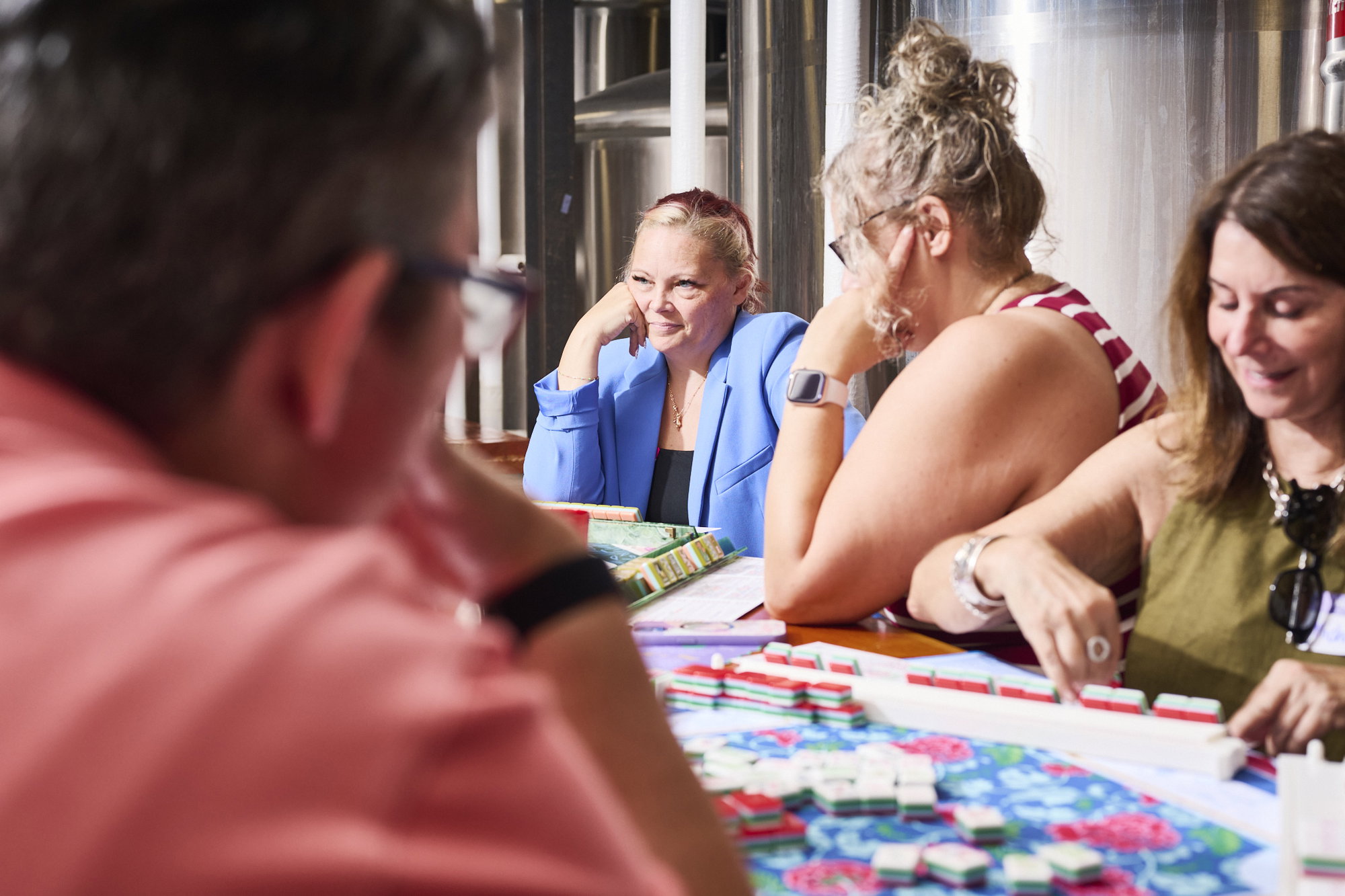
Photo by John Haynes
Today’s Main Street
Oldenburg embraced the idea of “main street” and its public places (diners, bars, etc.) as the ideal “anchor for community life.” In Sauk Centre, Minnesota, birthplace of the original “Main Street” (a novel that hometown author and Pulitzer Prize winner Sinclair Lewis published in 1920) Babbitt’s Wine Bar—named for another Lewis book—has become a popular third place.
Owner Allison Schelitzche’s motto for Babbitt’s is, “It’s a place to connect with yourself, your friends, and your community.”
The space itself, located on Oak Street, has a long tradition of being a third place in Sauk Centre. “In the 1950s, it was called John’s Place. They served breakfast, lunch, and roast beef sandwiches for 25 cents,” says Schelitzche, who, along with her husband, launched Babbitt’s in July 2022. “I have people all the time who tell me that their parents or grandparents would give them a quarter to go up to John’s Place for a sandwich.”
Babbitt’s serves wine, bourbon, local beers and ciders, and small plates in an atmosphere decorated with books and memorabilia that give a nod to Lewis; it’s a comfortable and welcoming space with high-tops, tables, and plenty of room at the bar.
“I have a group of dance moms who come in every Wednesday for a glass of wine while their kids are taking class in the studio kitty-corner from here,” says Schelitzche. “I have book clubs, people who are planning baby showers, Bible studies, and young couples here for date night.”
The collegial atmosphere at Babbitt’s, which recently received a Best Small Business Award from the Sauk Centre Chamber of Commerce, also provides another essential element for a third place—it’s somewhere people can come in solo and not feel conspicuous or awkward.
“People feel comfortable here. They can sit by themselves, and no one will bother them, but they are still out and engaged in the community,” Shelitzche says. “One of my regular customers is 92—she tells me, ‘I just love it here. I can come in and sit by myself and no one minds.’”
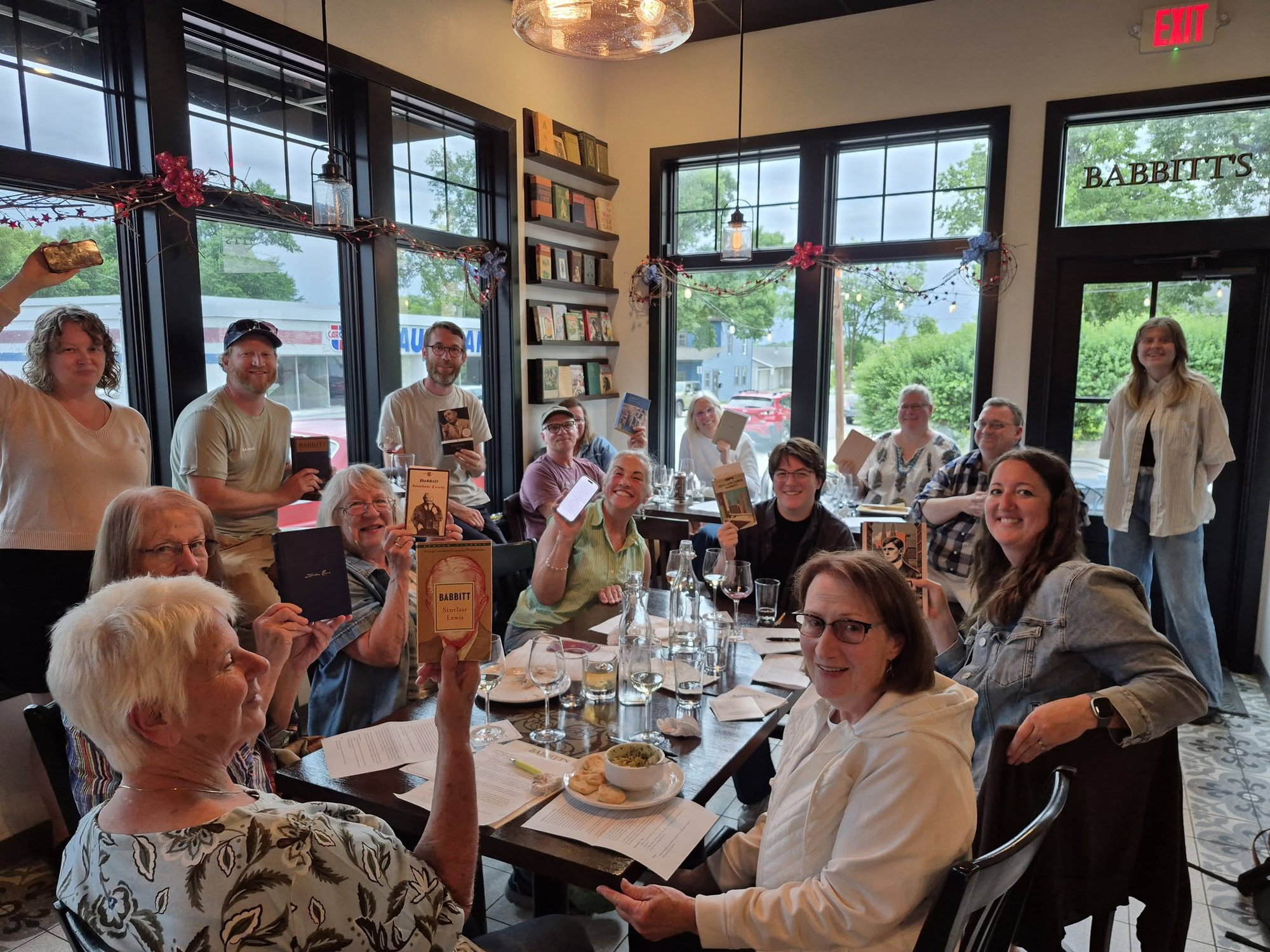
Courtesy of Babbitt's Wine Bar
‘Such a Need for Community Places Like Ours’
At Amore Coffee, owner Tara Wright says many of her regular customers are solo agers—enough, in fact, that she keeps Amore open on holidays since many of them “have no place else to go.”
Creating a thriving intergenerational community has always been part of Wright’s mission “to make the world a little better.” On an afternoon visit to Amore, there were several high school students, in groups or alone, sitting at the eclectic tables. Across the room, a group of older women were having a lively conversation, one of them knitting.
“There is such a need for community places like ours, where people can talk to another human and have a connection,” Wright says.
Wright has owned the coffee shop for seven years, and she worked there for five years before that. In addition to her loyal staff, many of whom have been with her for a long time, Wright relies on what she calls “my unofficial board of directors”—a group of 20 “elders” who are regular customers—to serve as a sounding board. “If I’m having problems with something, I can speak freely to them,” she says.
During the school year, Wright has also relied on her older clientele to help younger people in the community with their schoolwork. Amore hosts “Homework Help” on Sunday afternoons from 4 to 6 p.m., where everyone from elementary students to Ph.D. candidates have come in and received one-on-one attention from retired teachers and professors.
Wanting to help students succeed is a personal cause for Wright. “I didn’t have a great high school experience,” she says. “I know there’s a gap for some students like I was, so I had the resources to bridge that gap.”
Amore has become a supportive resource in other ways. A weekly AA meeting takes place in a large back room; the shop hosts “Mindful Mondays” for customers to come in and learn techniques to help them be more present in their daily lives; and the walls feature the work of local artists, all available for sale. Local musicians perform on Saturday night from 4 to 6 p.m., and old-time folk music is featured on Sunday mornings from 9 a.m. to noon.
And this past January, following the killings of Renee Good and Alex Pretti, Amore, located on the corner of Smith and Annapolis, drew 100 residents from the neighborhood for a candlelight vigil that wrapped around the outside of the coffee shop.
“People needed to be together,” says Wright.
In Your Neighborhood
Dr. Michelle Pasco, an assistant professor in the department of family social science at the College of Education and Human Development at the University of Minnesota, studies neighborhoods, which are third places in the broad sense.
“Neighborhoods are where people find a sense of belonging,” says Pasco, who lives in Northeast Minneapolis. “And when people know their neighborhoods, when they visit places like coffee shops, markets, and restaurants, they also feel more known. They feel safer. They can navigate independently.”
During a recent research project, Pasco showed a group of residents of South Minneapolis pictures that were taken of the community in the aftermath of the killing of George Floyd in May 2020. Many of the photos showed businesses that were boarded up or tagged with graffiti. “Because these residents were familiar with the area, when asked if these images made them feel unsafe, they said no,” Pasco says.
‘A Really Beautiful Community’
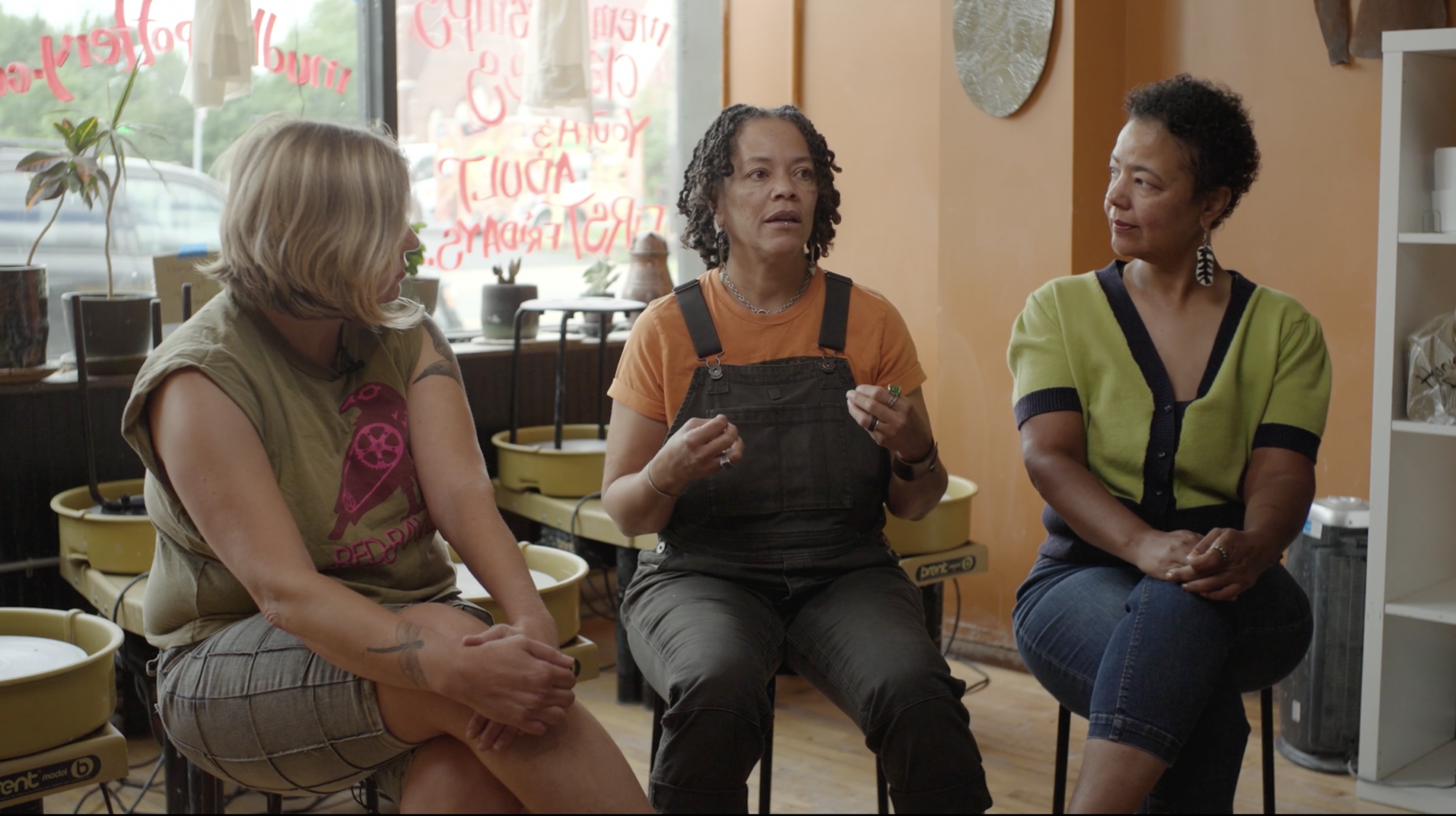
Mudluk Pottery on Bloomington Avenue in Minneapolis, just off Lake Street, is a place where everyone from beginners to more experienced artists can hone their craft and find their “people.” Sayge Carroll, a potter, opened Mudluk—which is described on their website as Black-, queer-, and woman-owned—in June 2023 with Katrina Knutson and Keegan Xavi.
“Clay people are pretty awesome,” says Carroll. “They are used to working with whatever they have.” Carroll definitely considers Mudluk a third place, intent on welcoming new people all the time.
Mudluk offers ample opportunities for creativity during First Fridays at 6 p.m. Not only can participants “dip their toes” into working with clay, Carroll says, but they can also join a community meal (a recent evening featured chili). Other features of First Fridays (which cost $20 with proceeds going to a Mudluk scholarship fund) include tarot card readings and an acupuncture therapist who offers “ear seeds,” placed on the outside of the ear to manage pain and stress.
Courtesy of Mudluk Pottery
“Anyone can feel invited to be part of what we do here. You get to be yourself. You don’t need to pull it together,” Carroll says. “Working with clay calms the nervous system. A lot of people do clay as a form of therapy for themselves. It’s a time to create and just be present. You can’t doomscroll with clay in your hands.”
The bright storefront space has a few comfortable chairs in addition to several pottery wheels, shelves, a long table, and supplies like clay and glazes. Classes and workshops are also offered.
The atmosphere is multigenerational—Carroll says regular participants range in age from their 20s to 60s and beyond. They offer a monthly membership option—members can come in and use the equipment whenever Mudluk is open, without restrictions, and receive discounts on firing and glazes (clay is an additional cost). All artists have the opportunity to display their work.
Additionally, Mudluk offers classes for adults with disabilities and hosts other inclusive community gatherings. “We have ‘Clay and Conflict’ sessions on Sundays,” says Carroll, describing a recent meeting of people who had survived boarding schools and could talk with others in a safe space. “When you work with clay, you are keeping busy, but at the same time, it can be transformative—what you make with clay can hold your feelings.”
Not only do participants say Mudluk is an essential place of community, but those who work there do, too. “Everyone who started with us at the beginning—at that time, all were volunteers—are still here,” Carroll says. “We are a chosen family.”
Finding Your People
Urban sociologist Oldenburg included breweries as part of his examination of the third place in his 1989 book—the German beer garden in 19th-century America, the English pub, and the American tavern. Suffice it to say, breweries have taken off in a big way, across the country and throughout Minnesota, and for many people, they’ve become that third place, whether for sampling, socializing, or participating in activities.
Lakeville Brewing Co. is family friendly, offering a kids’ menu, games, and lawn space. Wooden Ship Brewing Co. in Minneapolis hosts everything from live music to fashion pop-ups—even blood drives.
Mahjong Meet Ups
Claire Joseph, one of the founders of the Saint City Mahjong Club, says breweries are an ideal meeting spot for the thriving organization she runs with Kathryn Short and Tara Duginske.
“Breweries tend to be highly inclusive and welcoming and tend to be great places to represent the community as a whole,” she says.
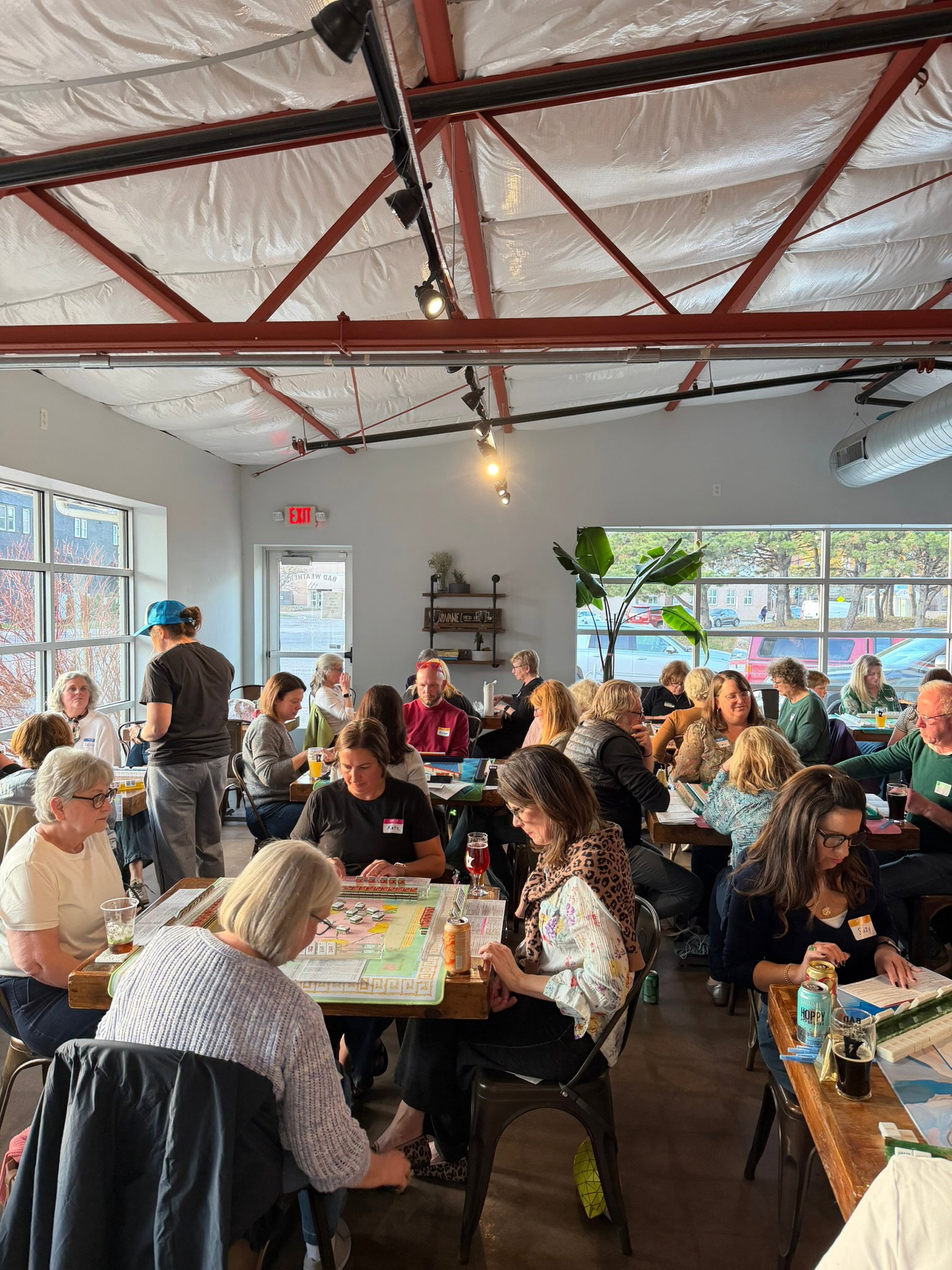
The Saint City Mahjong Club, which launched in July 2025, maintains an active calendar for this old-school game at breweries including Dangerous Man, Barrel Theory Brewing (starting in November), Dual Citizen, Wandering Leaf, and Bad Weather, all in St. Paul, and at Minneapolis Cider Co. (They also offer occasional daytime sessions at Larissa Loden Jewelry in St. Paul.)
According to Joseph, another plus for breweries is space. “We typically have anywhere from four [people] to eight or nine at a table, and they have that available space,” she says. “And the game play usually lasts two and a half hours. So, it’s really ideal because breweries are cool with people hanging out.”
Courtesy of Saint City Mahjong Club
Not only do breweries offer that third place, but in the case of something like mahjong, it’s a chance for people to find others as curious (or as passionate) about the game as they are. Saint City hosts open play options for those with experience as well as instructional sessions. And when asked about the growing popularity of mahjong among all ages (players at Saint City events range from 20s to 60s and beyond), Joseph says some credit belongs to the film “Crazy Rich Asians.”
“In that film, the game just looked cool. When mahjong first started in the U.S., in the 1920s and 30s, it was popular with older Jewish women in Upstate New York. The games were social events,” she says, adding that the National Mahjong League was formalized in 1937. “During Covid, when people were feeling lonely and longing for community—that’s when women in their 40s and 50s started playing, creating their own tiles, and the game really started to take off.” (Trend setter Joanna Gaines is a fan.)
As is a hallmark of a successful third place, Joseph says individuals feel empowered to attend a game night solo. “I’ve seen people come in on their own and sit at a table of four—by the end of the night, they are exchanging contact information,” she says. “People are really longing for community. They are also looking for ways to get off their phones and make real connections. Make eye contact.” She echoes Carroll when she says, “You can’t doomscroll while you’re playing.”
The Importance of IRL Connections
The impact of social media on real-time connections can’t be underestimated. Dr. Richard Kyte is the director of the D. B. Reinhart Institute for Ethics in Leadership at Viterbo University in La Crosse, Wisconsin. He’s also the author of “Finding Your Third Place—Building Happier Communities (and Making Great Friends Along the Way)” and an expert on the topic of third places. As Kyte says, “We’re becoming more stressed and more depressed the more time we spend online. And it also leaves less time for us to socialize.”
It’s the good feelings produced by “IRL” (in real life) connections, as Carroll and Joseph suggest, that nurture us and help us keep our friendships thriving. And when it comes to the topic of friendship, Kyte shares a sobering statistic. “Research shows that it takes 200 hours spent with another person to consider them a close friend. In 1990, one third of Americans said they had at least 10 people in their lives [whom] they would consider close friends,” he says. “Today, only 10% say they have close friends.”
Kyte believes that society might be approaching a turning point when it comes to the importance of social relationships. “People are waking up to the traps we’re falling into with our digital devices. All of our technology pushes us toward individual lives, but I think there is a movement where we’re inventing new ways of gathering and interacting,” he says, mentioning pickleball as a prime example, appealing to all ages.
Kyte mentions two new emerging third places he’s been hearing about. The first is thrift stores. “I’ve had young people mention to me that some thrift stores have become hangouts—they have favorite spots that they return to,” he says. “Thrift stores have also become a popular place to take a first date. They are inexpensive, you don’t need money to pay for a meal, and there are plenty of things to talk about.”
Another third place is farmers markets. “I’ve talked to people who say they regularly go to farmers markets on Saturday mornings because they like to be around people,” he says. Healthy produce, fresh air, places to sit and chat, as well as music or other forms of entertainment also add to the experience.
‘Friends We Haven’t Met’
Ten years after the publication of Oldenburg’s book on third places, he published a second book, featuring the real-life stories of small business owners and others from across the country about their third places: “Celebrating the Great Good Place: Inspiring Stories About the ‘Great Good Places’ at the Heart of Our Communities.”
In the book’s introduction, Oldenburg wrote, “We are an open mixing place for the general public, but we are strongly committed to bringing together people who may not normally spend time together in the hope that they will become friends, seeking deeper relationships with each other and with the community. A sign I once saw in an old café window proclaimed, ‘There are no strangers here, just friends who haven’t met,’ and that pretty much captures what we’re about.”
Nate Storring of the Project for Public Spaces says he’s “cautiously optimistic” about the future of third places. “There’s a growing awareness among all sorts of people that we don’t all have access to these places, and they play a really important role. Something’s missing, and people want to change that.” He adds, “We have been getting so much interest in this.”
More Third Places
Museums
Museums are great third place options for solo art lovers and families alike.
-
Minneapolis Institute of Art (Mia)
This free museum offers classes and tours and is open until 9 p.m. on Thursdays, spotlighting their Meet at Mia series, which features live music, special programming, and opportunities to make art. -
Walker Art Center
The Walker is also free on Thursday nights from 5 to 9 p.m. with programming, film screenings, and more. For families, Free First Saturdays offer drop-in art activities.
Coffee Shops
Many neighborhoods in urban, suburban, and rural areas alike have coffee shops where people regularly gather.
-
Lost Fox
Located in Lowertown, this is a popular spot with community residents and Lowertown workers. It’s a cozy and comfortable vibe—a shelf near the entrance is stacked with games. Lost Fox serves coffee, brunch, lunch and dinner and also features a happy hour. -
Bob’s Java Hut
For more than 30 years, Bob’s Java Hut has been creating a community in Lyn-Lake. Founder Bob started the shop as a place for people to go who wanted to stay sober—many were motorcyclists who had faced harassment at other coffee shops for taking up parking spots.
Community Centers
Community centers frequently offer multi-generational programming, as well as places to connect over common interests.
-
Sabathani Community Center
Located in south Minneapolis, Sabathani, one of Minnesota’s oldest African American-founded nonprofits, is a multi-service organization that meets the needs of local residents with a food distribution center, a clothing closet, job preparation, wellness education and housing information. They also host groups for older adults—a card club, the Vintage Voices choir, exercise programs (like chair yoga) and more. There is also programming for young people at Sabathani including Open Gym and Game Nights and the S.T.A.R. Program (Skills, Training and Readiness Program). -
Plymouth Community Center
An indoor playground, fitness center, and art gallery are just some of what’s available at the Plymouth Community Center. There is also programming dedicated to older adults—bridge, writers’ groups, a caregivers’ support group, and even a ukulele club. Plymouth Community Center also has a Sensory Inclusive room—a quieter environment with calming amenities for people with autism, dementia or PTSD.
Libraries
Libraries have always been gathering places for communities. With programs for all ages, study space, meeting rooms and more, they have always had a third place vibe. Check these websites for information about libraries in your community.