


Courtesy of Netflix
Long before it became a bestselling book series or a beloved television show, Laura Ingalls Wilder’s life in Walnut Grove helped shape one of the most enduring portrayals of the American Midwest. The banks of Plum Creek, the open prairie, the hard seasons and small joys—they’re not imagined places. They’re here.
Now, that story is being reintroduced for a new generation. Netflix has released the first teaser for its upcoming reimagining of “Little House on the Prairie,” set to premiere July 9. The series leans into what has always made the story resonate: the tension between hardship and hope, and the quiet resilience of a family building a life from the ground up.
At the center is Laura herself, played by Alice Halsey—observant, strong-willed, and deeply curious, a girl who questions the world around her while quietly collecting the stories she’ll one day tell. Around her, the familiar foundation remains: Charles, portrayed by Luke Bracey, the optimistic, restless father always searching for something better; Caroline, played by Crosby Fitzgerald, the steady force holding the family together with quiet strength; and Mary, brought to life by Skywalker Hughes, whose rule-following nature stands in contrast to Laura’s independence.
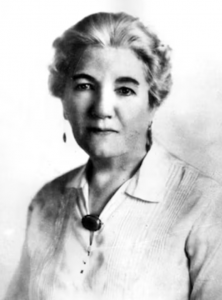
Courtesy of littlehousebooks.com
But for Minnesota, this isn’t just nostalgia. It’s a return to a story that feels deeply rooted in place. Wilder’s years in Walnut Grove were among the most formative of her childhood, marked by both struggle and survival—from devastating grasshopper swarms to the daily work of building a life on the prairie. That balance is what made her writing feel so honest, and it’s what the new series appears to be chasing: not just the romance of pioneer life, but its reality.
There’s also something timely about revisiting this story now. In an era defined by constant noise and acceleration, Little House offers a different rhythm—one centered on family, community, and resilience that doesn’t ask for attention but earns it.
For those who grew up visiting Walnut Grove or reading the books in school, the new adaptation may feel like a return. For others, it may be an introduction—not just to the Ingalls family, but to a version of Minnesota that still quietly shapes how the state sees itself.
Either way, the story begins the same: with a family, a journey, and a wide stretch of land that still feels, in many ways, like home.