


Wilderness immersion, personal reset, solitude—this is what the Boundary Waters Canoe Area Wilderness (BWCAW) promises. It’s also the lifeblood of the outfitters, lodges, restaurants, and small communities that rely on travelers each season. This summer, however, wildfires forced unprecedented closures across the wilderness during its busiest months, leaving visitors at home and local businesses holding their breath. As the wilderness begins to recover, fall offers something both visitors and the region need: a fresh start.
Go Beyond the Canoe
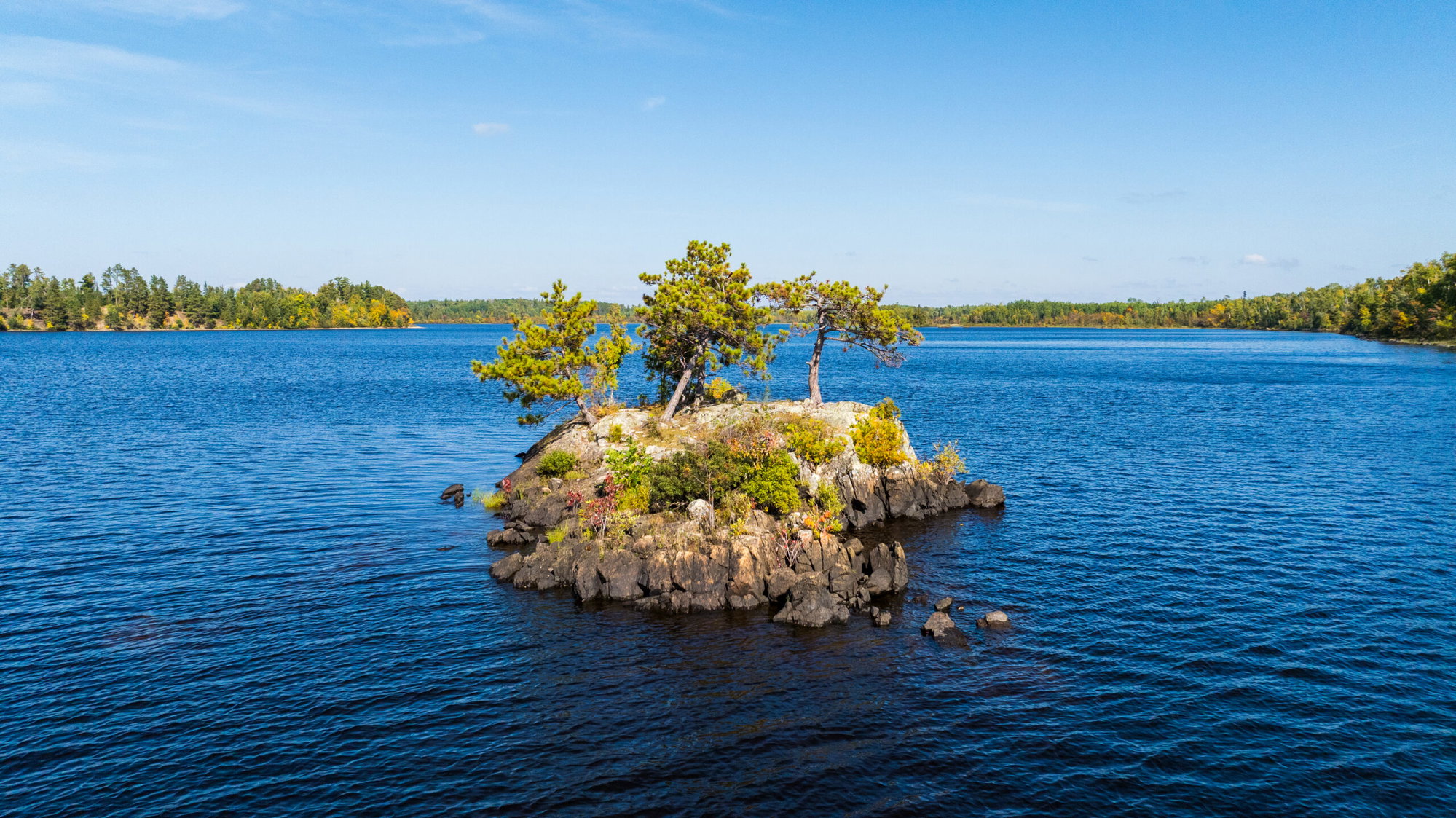
Everyone knows the BWCAW as a canoeist’s dream. With access to over 1,000 lakes and endless interconnected waterways, you can loop through the wilderness on water until you get loopy yourself. But fall provides a different way to experience the BWCAW: on foot. As the temperatures cool and the ground vegetation gets less dense, wilderness hiking comes into its glory—myriad fall colors and sounds create a fresh energy best experienced on the trail.
One of the best is the Powwow Trail, starting alongside Lake Isabella, 40 miles southeast of Ely. Construction of the trail began in 1979, linking former logging roads with wilderness paths. Today, the logging heritage of the area is more conceptual than physical—large-scale commercial logging was officially phased out and permanently ended in 1978, following passage of the landmark BWCA Wilderness Act.
Day-hiking or backpacking the stunning 31-mile Powwow Trail (entry point 86) transports you to a time when this area was prized more for its wood resources than its water. Ironically, considering this summer’s fire season, people are once again paying more attention to the BWCAW’s forests.
Give yourself three days to circumnavigate the well-maintained Powwow Loop using the excellent trail guide published by the Boundary Waters Advisory Committee. Sure, you’ll see lakes, but you’re walking through forested tunnels of 15-year-old jack pine: Millions of new trees have roared to life following the 2011 Pagami Creek wildfire in this area. This is one area of the BWCAW that has already recovered from fire, and the incoming forest provides abundant signs of health.
Another option for wilderness immersion without a paddle is the 39-mile Kekekabic Trail, part of the broader North Country Trail system that winds through the heart of the Boundary Waters. Depending on current conditions and access points, the trail offers one of Minnesota’s most remote backpacking experiences. “Once the leaves start falling, you can see the trail again,” laughs Derrick Passe, a trail maintenance crew leader for the North Country Trail Association. “It’s nice to see the path, rather than just kicking your way through the undergrowth. It’s a lot drier in the fall, too—the trail tends to firm up a lot more,” Passe adds.
Passe notes a major difference between canoeing and hiking the BWCAW: “If you’re paddling across one of the big lakes, you’ll probably see two or three canoes because you can see for miles. If you’re hiking on a trail and you’ve got two or three hikers within a mile, you’ll never know they’re there. It’s a lot more solitary. You’re more intimate with the woods.”
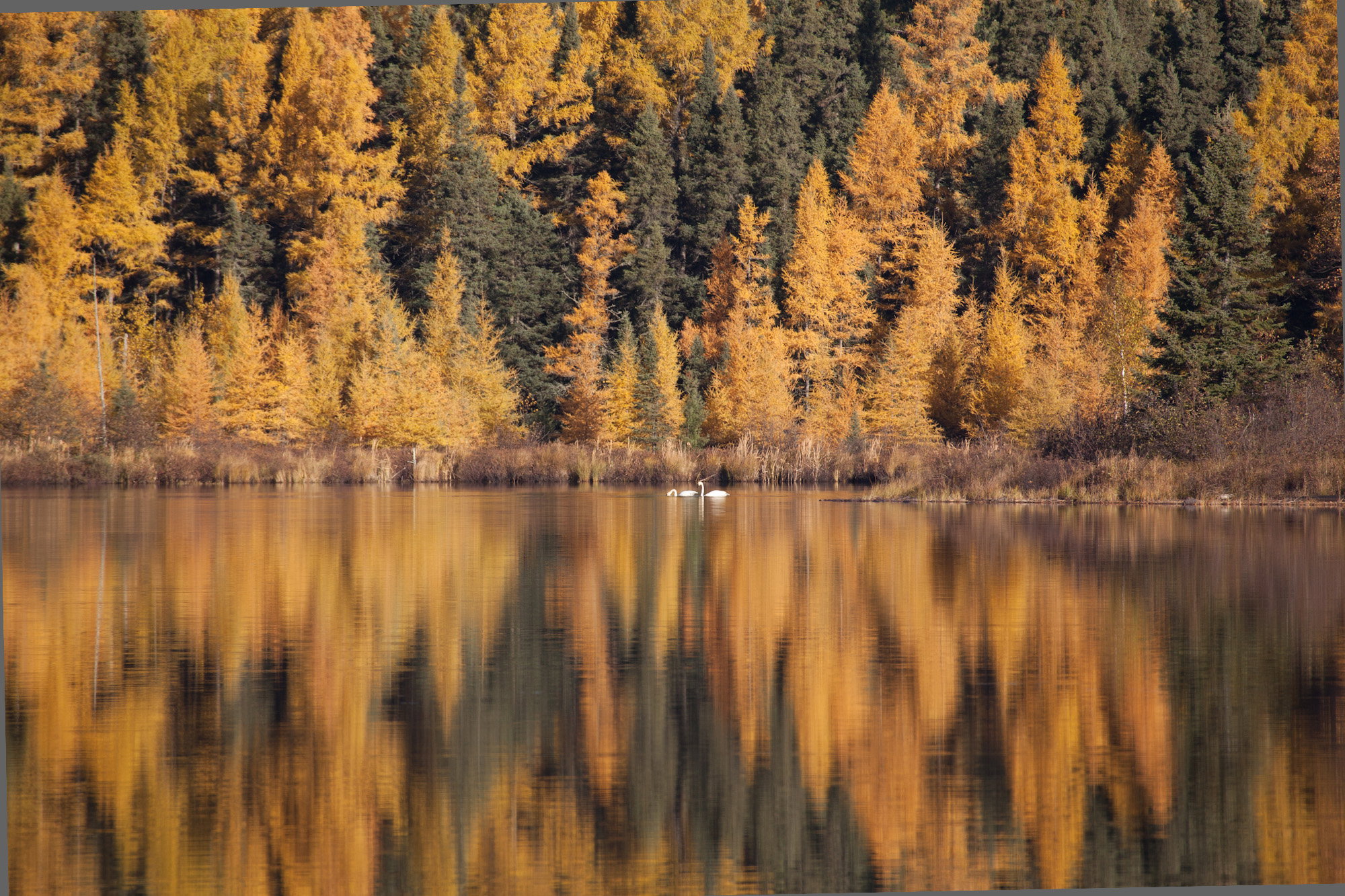
Other hiking options include the Sioux-Hustler Trail, the Border Route Trail, and the Brule Lake/Eagle Mountain Trail. Once the first frost arrives, greens give way to brilliant yellow aspens and orange tamaracks, transforming the forest into one of Minnesota’s most spectacular fall landscapes.
Increased Quiet
Clare Shirley is the co-owner of famed Sawbill Outfitters on the edge of the Boundary Waters, just north of Tofte. “We’ve got 70 years of internal knowledge about this place as a family business, and generally speaking, I’d say that September, in particular, is becoming more popular,” even before this summer’s fires, explains Shirley. “Word is out that this is a great time to go. It used to be quite quiet after Labor Day up here, but now there are more and more people going out.”
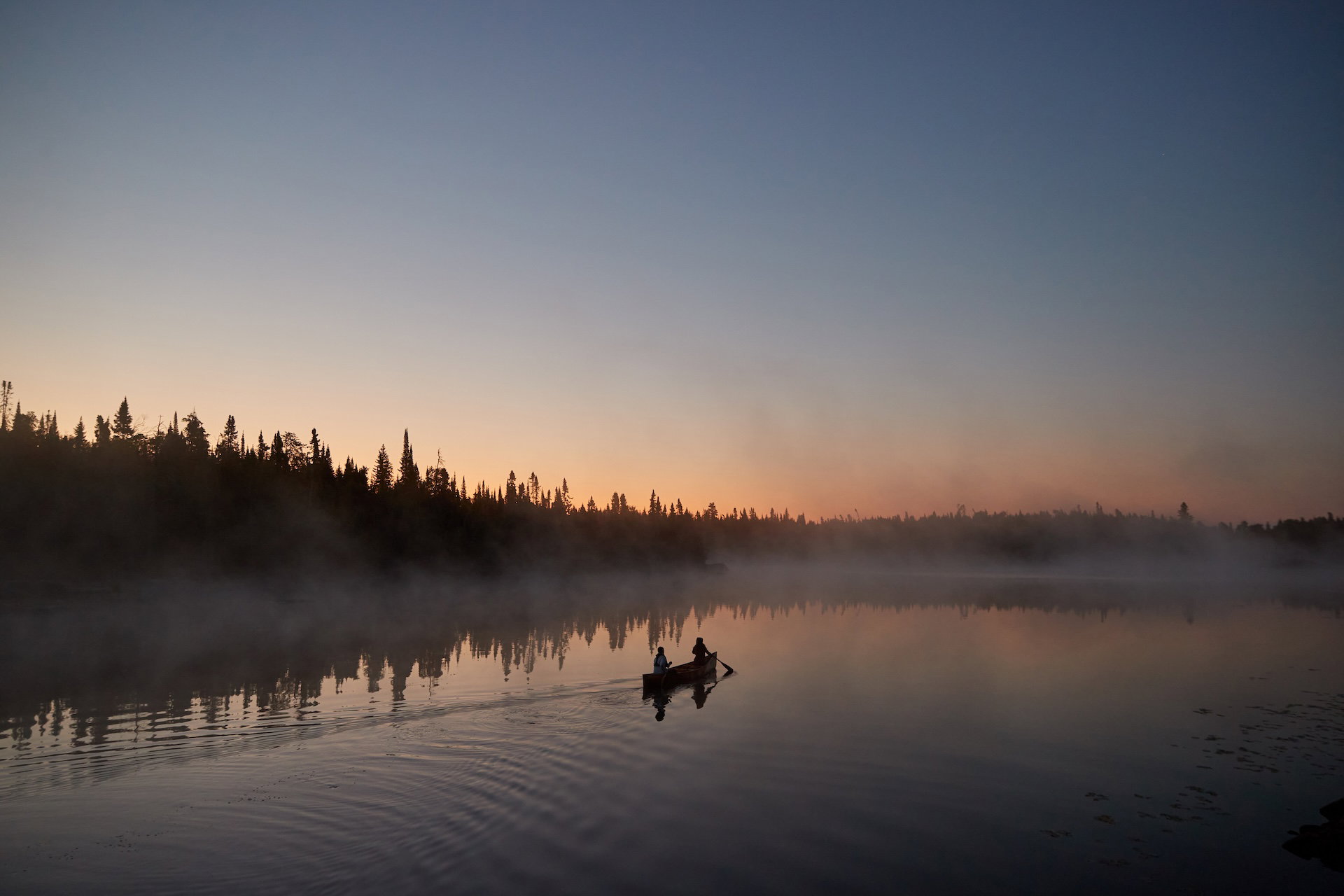
That said, Shirley notes that the make-up of groups changes in September: “We don’t see as many youth groups, Boy Scout groups, or church groups in this season. Everybody’s back in school. Groups tend to be smaller—a lot more couples and retired folks. There’s a quieter flow, and it doesn’t feel as bustling here, even though maybe the same number of permits is going out.”
As an outfitter, Shirley is usually maxed out all summer long. “We’re open 14 hours a day, 7 days a week at our outfitting shop in summer,” says Shirley. “We work really hard, and you can only do that because you know it’s short-lived, and you don’t have to do it year-round.”
Even as the pace slows, the season brings a different kind of visitor. Sawbill Outfitters is open through Oct. 20, but hours shorten to 8 a.m. to 7 p.m. starting in September. “We often get people at the shop in fall who didn’t even know we exist. They’re just out driving around, looking at fall colors, and they happen upon us. They come across this little store in the woods that they didn’t know was here,” Shirley says.
For Shirley, that’s part of the magic of autumn. “The Boundary Waters is so dynamic,” explains Shirley. “It’s really important to see it in all different seasons. So many people’s experience of this place is just a snapshot of a long weekend they take in early August every year. But it’s valuable to see it in transition and follow the changes that happen in other seasons.”
A fall trip will be a different kind of trip from that August swimming vacation, Shirley adds. “If you want to relax on vacation and take a dip in the lake every day, October is maybe not the time for you. Fall up here is more about the aspect of self-discovery, relying on your own abilities to explore the wilderness. It can be super rewarding.”
The Circle of Nature
This summer’s fires created a heightened awareness of both the need for forest regeneration and the dangers that this renewal through fire poses to nearby residents and campers. The lightning-induced fires of mid-July showed very clearly that nature works on its own cycles.
But fall in the BWCAW is also harvest season. One of the signature harvests in the Boundary Waters is native wild rice. This life-giving grain is a center point of Ojibwe culture. Just to see wild rice growing in its beds is to form a bond with past generations of Minnesotans who used wild rice as a subsistence food.
Wild rice can be harvested in the Boundary Waters and is usually ripe starting around Labor Day weekend. The harvest can last several weeks into September. Residents and non-residents alike can rice in Minnesota, and ricing day permits can be bought online (dnr.state.mn.us/licenses).
Be Prepared
Some things to keep in mind in fall: Be prepared for falling temperatures. You might wake up to frost on your boots in the morning. Get an early start each day. Once the sun goes down, it gets cold up north. Days are shorter, so be ready to stop and make camp earlier in the day. The amount of travel you can do in a day decreases. Weather patterns are different, and if it rains, it’s going to take longer to dry out. Wear wool socks and waterproof boots, not sandals. “Even people from Minnesota don’t realize how far north we really are, and how much of a difference that makes in travel planning, and what you pack and bring,” says Shirley.
The BWCAW has never been as highly used in the fall as in the summer. But this year is teaching us the value of fall: a time of introspection and deep reflection on the Boundary Waters’ value and meaning. This place needs our support, and one way to do that is to experience it in a new season. While fall camping has shorter days and frosty mornings, that’s a small price to pay. Rather than grieve for what was lost this summer, now’s the time to experience Canoe Country like you never have before. Rediscover a wilderness reborn—and rediscover yourself in the process.