


Ben Wang has always loved movies. As a kid, one of his first movie theater experiences was seeing “Star Wars: Episode III – Revenge of the Sith” at the former Southgate Cinema in Northfield. “My grandfather had an old camcorder, and I went home and thought, ‘I can do that,'” says Wang. “I tried to recreate the whole movie shot-for-shot with my friend. We didn’t get very far… but I think that’s an example of me not only loving film and performing arts but wanting to do something in it.”
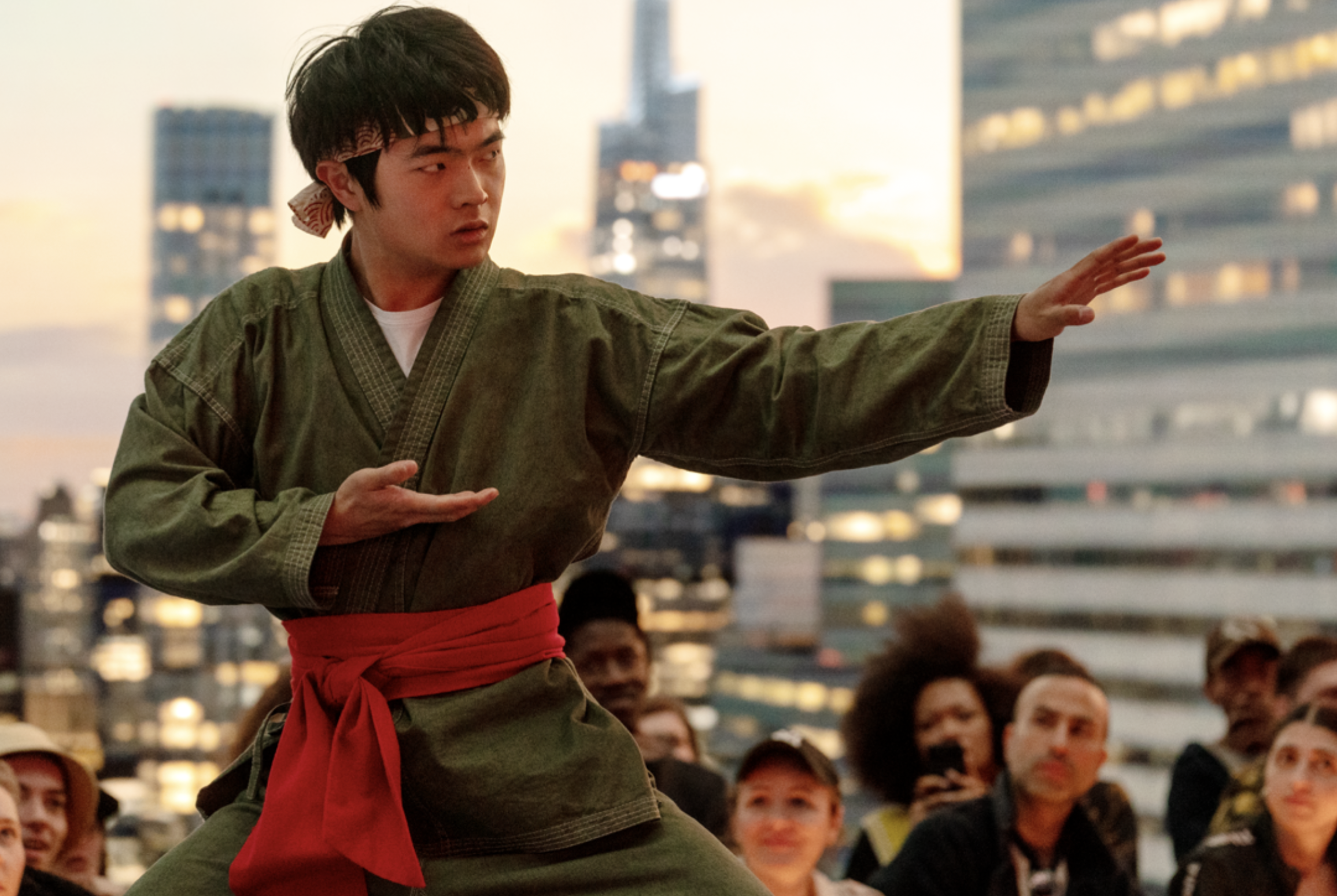
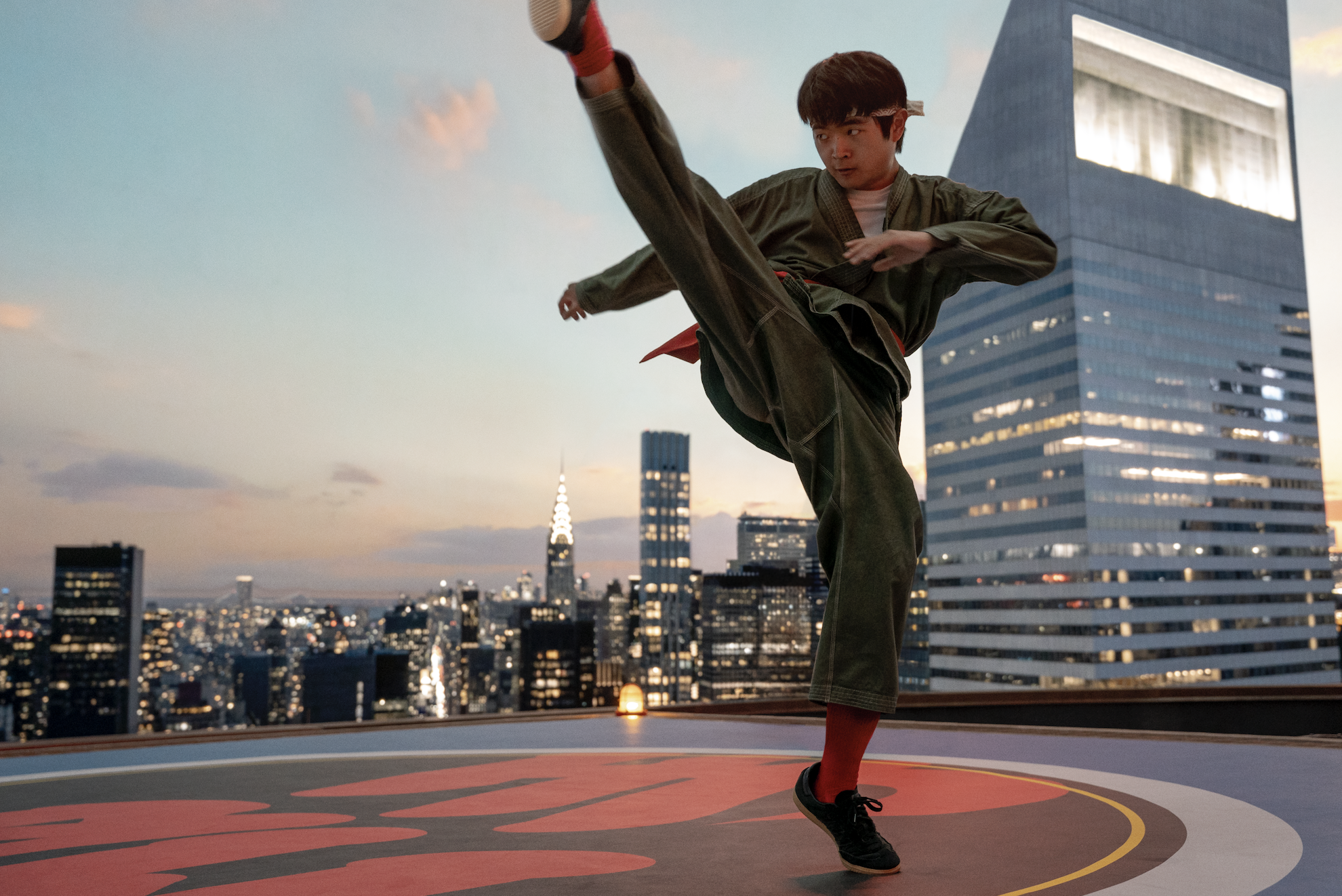
Despite his early fascination, Wang never expected to work in film and television himself, let alone in an iconic Hollywood franchise. And yet, at just 25 years old, the actor has landed in the center of the “Karate Kid” universe alongside Ralph Macchio and Jackie Chan. Wang will star as Li Fong, the next titular Kid in “Karate Kid: Legends,” which hits theaters May 30.
Courtesy of Sony Pictures
Let’s rewind: At age 6, Wang immigrated to Northfield, Minnesota, from Shanghai, China, with his mother. “The concept of looking out of a car window and seeing nothing, that was new,” he jokes. But despite the cultural differences (and lack of skyscrapers), Wang didn’t have much trouble feeling right at home. “I feel very fortunate to have grown up in a community like Northfield,” he says. “Some of the best people I know live there to this day.”
In particular, Wang found his footing within Northfield’s thriving arts community, where he laid the foundations for his acting career in community and high school productions. “It was something that I knew I loved to do the second I did it,” he says. “But the first thing that caught me by surprise was how much I loved being part of that community, going somewhere where everybody has the same enthusiasm as you do about something that’s pretty esoteric at the end of the day… it felt like a good, healthy environment.”
A true testament to the importance of grassroots arts programs, it’s common for on-screen actors to get their start on the stage—Wang, for one, says he doesn’t know where he would be without theater. “I’ve gone to many different places in America, and no matter how big or small a community is, there’s always a theater,” he says. “It’s like a necessity of civilization, almost.” Sticking to what he knew best, Wang went on to study musical theater at New York University’s Tisch School of the Arts (following an intensive, self-funded audition process he paid for by working as a busboy at Northfield’s Tokyo Grill).
Wang says he didn’t even consider acting for the screen until his final year of college, when he took a summer session of the school’s film and TV acting program. Here, he dipped his toes into the medium, learning all the basics and even securing a talent agent. Still, he was unsure of whether there would be a place for him in these kinds of spaces.
Courtesy of Sony Pictures
“Now, there’s a lot more Asian representation in film and television, and it really just happened in the last five or six years, catalyzed by the wave that was kicked off by ‘Crazy Rich Asians,'” Wang explains. “It’s not that Asian people weren’t in film and television, but the roles they played were limited by what people thought Asian people could be… instead of being able to express the full breadth of our humanity.”
But Wang is optimistic about the direction the industry is moving, and he has added several on-screen roles to his resume post-college—most notably, he starred alongside Michelle Yeoh in the Disney+ series “American Born Chinese.” But, at the time of its release, “Karate Kid: Legends” will be his biggest project thus far, hopefully cementing a permanent place for Wang on the big and small screen alike. He’s one of just three Karate Kids, after all.
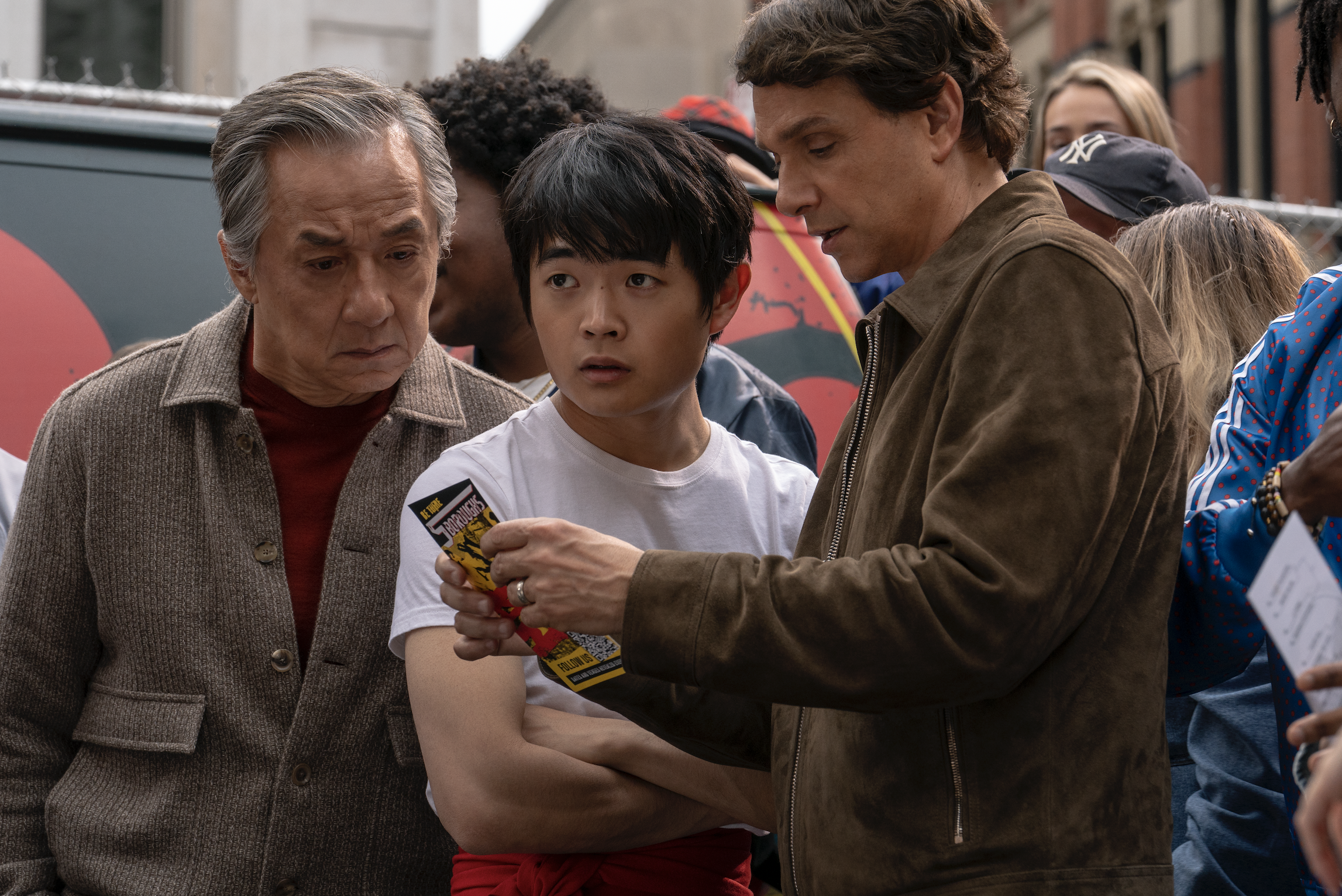
Even more impressive, though, is the fact that Wang booked the role of Li Fong from an open worldwide casting call. In 2023, Macchio and Chan, who are reprising their roles as Daniel LaRusso and Mr. Han, respectively, announced the search for the next Karate Kid, and over 10,000 actors threw their hats into the ring within the first 24 hours.
Courtesy of Sony Pictures
For Wang, the role felt serendipitous. Like most members of Generation Z, “The Karate Kid” (2010) with Chan and Jaden Smith was his first introduction to the franchise. As a young boy who had lived in Beijing (where the story is set), Wang remembers watching the movie at 10 years old and feeling like it was made for him. His aunt would later introduce him to the original 1984 version—her favorite movie, for which Wang also has a soft spot.
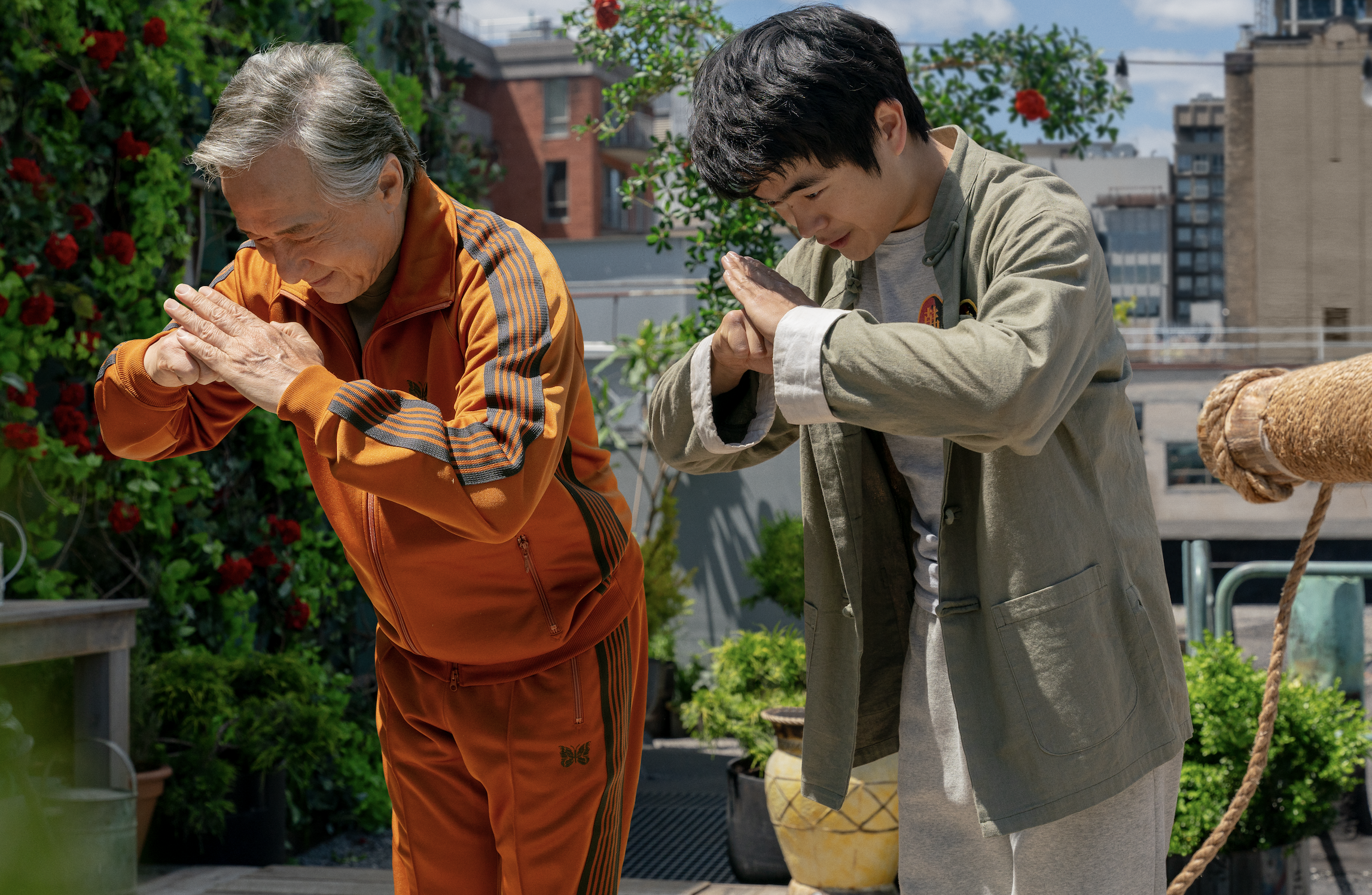
“It is a franchise that I knew and loved, so it was kind of crazy to be able to be a piece of the continuation,” he explains. And that’s not to mention working alongside Macchio and Chan themselves, the significance of which is not lost on Wang. “Anytime I was in the same room as them, it was a continuous learning experience.”
Courtesy of Sony Pictures
He shares a personal connection with his character, too. Like Wang himself, Li Fong moves from China to America and has to learn the ropes. “All ‘Karate Kid’ movies contain this aspect of kids who are taken out of an environment they’re familiar with and plopped into a new one,” says Wang. “That emotional feeling of being put somewhere completely new, when it’s out of your control, and having to learn to deal with that kind of stress… I think that’s emotionally resonant for a lot of people.”
While audiences have yet to see him star as Li Fong, Wang has already caught Hollywood’s eye. With several major projects in the works, he’s on the cusp of becoming a household name in the next few years—he is involved in the upcoming film adaptation of Stephen King’s “The Long Walk” (set for a September release) and recently secured a leading role in the highly anticipated Hunger Games prequel, “Sunrise on the Reaping.”
But even as he steps further into the spotlight, Wang hasn’t lost sight of his Minnesota roots, a lived experience that he feels sets him apart from others in the industry. Sure, he’s the new Karate Kid, but he’s also the passionate young movie fan that found magic in a two-screen, small-town theater—and hopes others can do the same.
“I think the most important reason movies exist is to have a good time. That’s what movies always were to me, and why they’re special to me,” he says. “I just want to make something good that people can then go and have a good time at.”