

Courtesy of Bob O'Hara
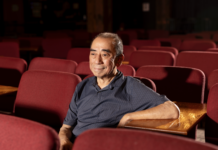
Paddling remote rivers, chasing euphoria in the Boundary Waters, and building a legacy of wilderness adventure—this is the world at the heart of “Where the Green Light Shines,” Ryan Rodgers’ new book about legendary Minnesota canoeist Bob O’Hara. In this conversation, Duluth-based outdoors writer Rodgers reflects on how chronicling one man’s adventures shaped his own understanding of the draw of the Far North.
Where did you originally get the idea to write about canoeing and Bob O’Hara?

Courtesy of University of Minnesota Press
I wrote a previous book on cross-country skiing, and I emailed Bob, who was a longtime cross-country ski coach. Attached to his response was also this list of canoe trips he’d done. I clicked on the attachment, and I was blown away. … I was looking for an article to write for the DNR magazine, and I said to Bob, ‘Let’s write something about your canoeing.’ And he was on board with that. He was telling me stories of these trips that were set in this lost era of the Canadian Far North. I thought, I could just keep going and turn this into a book. The goal was not to create a biography of Bob, but to tell a series of adventure stories that illustrates the rise of recreational canoeing, mostly framed around Bob, as well as some other characters.
What did you learn about how the ‘canoe culture’ of northern Minnesota evolved over the decades?
When Bob started doing his Boundary Waters trips in 1959, it wasn’t as common a pursuit as it is today. It’s really blossomed from this very arcane pursuit to a rite of passage.
As long as we have the Boundary Waters, we get to live in the best of both worlds. There’s this minimally altered landscape where a person can travel by their own means without modern convenience—plus, we have space-age equipment that’s light and durable and strong. You get to travel these water routes that have existed for millennia. I like getting away from distractions and the dullness of daily life.
Do you have a favorite Bob O’Hara story from the book?
Back in the ‘70s, he had become obsessed with this idea of paddling the Northwest Passage. It’s a long route from the Atlantic to the Pacific through the Arctic. And having very little information on whether it was feasible, Bob attempted multiple times to try and canoe the Northwest Passage. And thinking about that now, it’s really astounding. Taking the plunge to attempt something like that—it’s really extraordinary.
What was your favorite part of putting this book together?
I was able to contact several of Bob’s former paddling partners, and some of them had these outstanding journals. I had Bob’s journals, which kind of laid out the bare facts. But, like on any big trip, there were often conflicts, which is natural when you’re stuck with another person in a canoe for weeks on end. These other journals from people on the trips were very thoughtful, and they gave rise to multiple voices in the book.
What does ‘the green light’ refer to?
Bob has a number of catchphrases. ‘If you want to rough it, put sandpaper in the seat of your pants.’ He’s not big on depriving himself unnecessarily; make things as comfortable as you can. ‘Keep the round side down’ means you don’t want the round side of your canoe sticking up in the air. And, ‘When the green light is on, you go.’ When you have sunny, calm weather, you don’t hang out at camp and enjoy it. You go. In the Far North, conditions can change very quickly. And I think the green light is also a metaphor for the euphoria of wilderness travel. Once people get a taste for it, they keep seeking it out.
Can you give us a quick update on what Bob O’Hara is up to this year?
Courtesy of Bob O'Hara
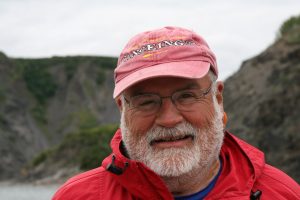
I actually heard from Bob a couple days ago. He won a canoe at a raffle last spring, and it’s an old-school wood canoe. Because it wasn’t commercially produced, he’s having a hard time getting it registered. [Laughs] But most importantly—Bob has two Boundary Waters permits for this summer. He’s canoed the Boundary Waters every year since 1959. He turned 85 in February.
“Where the Green Light Shines” by Ryan Rodgers (University of Minnesota Press, $29.95) is available July 28, 2026—visit upress.umn.edu to learn more.