

Photo by Taycier Elhindi
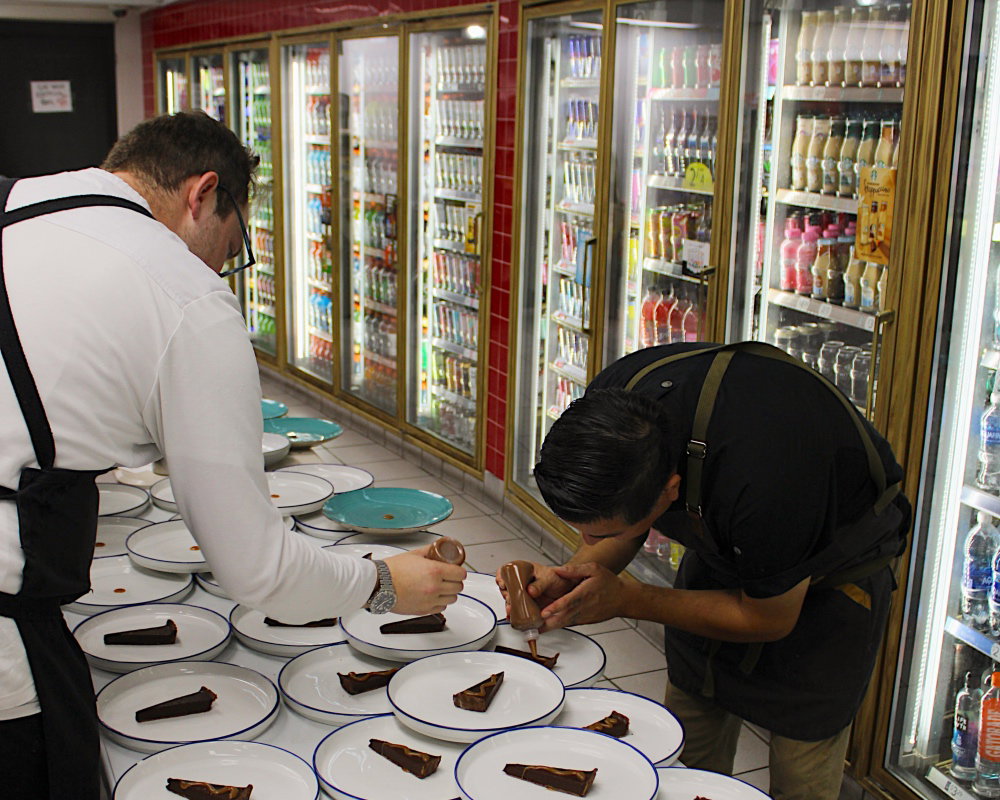
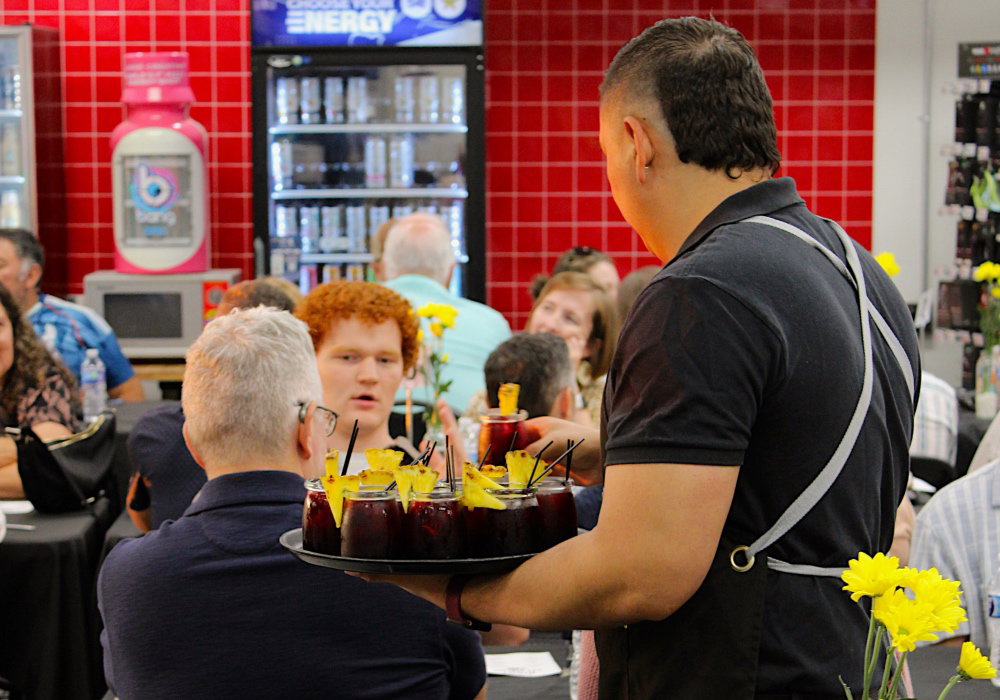
Quietly seated off Diffley Road in Eagan, an unsuspecting BP gas station is transformed into an entirely unexpected home for fine dining. One a month, Chef Cristian De Leon and bar director Zoilo Ruacho of El Sazon are joined by some of the Twin Cities’ most talented Latino chefs to present a 6-course dining experience with craft mocktail pairings known as “Night at the Gas Station.”
What began as a casual conversation between De León and El Sazon Ruacho has evolved into one of the metro’s most unique culinary experiences. “The Gas Station Dinners started from a simple conversation,” Ruacho says. De León had been talking about how much he missed creating new dishes and experimenting beyond the restaurant’s daily menu. Ruacho responded with a seemingly ridiculous suggestion: “Why don’t we do a coursed dinner right here in the gas station?” The idea stuck.
After getting permission from the station’s owner, the team launched its first dinner with just 20 guests. It took weeks to sell out. Today, the series has hosted 23 dinners and regularly welcomes guest chefs to collaborate, experiment, and tell their stories through food. The original 20 guest capacity has grown to 50 with tickets selling out within minutes of announcement.
For De León, the dinners were born from a desire for something many chefs spend years searching for: creative freedom. “Before, I always had to ask someone permission to create a plate,” he says. “Most of the time, you have to go through too many people, and it’s still a no.”
Those limitations can be particularly frustrating for chefs whose cultural cuisines are often reduced to a handful of familiar dishes. While restaurant menus need crowd favorites to keep the lights on, Night at the Gas Station allows chefs to dig deeper.
“At the end of the day, we are a business,” De León says. “If you put something on the menu that you really want to make, maybe nobody buys it. These events give us the freedom to create all this stuff.”
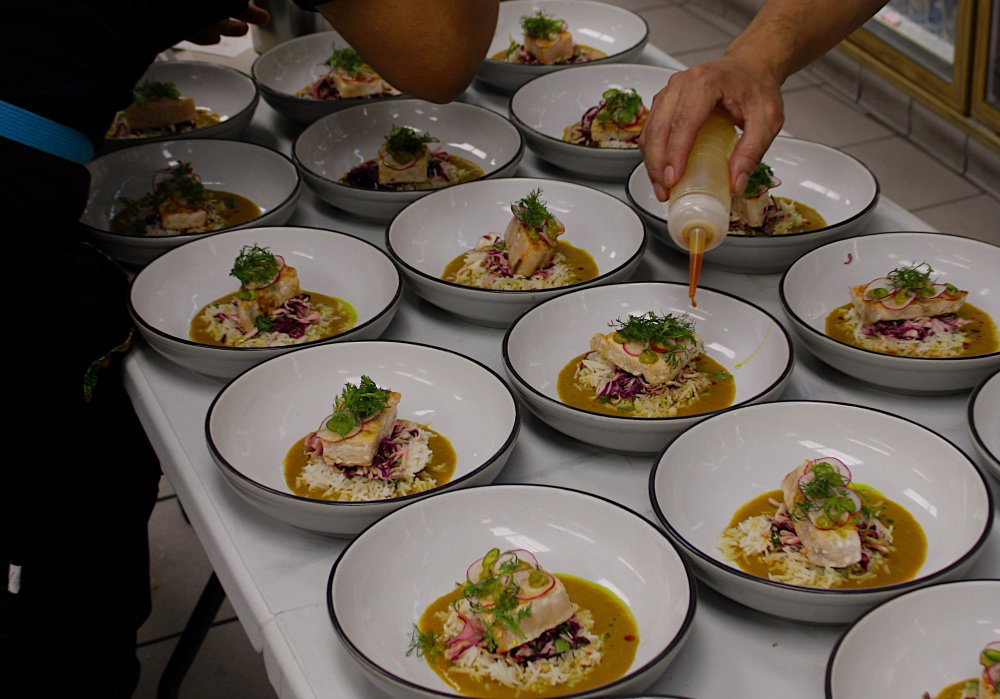
That spirit was on full display during the series’ 23rd installment on August 24, when De León stepped back from the menu entirely for the first time. Instead, he handed the spotlight to Boca Chica chef Fernando Grassi Cueto and El Sazon sous chef José Cortes, choosing to support them from behind the scenes. The decision reflects a larger goal that has emerged as the dinners have grown: creating opportunities for the next generation of chefs.
“I wish I had that opportunity in the past,” De León says. “To have freedom to do that.”
For Cortes, who has worked alongside De León for nearly three years, the evening represented more than simply preparing food. “People are finally going to link those flavors to me as a person,” he says. “They’re going to see my style reflected in the menu.”
Cortes describes the dinners as an opportunity to challenge perceptions of Latin American cuisine. His dishes often blend techniques and influences from culinary traditions across the globe while remaining rooted in his heritage. “We want to share our culture,” he says. “We want to welcome you into our homes. Not only the French and Italians can cook. We can cook, too.”
That same philosophy extends beyond the food and into the beverage program. Each dinner includes thoughtfully crafted mocktail pairings designed by Ruacho, whose drinks often feature herbal, savory, and seasonal ingredients more commonly associated with a kitchen than a bar.
“I use my mocktail menu as ideas for what I’m going to do at the restaurants,” he says. “This is where I start experimenting.”
One clarified soda that now appears in El Sazon’s beverage program began as an experiment during a gas station dinner. Other pairings have been inspired by ingredients growing in Ruacho’s garden or by techniques he encounters through books and research. For him, each event functions as a testing ground.
Taycier Elhindi
“What do I want to learn?” he asks himself when developing a menu. “It’s a good way to start because I get to experiment with 40 or 50 people at the same time.”
Over the course of nearly two dozen dinners, the series has grown from a small passion project into a community gathering. According to De León’s son, Christian, familiar faces return month after month while newcomers discover the experience for the first time. “I see new faces, people who come to almost all of them, people connecting with new people,” he says. “It’s a great way to make new friends.”
That sense of connection is perhaps what makes Night at the Gas Station so much more than a novelty. The unlikely setting may grab your attention, but the experience is profound because of the culture, mentorship, experimentation, and community it curates.
For De León, seeing guests gather around dishes that tell the stories of his heritage remains the most meaningful part of the evening. “Whenever I see all these people eating our heritage, it means a lot to me,” he says. “It’s beautiful.”
Looking ahead, the team has no plans to slow down. September’s installment will coincide with both Hispanic Heritage Month and Mexican Independence Day, offering chefs another opportunity to celebrate the stories, traditions, and flavors that have shaped their culinary journeys. For De León and his collaborators, the dinner will serve as both a celebration and a reflection honoring the richness of Latin American cuisine while continuing to challenge perceptions of what it can be. If the first 23 dinners have proven anything, it’s that some of the Twin Cities’ most exciting culinary storytelling can happen in the most unexpected places.