

Photo by Caroline Yang
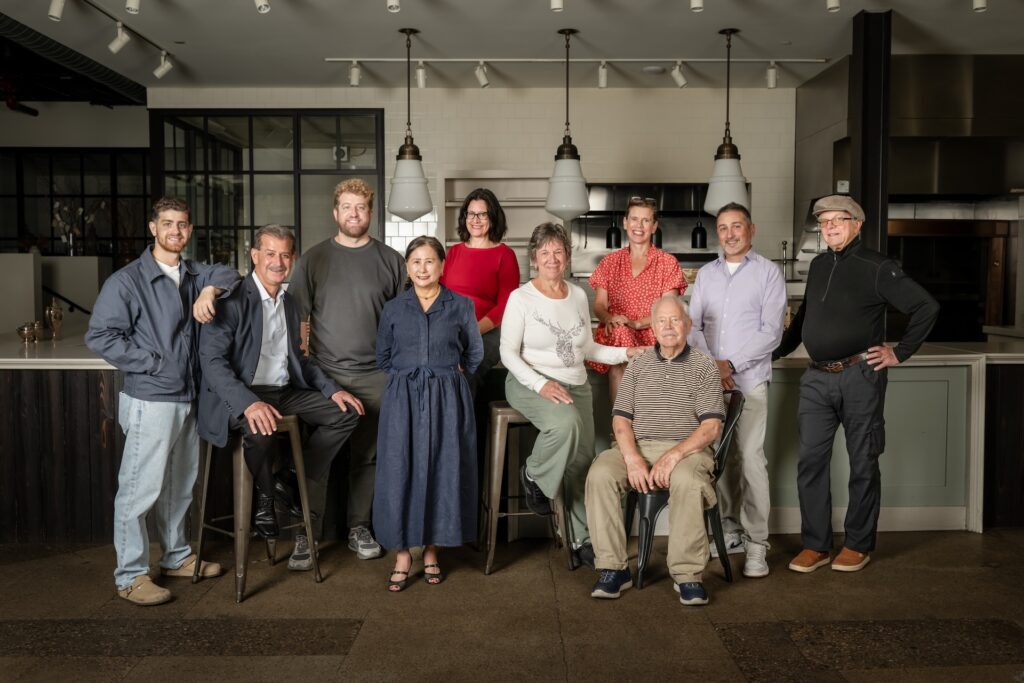
For generations, Minnesota restaurant families have introduced diners to flavors from around the world and made those flavors part of the way we eat. Behind their menus are stories of immigration, hard work, and traditions handed from one generation to the next. Across Minnesota, our culinary landscape is not merely built on brick, mortar, and menus. Rather, it is sustained by the profound grit, passion, and lineage of restaurant families who feed our communities and keep their heritage alive, one shared dish at a time. Together, five of those restaurants—Rainbow Chinese Restaurant, Black Forest Inn, Kramarczuk’s, Mediterranean Cruise Café, and Boca Chica Restaurante y Cantina—have shaped more than 281 years of our state’s restaurant history.
We brought members of these families together to talk about the dishes, memories, and relationships that have sustained their businesses—and what Minnesota has meant to them. This is an exclusive digital extension for an article that appears in the November/December 2026 issue of Minnesota Monthly.
Please note: interviews have been edited for clarity and flow.
Rainbow Chinese: A Family Tradition
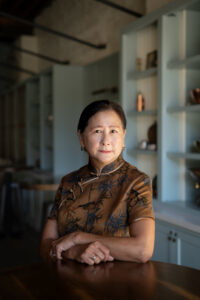
Photo by Caroline Yang
JERROD SUMNER (JS): You are the founder of the restaurant, but is there any other generation of your family involved in the business?
TAMMY WONG (TW): It was mostly me, but nobody ever asks if I am the founder. I always like to honor my parents. It was my father who wanted to have a restaurant. I am the oldest of nine children, number two in the family, and my heritage is 100% Chinese. Being a woman and the oldest sister coming in without knowing anything about running a restaurant, it felt less like a business plan and more like a daily chore that had to be done. I had to figure out how to make a living and support my family. When I was young, it wasn’t necessarily a desire at first, but rather a sense of responsibility and pressure. I remember going out to find a quiet tree to sit under while trying to figure out how to incorporate the business. I learned as I went, setting up the legal structure, and I have been the legal owner of the restaurant since 1987. It is going to be forty years old soon, and I am still learning how to run this business. My dad supported me emotionally, but it was mostly up to me. I learned how to print menus, figure out what people love to eat, and share our heritage and culture. We took over the space from someone who came from New York with a big idea and a noodle machine to supply fresh noodles right here in Minneapolis; they were truly ahead of their time. They served noodle soup, which people loved, especially since there weren’t many noodle shops in Minnesota back then. People coming to the grocery strip would stop in for noodle soup. They operated for about a year, and then a couple of my siblings and I took over. I became the legal owner from day one because I was the one who made everything happen.
JS: What do you want diners to think of when they think of Rainbow Chinese and Tammy Wong? What dish are you known for, and how do you want people to experience it?
TW: Things have certainly changed over the years. If you had asked me fifteen or twenty years ago, people came specifically for the noodle soup. Nowadays, people often know me for making the best egg rolls and incredible black bean sauce. People talk about that black bean sauce all the time. Along with the sauce, our noodle dishes are among our absolute best sellers. One customer favorite is the Singapore Chow Mai Fan, a gluten-free rice noodle tossed with curry spices, pork, and shrimp. Another classic is chicken with black bean sauce over pan-fried noodles, which we traditionally call two-sided brown Cantonese-style noodles. When my family moved here from California, I worked at a little restaurant in St. Louis Park and kept seeing orders for Cantonese chow mein come in. People loved those crisp noodles on the side paired with steamed vegetables and savory sauce on top.
JS: Was it challenging for diners to get used to the dishes you originally offered when they fell outside what people were familiar with? Was it hard to teach them about foods like black bean sauce?
TW: That is a great question. At the beginning, we were in a unique neighborhood undergoing revitalization, and ninety to ninety-five percent of our customers were Asian. They loved our food, like the beef chow fun. Then, a food writer named Jeremy Iggers came in and tried new things over a couple of weeks. I remember he ordered squid with salted vegetables, which is the exact traditional translation from my ancestry for squid with pickled mustard greens. It is delicious! After he wrote a wonderful three-and-a-half-star review, our sales jumped from a couple hundred dollars a day to having lines stretching out into the street, staying open until one in the morning with so many people coming to eat. To answer your question, we did not have trouble with our core community, but when other customers started coming in, we gently guided them on how to try traditional, authentic noodles.
JS: Do you consider yourself a cook or a chef?
TW: When my staff calls me a chef, I feel a little shy about it when I step outside the restaurant, so I would rather people not call me a chef. But when I walk back inside, I tell myself, you know what, I can be a chef.
JS: You are a chef. A total badass chef, in fact. Tell me, what is inspiring you today? What ingredients, trends, or ideas are exciting you right now in the restaurant?
TW: For years, I volunteered teaching people how to use local vegetables at the Minneapolis Farmers Market, and I became a vendor more than ten years ago. It is another wonderful way to coach and connect. Young people and farmers come by for a drink or an egg roll, and we trade items. Sometimes I end up with so much produce that I need to pickle and preserve it. Recently, because the farmers market shifted from being open seven days a week to closing on Mondays and Tuesdays, some growers do not have large coolers like we do, so surplus produce risks going to waste at the farm. Especially during the slow state fair weeks, they ask if we can take the extra vegetables so they do not get thrown away. I took all of those fresh vegetables and beautiful flower bouquets and set up a display right at the restaurant. Customers and employees can buy them at fair prices, like a bag of green beans for three dollars or a bouquet for ten dollars, and I bring every cent right back to the growers.
JS: Minnesota Monthly is dedicated to the spirit of Minnesota. What does the spirit of Minnesota mean to you?
TW: I was not born in America; I was born in Vietnam, and my family spent time as refugees in Hong Kong before moving to the United States. We lived in New York, then California, and finally settled here in Minnesota. I have lived here for most of my life. This city is my home, and that is what the spirit of Minnesota means to me. It is a beautiful, beautiful city that I am proud to call home.
Boca Chica Restaurante y Cantina: A West-Side Tradition
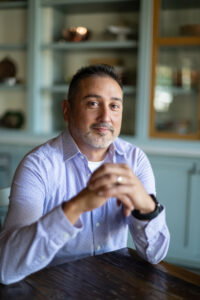
Photo by Caroline Yang
JERROD SUMNER (JS): What is your first memory of the restaurant, the food, and growing up around it?
JOSÉ FRIAS (JF): My first memories are a bit unique. My parents separated when I was very young, so my memories of coming to the restaurant often started with my mother dropping us off. Because it was our weekend time with our dad, we would spend the entire day here while he worked. As a young kid in a restaurant, you find anything you can to play with. I remember finding huge bags of rubber bands because back then everything involved office paperwork instead of computers. I would grab a stack and start shooting them at targets, and I am sure I gave a few unsuspecting customers a little shout-out from under a table as they walked through the door.
My dad would also let us bring our little red tricycles. When things were supposedly slow, we were only four or five years old, he would let us ride around the dining room while he worked. You would just jump on one in the middle of lunch until your dad finally yelled at you to stop. Those are my earliest memories here. I have been here my whole life, but those are the ones that truly stick with me.
JS: What dishes are you most known for, and how do you want people to experience the restaurant?
JF: The dishes we are probably most known for are our deep-fried tacos and what I call Don Guillermo enchiladas, named after my grandfather. We were kind of like a culinary gateway. My grandfather understood that the Minnesota palate back then was not quite ready for fully traditional Mexican food, so he took what he learned from his in-laws in Texas and adapted it to fit the customers he encountered here. Yellow cheese is not traditional in Mexico, but it is a classic Tex-Mex element, and when paired with our chili gravy, which is another Southwest staple, it completely took off.
That opened the door for him to introduce other dishes like guisos. A guiso is like a stew, but much thicker, featuring a meat base simmered in a rich chili pepper sauce, whether chipotle, verde, or pasilla. You eat it with tortillas, rice, and beans, basically using your hands. When he opened the restaurant, coming from a background of profound poverty, he never wanted a little taqueria or a garage taco stand. To him, those represented the hardship he saw in Mexico. He wanted a proper sit-down restaurant. His very first slogan, for a man who barely spoke English, was “Boca Chica Restaurante, a nice place to eat.” He wanted a nice place for people to sit down rather than serving tacos out of a garage.
To this day, many of our meals start with sopa de fideo, a traditional Mexico City soup, because that is how formal dining was served. Beyond the guisos and deep-fried tacos, our carnitas are fabulous. My grandmother put them on the menu about twenty-eight years ago, and I can still remember the exact table I sat at the day she brought them out for me to try. We still prepare them very traditionally, and it remains one of my absolute favorite dishes in the house.
JS: What kind of ingredients or trends are you seeing that inspire the restaurant today?
JF: We are really evolving. I brought in a chef because I understand that the restaurant industry changes constantly. Diners had their era, and then family-style restaurants from the seventies, eighties, and nineties had theirs. Today’s restaurant world is much more chef-driven, featuring a modernization of cultural aspects. My inspiration is to bridge that old and new gap. As we note in our marketing plan, we are a sixty-two-year-old restaurant serving the classic recipes our large clientele loves, but I am also a diner who understands a new generation wants something different.
My aspiration is to offer our traditional food while also developing new items with a slightly more modern twist. All of our seasonal menus feature more modern presentations. For instance, we are introducing a short rib dish with a special sauce. When people think of Mexican food, short rib is not usually the first thing that comes to mind, but short ribs are wildly popular in the modern culinary world.
We are also elevating the dining experience by focusing heavily on customer service, hosting prix fixe meals and ticketed events, and collaborating with other incredible local chefs like Christian De Leon from El Sazon and the team at Aubergine. My goal is to introduce newer generations to our restaurant without them thinking we are stuck in the past. There are so many Mexican restaurants in the suburbs now, and younger diners might not recognize a traditional chili gravy or a deep-fried taco. I know they are incredible items, so my drive is keeping this going for another forty years by evolving thoughtfully. Alongside the food, we just redesigned our dining room to feature an open-air concept overlooking the patio, complete with screens to keep the bugs out so guests can enjoy that wonderful open-air feeling indoors.
JS: Minnesota Monthly is dedicated to the spirit of Minnesota. What does the spirit of Minnesota mean to you?
JF: For me, the spirit of Minnesota really resonates right here in my neighborhood on the West Side. I have spent my whole life and most of my hours here in this community. The spirit here is built on community, culture, love, and unity. Especially over this past year, which was very difficult for our community, it was incredible to see Greater St. Paul and all of Minnesota show that they share those exact same values. People came out to support us not just from the West Side, but from all across the Twin Cities. That inclusivity and acceptance of my family, our culture, our food, and our evolution means the world to me. That is what the spirit of Minnesota feels like.
Mediterranean Cruise Café: Hospitality Across Generations
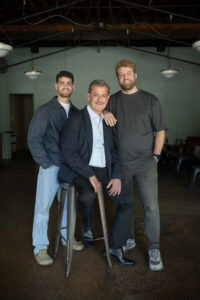
Photo by Caroline Yang
JERROD SUMNER (JS): Tell me how you ended up in Minnesota.
JAMAL ANSARI (JA): My older brother came before me. He went to the University of Minnesota and graduated six years before me, so he was already established and knew the city well. When I finished high school, I knew I needed to pursue my education and build my future. America represents opportunity and the place for tomorrow. I felt very fortunate to be able to come here and live in this country.
JS: Where are you from originally?
JA: I was born in Jerusalem, in the city of Jerusalem, which is where my parents are from as well. We are of Palestinian heritage.
JS: Before the idea of opening a restaurant in America, what are your first food memories of your parents cooking?
JA: We did a tremendous amount of home cooking. For salads, tabbouleh was something we made constantly because it is so rich with fresh parsley and tomatoes, making it wonderfully delicious. Feta salad was another staple, featuring fresh cucumbers, tomatoes, and feta. Lentil soup was something we ate frequently, served with fresh onions, green onions, and olives. My mother also made stuffed grape leaves and zucchini, which felt like a day in heaven, though they required so much preparation that we only had them about twice a month.
We also frequently made a rice dish called maklouba, featuring chicken, cauliflower, and eggplant. Everything was prepared to absolute perfection, focusing on fresh, healthy ingredients. On weekends, we often grilled kebabs, kofta, and chicken, serving them with fresh potatoes, salads, and hummus.
When my mother made hummus, I always watched closely to learn her ingredients and technique. We would soak the dry beans overnight so they expanded nicely, then cook them the next day until they became tender and fluffy. Once cooled, we blended them with fresh garlic, sesame tahini made from scratch, and rich olive oil. We garnished it with onions, radishes, green onions, and tomatoes to complement all those flavors. We made hummus frequently, along with homemade babaganoush.
JS: In your culture, is it common for the boys to help out in the kitchen?
JA: Absolutely, because children need to learn everything. Today, my own grandchildren are learning by watching what we do because they taste the food and want to understand how it is made. When you start young, you absorb everything. Now we pass those traditions on to the grandkids, and I can see how closely they pay attention. They know we have something special, and they are already involved. I have a four-year-old grandson who watches everything we do. Sometimes he comes to the restaurant, and sometimes he visits Baba’s, where his dad runs things. He is already involved at such a young age, which is wonderful.
JS: What dishes are you most known for at the restaurant, and how do you want people to experience them?
JA: Our kebabs are expertly prepared. We source wonderful chicken, cut it to perfection, season it with our special recipe, and place it on skewers to grill until it is as tender as possible. We also make ground beef kofta kebabs, alongside beef and shrimp options. Our kebabs feature clean, 100% edible meat with zero waste, served with seasoned basmati rice and fresh salad for the ultimate meal.
We are also famous for our gyros, featuring perfectly cut, thin slices of meat cooked on a rotisserie and served with fresh vegetables and onions for extra flavor. Another customer favorite is our lamb. We prepare three different lamb dishes, including a lamb rack that diners always describe as melt-in-your-mouth tender. Our specialty is the lamb shank and leg combination, which we cook to perfection over six hours until the meat literally melts off the bone. Served over rice or couscous, it is simply delicious.
JS: One thing that stands out about you, Jamal, is your incredible hospitality and what welcoming people into your restaurant truly means. Did that sense of hospitality start back in Jerusalem, or is it just naturally who you are?
JA: It is something we have always lived by. I learned it from my parents growing up. My father constantly welcomed friends and family into our home, and our house was always filled with gatherings. Growing up in the Old City of Jerusalem, I watched local business owners welcome people with such genuine warmth. It makes people happy, builds connections, and helps you truly know your customers.
Hospitality is not just one thing; it is everything. It makes customers believe that you genuinely care about them. We love our patrons because without them, we have nothing. Over the years, our customers have truly become our friends and family. When people walk in, I greet them by name, and once I learn a name, I remember it for fifty years. Every weekend they return, giving hugs and asking how our family is doing. They always remind us of our kindness and our smiling faces, telling us how much they missed us.
JS: Was it challenging at first for diners to get used to dishes outside of their comfort zones, or did they embrace the food right away?
JA: Honestly, our food is so inviting and accessible. Meat is universal, but we elevate it with unique seasonings that make it incredibly flavorful. Once people try it, they fall in love and return for the exact same dish forever. For instance, back when we opened in 1980, I created a combination tray featuring Greek salad in the middle, flanked by falafel, hummus, a slice of gyros, and potatoes. People have been ordering that exact dish for decades because it is fresh, healthy, and packed with protein.
JS: What inspires you today? What ingredients or culinary trends catch your eye alongside the classics?
JA: Today, what inspires me is the drive to keep the business thriving and running seamlessly every single day. Caring for our customers and taking pride in our daily work keeps the rhythm alive and proves what we have accomplished together.
JS: There is something deeply sacred about preparing food for someone, nourishing both their body and their spirit. That feels more important now than ever.
JA: That is very true. People today care deeply about their health and watch what they eat. Our food is healthy, clean, meaningful, and packed with authentic flavor. We always tell people to try it once because they are going to love it.
JS: You mentioned your grandkids earlier. What does it mean to see what the younger generation has built with Baba’s?
JA: It means the world to me. It means they are continuing my success and carrying our family legacy forward. Knowing they can step in gives me peace of mind. All of our customers see how dedicated the kids are and how much they love what they do. I will support them my entire life because we believe in each other. Working together is everything. They learned by watching us, and seeing my son and grandson enjoy their work and love their customers makes me happier than words can say.
JS: Our magazine is dedicated to the spirit of Minnesota. Thinking back to when you first arrived, based on your brother’s stories, what does the spirit of Minnesota mean to you?
JA: Minnesota is a beautiful state filled with exceptionally friendly people and a wonderful community infrastructure. It embraces incredible global diversity. People are approachable, and I have always felt safe and happy living here. Customers come in, chat about where I am from, and express how much they love our family story. Being surrounded by such welcoming people makes me deeply happy.
Kramarczuk’s: Preserving a Ukrainian Legacy
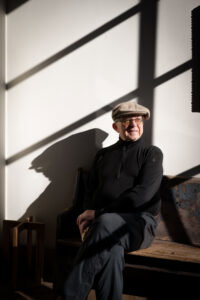
Photo by Caroline Yang
JERROD SUMNER (JS): Tell me about your first memory of being in the restaurant as a kid.
OREST KRAMARCZUK (OK): I was three years old when my parents started the business. I remember our original location on Marshall Avenue with its small storefront and an old Orange Crush sign out front. After my father was in business for just a few months, his partner came after him with a butcher knife, so my father had to leave, and they lost everything they had saved up. My earliest real memory after that is playing with my Tonka toy trucks in the sawdust on the floor.
JS: You went to law school to humor your parents rather than to get into the restaurant business.
OK: That was the plan. But once I got into it, I realized my passion was truly in the business my parents started. My other concern was how hard they had worked. By the time I was in my twenties, they had established a wonderful reputation in the community, and I did not want to see all of that hard work vanish if the business failed to transition to the next generation.
JS: What dish would you say you are most known for?
OK: While we are universally famous for our sausage, the dish people associate with us above all else is our cabbage rolls.
JS: You truly cannot beat them.
OK: It is essentially just a Polish burrito.
JS: We know you deeply respect cultural tradition and authenticity, but do you ever break any rules with the menu? Are you an innovator?
OK: A rule breaker and an innovator, absolutely. When we started the restaurant back in 1976, we actually started with a microwave. Back then it was all about finding ways to make money and survive. I found that Rueben Meats had an overproduction of pastrami, so I bought little packets of it for twenty-five cents each, and we started making sandwiches. We started with a pastrami sandwich, a ham sandwich, and then, after reading up on popular sandwich trends, I discovered the Italian grinder was a huge hit. I went to Delmonico’s to buy the peppers and the giardiniera, and I created our grinder sandwich. To this very day, it remains one of our top sellers.
We actually started as a sandwich shop because we needed cash flow. Eventually, we evolved into ethnic specialties. In my opinion, one of the best strategies for running a successful restaurant is keeping a simple menu. We started with just three or four sandwich items, and then we transitioned into pierogi. We did not even have cabbage rolls at the very beginning because we started out in the corner of a counter. It just kept evolving step by step to this very day.
JS: You mentioned transitioning from the meat and potatoes era back then to the fusion and innovation of today. What is the biggest change you have seen? Is it the patron or the restaurant?
OK: It is definitely the eater. When I started, dining out was all about classic meat and potatoes. You had a few famous spots in the city that everyone visited. The top end was Charlie’s Cafe Exceptional, which served the absolute best traditional American food. Then you had the Lincoln Del, which preceded us by a few years and offered Jewish and Eastern European traditions. You had Jax Cafe for American dining, wonderful local supper clubs, and country-style Italian spots like Mama Rosa’s, Bucco’s, and Vessio’s that no longer exist. Back then, the exotic option in town was the Nankin, which was Chinese dining.
JS: Do you feel back then that those restaurants were cooking for their own communities, or were they catering to a broader American audience?
OK: They were not cooking strictly for ethnic communities; they were catering to the mainstream American palate, which tended to be quite bland. They served high-quality steaks, but nothing truly innovative.
JS: Do you think it was challenging for diners to get used to the dishes you originally offered that fell outside their comfort zones?
OK: We started with a built-in niche market because we were an Eastern European ethnic restaurant. We already had a natural base of Polish and Ukrainian customers who loved pierogi, cabbage rolls, and borscht because their grandmothers made that exact food. So when I introduced our menu, I did not face a massive challenge meeting the palate of that core community.
There was another important hurdle, though. When I started in the business with my father, I constantly had to educate people about Ukrainian culture. Everyone would say, “Oh, it’s just part of Russia.” We struggled for years to establish a separate cultural identity, long before Ukraine was in the headlines every single day. I made it my mission to educate people that Ukraine is a distinct culture with its own separate language. For instance, borscht is not Russian; it is Ukrainian, and it has even been granted that status by the World Heritage Foundation. My primary goal back then was simply to introduce and educate American diners about Ukraine and its food.
JS: What is inspiring you today? Is it an ingredient or a trend?
OK: What inspires me today is the deep respect for world cuisine from every culture. If you are in this business, you learn quickly to be non-judgmental and to embrace other cultures, ethnicities, and traditions. What excites me most is seeing cutting-edge chefs embrace fusion, combining different culinary backgrounds to create something entirely new and fascinating.
JS: What is your answer to that? What innovative fusion are you cooking up over at Kramarczuk’s?
OK: We created the Hmong sausage in collaboration with Chef Yia Vang. When I look at collaborations like that, it serves as a wonderful inspiration to me, and it is truly indicative of what it means to be an American.
JS: Minnesota Monthly is dedicated to the spirit of Minnesota. What does the spirit of Minnesota mean to you?
OK: The spirit of Minnesota means that we are strong, we are innovative, and we embrace everyone.
Black Forest Inn: Growing Up on Eat Street
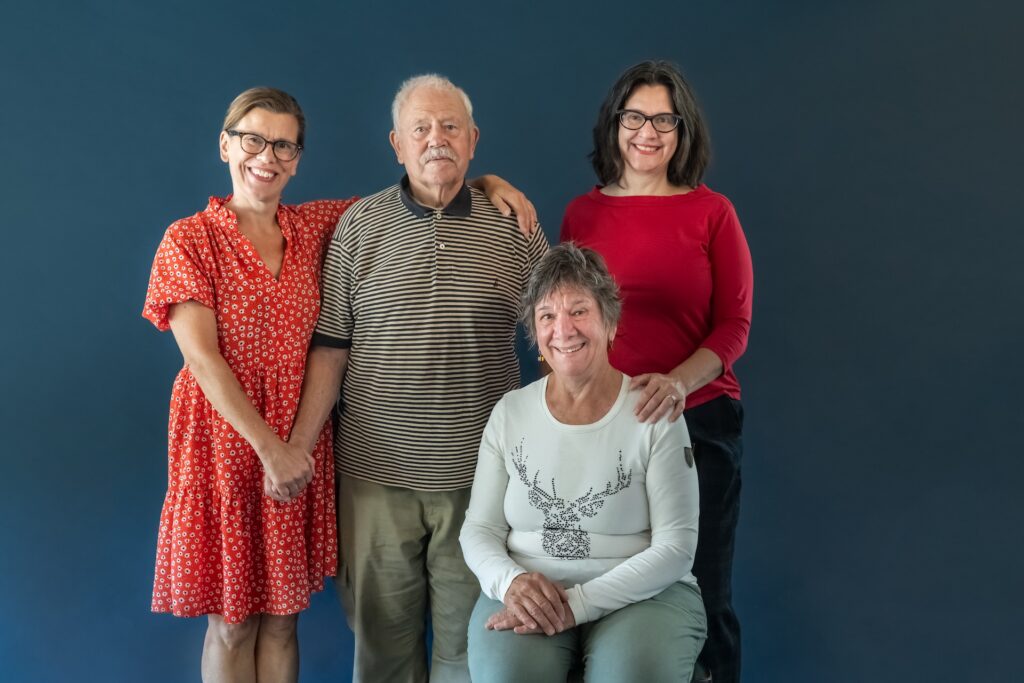
Photo by Caroline Yang
JERROD SUMNER (JS): What are your first food memories from your parents, and what do you remember first about the restaurant?
ERICA CHRIST (EC): A well-done hamburger. When I was very little, around kindergarten age, I always felt a little disappointed when we had to go to the restaurant after being picked up from school. I knew I would have to invent my own things to do because my parents would be so busy, and I would have much rather been at home. I was a really picky eater back then. I only wanted a well-done burger, breakfast cereal at all hours, and spaghetti, but only if the sauce was perfectly smooth. My sisters probably ate more actual German food because they were not nearly as picky as I was. Tina is the one to ask about that. I only really came to appreciate and research German food much later in life, around my mid-twenties. Since then, I have been the one diving into the history of different recipes, the origins of various ingredients, and what traditional preparations look like.
GINA CHRIST (GC): For me, it has to be French fries or apple strudel.
JS: Erica was mentioning that childhood memory of arriving after school and thinking, “Oh no, we are going to the restaurant again.”
GC: Oh, absolutely. We came here after church on Sunday and straight after school on weekdays. My mom would throw a comforter in the office up front and tell us to go run around and then crawl in there to fall asleep when we were tired. We were raised right in the bar. When we were little, we would walk in and announce that we wanted a Tom Collins, and everyone would look at us aghast, even though it was really just our version of a kiddie cocktail. We practically lived here. The blender and the soda fountain behind the bar were probably our two favorite toys. We also loved the beer chute in the basement that led down to a sand pit over the sidewalk. Since they tossed empty cans down it, they needed a soft landing, so there was a pile of sand at the bottom. It was only about eight feet deep, but we thought it was the most hilarious thing in the world. We used to fish money out of the fountain in the beer garden and then walk across the street to Butler Drug to buy candy. We played hide and seek in the basement, and one of our main babysitters was Maida, who ran the floral shop across the street. We were simply here all the time.
JS: Did you understand early on that you were in the business of feeding people? Did you grasp the reality of the restaurant?
EC: Yes, but when I was very little, it felt as much like a bar as a restaurant. I would get plopped down on a bar stool, and I certainly understood that food was always being made, people were constantly working, and the atmosphere was lively and busy. It was an adult place rather than a children’s space.
JS: What is inspiring you today? What ingredients or trends are catching your attention on the bar or restaurant side?
EC: Well, lately we have been making a lot of our own homemade liqueurs. By we, I mostly mean me. About ten or fifteen years ago, I had an apricot tree in my yard that, after producing nothing for years, suddenly dumped about eighty pounds of fruit on me. I found a recipe for an apricot liqueur and thought it looked easy enough, so I tried it. I realized I could do the same with other fruits and started experimenting from there. We also host an asparagus festival every spring. Asparagus is not even my favorite thing, but I don’t hate it, and every year we challenge ourselves to do something completely new with it. We have smoked it, made kimchi with it, deep-fried it, pureed it, and even added it to ice cream.
JS: What dish do you think you are most known for, and how do you want people to experience it?
EC: Bratwurst. We want it to be the best bratwurst in North America. When people experience it, we want them to feel like they are tasting the absolute pinnacle of flavor, thinking, “This is the best, this is so delicious, I cannot even believe how good this is.” It is interesting because when the restaurant first started, almost everyone who came in had German family roots or heritage. Now, German cuisine functions more as a unique ethnic option, so people come through our doors specifically because they want to try something authentic and German.
JS: That touches on respecting culture and traditions, and whether there is such a thing as being too authentic versus knowing when it is okay to break the rules.
EC/GC: It is definitely okay to break the rules. We are connected enough with Germany to know that people over there are breaking the rules too. We are fortunate that we are not in the cultural preservation business. Culture is a lively, growing, and changing thing. For example, currywurst reflects Turkish culinary influences in modern Germany. When we saw that evolution, we jumped right on it and created a chicken sausage version with no beef or pork to serve different dietary preferences.
Our asparagus festival is another good example. In Germany, they celebrate asparagus season simply by putting asparagus on traditional dishes everywhere you look. We take it a step further, almost like an Iron Chef competition, asking what creative things we can do while keeping it delicious and fun. We never quite know what people are going to love versus what they will find merely interesting. Oktoberfest starts in two weeks, and we take a similar approach there. We always feature traditional sausages and pretzels, but we have also featured items like a Reuben burrito, and people line up for it.
JS: Minnesota Monthly is dedicated to the spirit of Minnesota. What does the spirit of Minnesota mean to you and your family?
EC/GC: That is a wonderful question. We are exceptionally proud to be in Minneapolis right now. We are proud to stand with this community. The lovely thing about living and working here is that hard work is never shunned in Minnesota. We are a hardworking people, which makes it a fantastic state to be in the food business. We are so lucky to be connected to farms located right down the road.
Eat Street, the very neighborhood we are sitting in, is an immigrant street. Historically, Minnesota has taken wonderful care of its immigrants, going all in to support Vietnamese refugees, Somali refugees, and so many others. We feel deeply connected to the immigrant families on Eat Street and the natural entrepreneurialism that comes with that background. Being a first-generation American is its own unique experience. While our family heritage is German, I do not necessarily feel distinctly German; rather, I feel connected to the broader immigrant community. Through our business and our lives, we interact with many first-generation Americans, and there is a true universality to that shared experience. Regardless of where your parents came from, there is a wonderful, clannish sense of community and connection that comes with it.