

Photo by Darin Kamnetz
For Twin Cities audiences, national tours of Broadway shows arrive with seemingly effortless grace: The curtain rises on a Tuesday opening night, the cast performs to much applause, and after a few weeks, the show moves on to the next location. But the reality is far more complex and impressive. Behind every performance is a multiyear dance of routing logistics, financial planning, artistic ambition, and local collaboration.
Minneapolis has earned a national reputation among booking agents and producers for its strong subscriber base, well-run venues, and experienced crews. “There is a 30-, 40-, maybe 50-year history of great support for artists and live entertainment here,” says Jim Sheeley, president of Broadway Across America-North. “It goes back to all the corporations, businesses, and foundations created to support live theater, which give people like us and all the theater companies in the Twin Cities a way to broaden their audience.”
Sheeley, who is based in Minneapolis, oversees Broadway Across America’s partnerships in the Twin Cities, as well as three markets in Wisconsin and two in Michigan. He works with the team at Hennepin Arts to present Broadway shows to Minneapolis audiences. Hennepin Arts operates several historic performance venues in Minneapolis, including the State, Orpheum, Pantages, and Dudley Riggs theaters. Across these spaces, hundreds of individuals are employed to maintain the buildings, present the shows, and manage ticket sales and the patron experience.

Courtesy of Hennepin Arts
The Journey to Minneapolis
Before any actors step foot on the Orpheum’s stage in Minneapolis, the show has already been in development and planning stages for years. Meredith Blair, president and CEO at The Booking Group, helps set tour routes for some of Broadway’s most recognizable titles, such as “Hamilton,” “Mamma Mia!,” and “MJ the Musical.” Minneapolis is always a priority on those routes thanks to its central location, strong subscription base, and reliable ticket sales.
“It’s a Rubik’s Cube,” Blair says. “You’re taking geography into account, as well as venue availability.” Many theaters and performing arts centers around the country are home to resident ballet companies, symphonies, or operas, which can complicate the logistics of staging a national tour. In Minneapolis, however, the Orpheum doesn’t need to coordinate with in-house performance groups, offering greater flexibility in scheduling.
“We’re in a very fortunate position to have multiple theaters here in Minneapolis,” says Todd Duesing, president and CEO of Hennepin Arts. “The Orpheum is the main Broadway house, and we have it available for Broadway productions before other things are booked.” This flexibility is especially important when it comes to load-in and rehearsal schedules. In venues shared with resident companies, it’s not uncommon for touring crews to strike the set in the middle of the night so another group can access the space by morning. Then the crew isn’t fresh, which can be a health and safety issue.
Minneapolis’ central location and abundance of theater professionals and enthusiasts should, in theory, make it a perfect launch point for national tours. Instead, Minneapolis is more likely to be a third, fourth, or fifth stop on a tour, because of competitive tax incentives in other parts of the country. “The vast majority of tours tech in New York, Connecticut, Ohio, or Maryland because of state tax credits,” Blair says. “I’d love to open more tours in the middle of the country because it gives me routing options, and right now everything comes out of the Northeast, creating a bit of a logjam.”
Efforts to pass legislation that creates more arts opportunities in the Twin Cities have been in the works, and Duesing believes there’s momentum. “We have a [tax credit] bill that we brought forward, and we do believe that it will see the light of day and success in the next session,” he says.
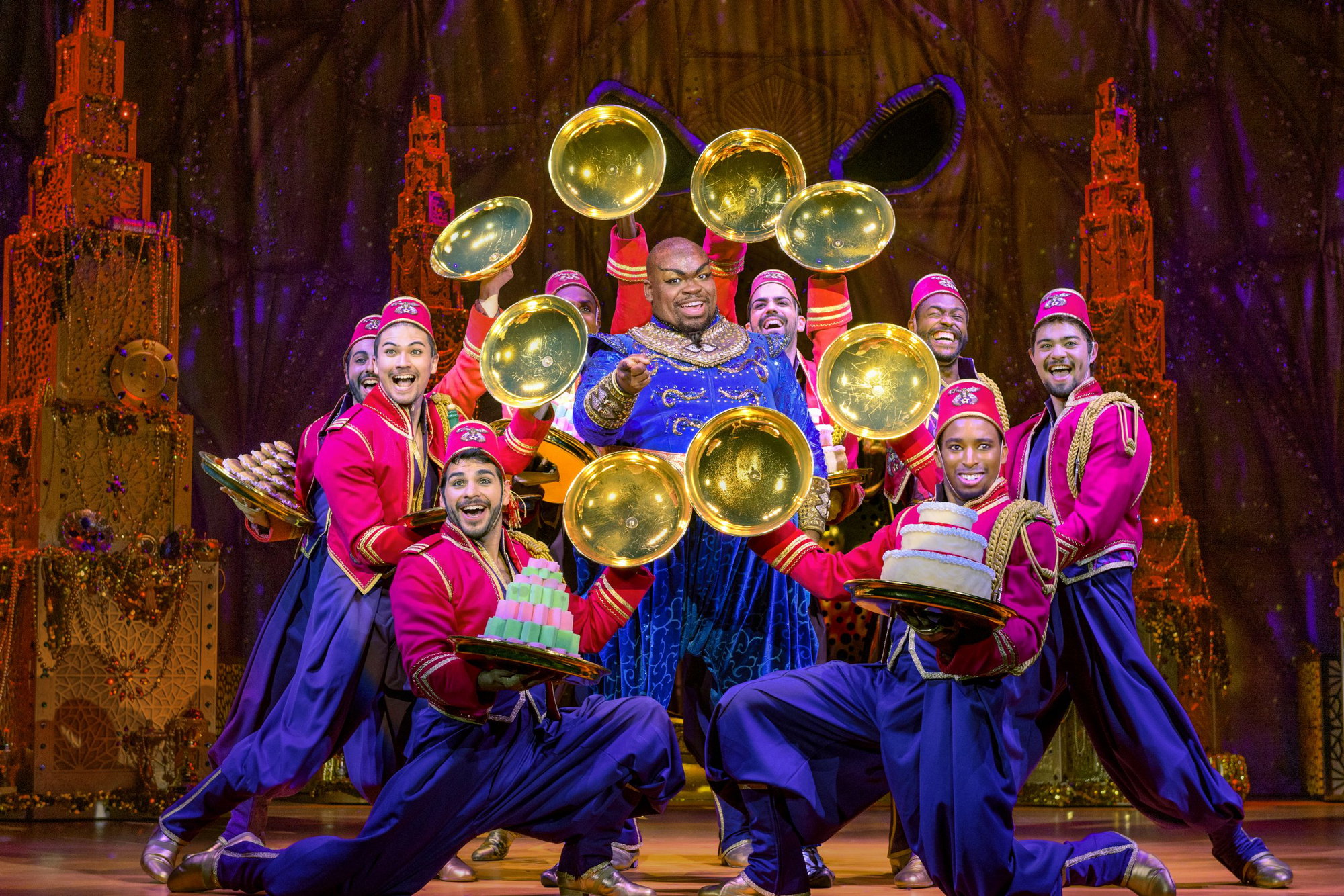
Photo by Deen Van Meer/Disney
The Road Crew Meets the Local Crew
Once a show is booked, the work of setting it up begins. “The tour arrives with a plan to unpack several trucks, like knowing which parts of the stage go in and out first,” says Duesing. “And they work with our own technicians here in the market that assist the touring folks who are very familiar with the show. It’s a combined effort.”
A tour can range from 25 to 75 people, depending on the size of the cast and complexity of the set. For a smaller show, the team can load it in around eight hours, but more often, it takes a day and half to get everyone situated in a new theater. Afterward, loading out can take six to 10 hours.
During the show’s run, Hennepin Arts supports the tours with stagehands, makeup artists, wardrobe support, and other artistic professionals who help the traveling cast and crew. Many road crews and local theater professionals have been in the business for years and may have a history of working together on past productions in Minneapolis, which improves communication and coordination.
“There are all kinds of industry professionals that support the tour, not to mention organizations like ours that have people selling tickets and doing the marketing and advertising,” says Duesing.
That trust and support among professionals makes bringing new entertainment to Minneapolis easier. For example, the monumental premiere of the musical adaptation of “Purple Rain” will be at the historic State Theatre Oct. 16 through Nov. 23. It’s a full-circle moment for this iconic narrative to debut precisely where its inspiration was born. “It’s hard to imagine ‘Purple Rain’ starting anywhere but Minneapolis,” says Duesing. “Prince’s indelible legacy isn’t just remembered here—his music and artistry are woven into the fabric of our city. To see the story of ‘The Kid’ come to life on stage for the first time, in the very place that inspired it, is extraordinary.”

Courtesy of Hennepin Arts
Furthermore, the Orpheum will present “Harry Potter and the Cursed Child” in spring 2026. “This is the first actual tour of that show, and it’s here in Minneapolis for a reason,” says Blair. “It’s not just because they sell tickets, but because it’s a physically challenging and technically complex show, and we know their team can do it.”
Broadway’s Community Impact
Outreach to the local community is a priority for both Hennepin Arts and the national Broadway tours. Oftentimes, artists and technicians from shows may work with Twin Cities educators on workshops or presentations that give students a behind-the-scenes look at their show. For example, when “Life of Pi” came to town in March 2025, professional puppeteers held a workshop with the large-scale tiger puppet from the show for the FAIR School for Arts, which is conveniently located across the street from the Orpheum Theatre.
Hennepin Arts also helps run Minnesota’s Spotlight Education program, which includes a statewide musical theater competition to nurture young talent and a student showcase that allows high schoolers to perform on Minneapolis’ historic stages. Each year, top Minnesota student performers known as “triple threats” are sent to New York City for a cultural and educational experience that exposes them to a career in theater at the national level. Past Spotlight Program alumni include Broadway notables like Laura Osnes, Ryan McCartan, and Caroline Innerbichler, who have touted support from the Minneapolis theater community as key to their success.
The stakes are high for the Broadway tours, artistically and economically. Using Broadway League data, Hennepin Arts calculated a $62 million economic impact from the past season, which includes employment opportunities created by the arts community. For the 2025-2026 season—which will include 25 shows and major productions like “The Phantom of the Opera” and the pre-Broadway world premiere of “Purple Rain”—that number could reach up to $150 million.

Duesing notes that Hennepin Arts theater performance attendance is on par with the Minnesota Vikings, but unlike major sporting events, theater happens all year long and on more nights of the week. Touring Broadway shows, in addition to comedy performances and concerts at the Pantages Theatre and State Theatre, are an important driver of traffic to downtown. “Theaters are the small business engine that keeps people in downtown restaurants and retail and so forth throughout the duration of a week,” says Duesing.
“Theaters are the small business engine that keeps people in downtown restaurants and retail.” –Todd Duesing, Hennepin Arts President & CEO
As Broadway tours continue to evolve—technically, artistically, and economically—Minneapolis remains a vital stop on the national circuit, not just for its ticket sales and talent pool, but for its community heartbeat. From behind-the-scenes crews and local students to theatergoers who fill the seats night after night, it takes a citywide ensemble to keep the curtain rising. And as the spotlight turns to future debuts like “Purple Rain,” it’s clear Minneapolis isn’t just hosting the show—it’s helping write the next act. “A moment like this is no accident,” says Duesing. “It’s a testament to the strength of our arts community, the vibrancy of our cultural life, and of course, the passion of Minnesota audiences.”
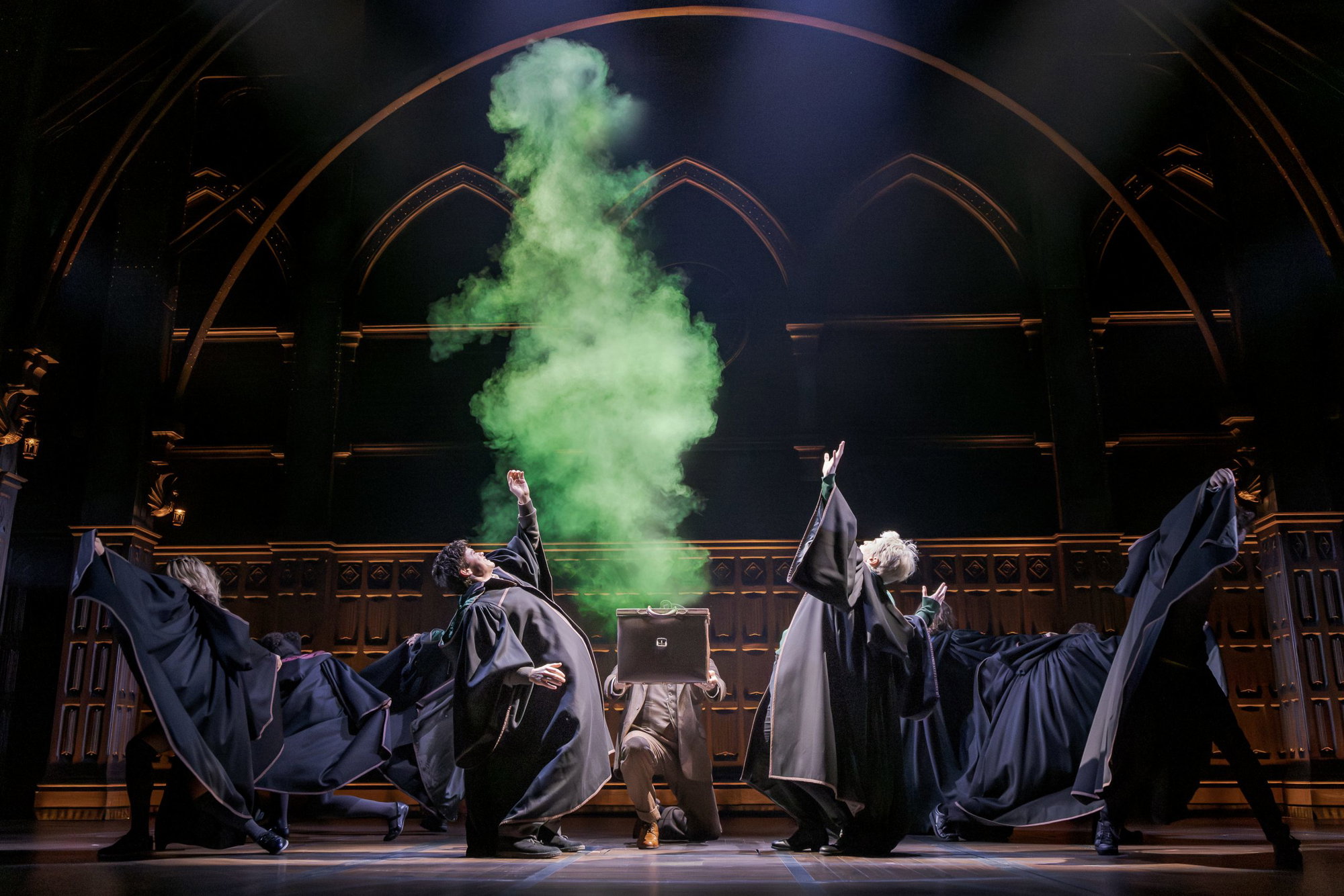
Photo by Matthew Murphy