

Courtesy of the Minnesota State Fair
Fairgoers flock to the state fairgrounds every summer for the culinary triumphs, the lights of the midway, and the joyful crowds. But nestled within the bustling heart of the fairgrounds exists a quiet marvel that captivates the aesthetic soul. This is the realm of crop art. The unique medium represents the marriage of the harvest and the humanities. It is a dialogue between the field and the frame, rooted entirely in raw agricultural materials being deliberately used for artistic expression.
To truly appreciate the cultural phenomenon of crop art, one must first look back at its humble beginnings. The tradition officially debuted at the Minnesota State Fair in 1965. It was conceived as a clever publicity stunt by siblings Orris Shulstad and Jean Hudak, who simply wanted a distinctive way to promote their seed business to fairgoers. What began as a commercial display has evolved into a cultural cornerstone of our state.
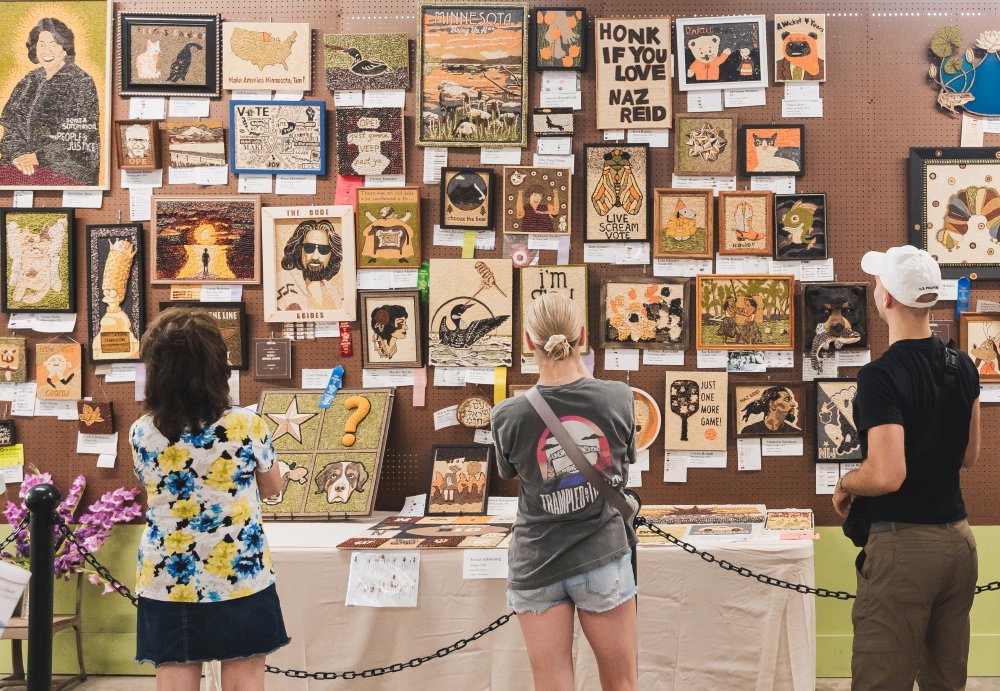
Today, the numbers are staggering. An average of 200,000 visitors file through the crop art displays every single year to marvel at the craftsmanship. In 2025, a record-breaking 451 artists submitted their work. Unlike exclusive galleries or even other state fair competitions with fierce rejection rates, all works submitted to the crop art competition are proudly displayed for the public to admire. This democratization of the gallery wall is a rare and vital contribution to Minnesota’s cultural landscape.
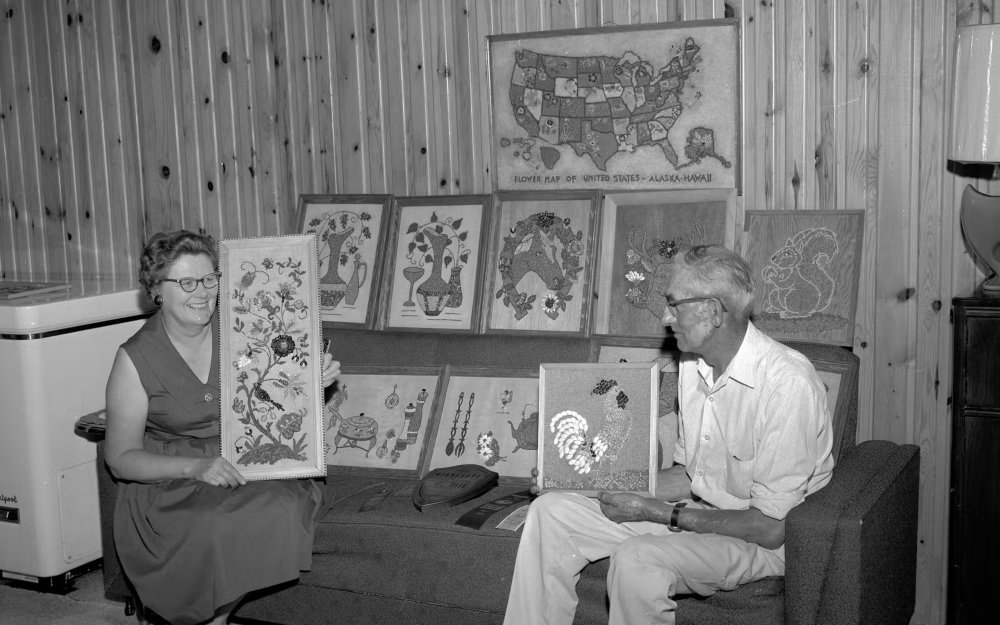
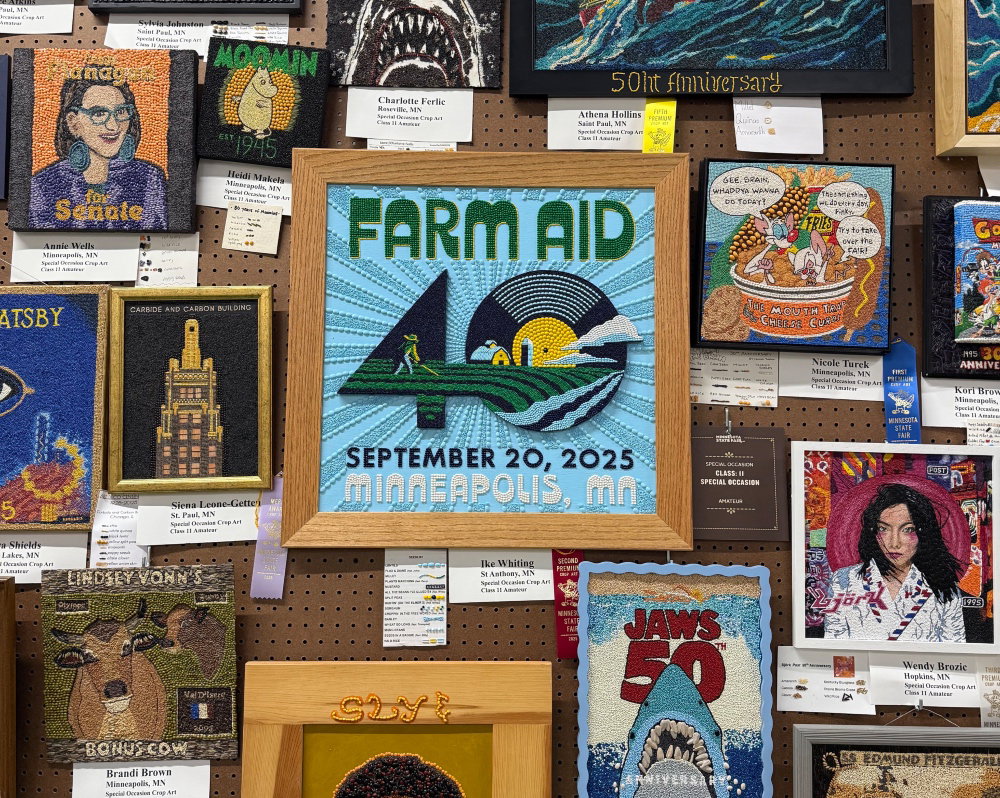
The parameters of the competition are specific, creating a constraint that breeds creativity. All crop plants and seeds used in the artwork must be native to Minnesota, but the competition itself is open to competitors from anywhere in the world. With each completed artwork, the artist must include a detailed legend card. This card serves as the museum plaque of the agricultural world, showing the audience exactly which local seeds, from wild rice and amaranth to vibrant corn and tiny mustard seeds, were used to create the masterpiece.
The artists compete across 28 classes, vying for ribbons and four special awards. The categories have organically expanded over the decades. Today, there are divisions for both painted and unpainted seeds, and there’s even a division for wearable crop art, bringing agricultural haute couture to the fairgrounds.
While the complexity of the final pieces continues to evolve, the raw materials and the tools of the trade remain simple. Most of these intricate portraits, landscapes, and modern pop culture homages are constructed using nothing more than white Elmer’s glue, wooden toothpicks, and immense patience. Despite these incredibly basic tools, the artists continually innovate and fiercely drive the aesthetic of this artform forward.
This is the enduring magic of the exhibit. Inclusivity directly fuels innovation. Attendees return each year not only to discover the clever new themes but also to see exactly how these dedicated artists push the physical boundaries of the medium itself.
To gain a deeper understanding of this phenomenon, we chatted with Marta Shore, a University of Minnesota biostatistics professor, award-winning crop artist, and the assistant superintendent for crop art and scarecrow at the fair. Shore brings an analytical and deeply passionate perspective to the tradition.
She notes that the Minnesota State Fair’s physical location serves a purpose. “The fairground integrates city and rural life in a way that is distinctly reflected in the art itself,” Shore says. “We see this beautiful cross-pollination everywhere, even in the fact that many urban schools now host highly active Future Farmers of America clubs. The boundary between the metropolitan artist and the rural farmer is completely blurred in this specific competition.”
Shore attributes the tradition’s massive popularity directly to its unpretentious accessibility. “While the raw materials must be growable in Minnesota, the content rules dictated to the artists are remarkably minimal,” she says. “Because the fair exhibits nearly all submissions, it effectively lowers the intimidating barriers of the traditional art world. This radical inclusion welcomes outsiders and grants participants a level of pure, unbridled artistic freedom that is rarely found anywhere else. Formal art school training is not a requirement to create a masterpiece here. One simply needs a vision, a toothpick, and genuine reverence for the medium.”
Imagine stepping into the Agriculture Horticulture Building during the peak of the fair. The air is thick with the sweet, earthy scent of fresh apples and the distant aroma of roasted corn. You navigate through the crowds, and suddenly, you are standing before walls covered in thousands of tiny, perfectly placed seeds. You are looking at spectacular portraits, witty political satire, and inspired landscapes, all rendered in the natural, earthy palette of our state.
Take a moment to pause in front of those displays. Reflect on the original concept of cultivating creativity from the field. This fair tradition and art exhibition is the ultimate celebration. It is a space where we are actively honoring the relentless, vital work of the Minnesota farmer while simultaneously celebrating the boundless ingenuity of the crop artist. It is the very best of who we are, preserved for all to see.