

The countdown to the Great Minnesota Get-Together is nearly over. On Thursday, Aug. 27, the gates swing open on 12 days of Fair favorites, new foods, midway thrills, Grandstand shows, and the only-in-Minnesota traditions that bring generations back year after year.
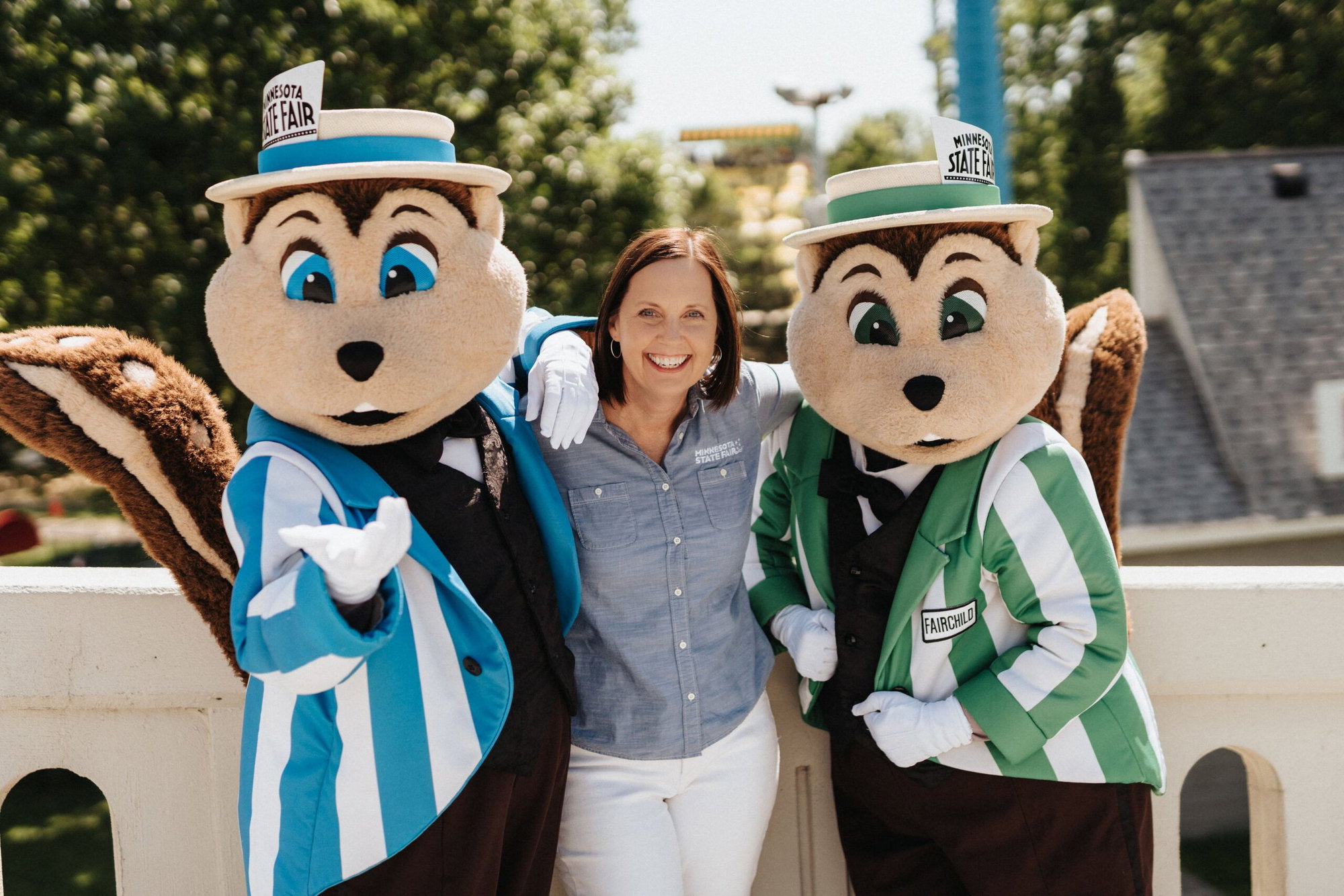
Few people know what it takes to bring it all together better than Minnesota State Fair CEO Renee Alexander, who started at the Fair as an entertainment intern in 1989 and today leads one of the state’s most beloved annual events. Ahead of opening day, we caught up with Alexander about what keeps the Fair feeling both comfortably familiar and excitingly new, the thousands of people who make it happen, and why—after more than three decades—she still feels the magic when those gates open.
Courtesy of Renee Alexander
Can you give me a little bit of your background and what led you to your position with the State Fair?
I’m CEO of the Minnesota State Fair, and as of May, I’ve been in this position for three years. I actually got my start at the State Fair as an intern in the entertainment department back in 1989. That summer, I fell in love with the Fair and with being part of creating something that is so beloved by so many—something bigger than myself. I was hired full time and stayed for five years before going out into the great big world. I worked as an entertainment agent and in event production and corporate meeting planning. Then, 21 years ago, I came back as director of entertainment. I slowly worked my way up—not in a ladder-climbing way, but I just kept ending up with more things on my plate. Three years ago, when I was hired into this position, I was deputy general manager of entertainment and marketing. I had been booking the Grandstand entertainment, overseeing all the free entertainment, marketing, ticketing, and several other areas of the organization. I really started at the bottom and worked my way up.
What were you doing during your internship in 1989?
I was in the free entertainment department. During the summer, I worked on coordinating the Amateur Talent Contest, the Milk Run, and some of the Senior Building entertainment. During the Fair, I was on the ground as an entertainment runner, delivering pop, water, and ice to the stages, helping get the parade launched onto the grounds every day and doing whatever it took behind the scenes to keep the entertainment program running.
In your role now as CEO, what does your day-to-day look like?
It’s a real mixed bag. There’s long-term strategy, overall business operations, and a lot of decision-making. We have a full-time staff of about 90, so a big part of the job is keeping us moving forward. I report to a 10-member governance board, which means working closely with the board, keeping members informed, and preparing for meetings. I also do a lot of external ambassador work, whether that’s speaking at Rotary clubs or attending different events. And there are plenty of meetings. This is my last year booking the Grandstand entertainment, which is something I’ve continued to do while serving as CEO.
We’re also like any other business. We have human resources, finances, and all of those core operational pieces, so it’s about keeping the guardrails up in those areas while working collaboratively with our staff and external partners. It’s never dull, and in some ways I’m busier this time of year than I am during the Fair. By Fair time, we have about 3,000 people executing the business plan and strategy that our year-round team has put together. At that point, my role becomes being prepared to problem-solve, put out fires, and show up at events happening across the fairgrounds. The days are long, and there are certainly stressful moments—like when a major storm blows through and you have to delay opening because trees are down. But once the Fair begins, the rest of the outside world gets put on hold from our perspective. We’re solely focused on what’s happening within those 322 acres.
That storm you mentioned—wasn’t that recently?
Two years ago. We had a storm come through on Monday night and had to cancel the Grandstand show. The next morning, around 5:30 or 5:45, high winds blew through the fairgrounds again. We had trees and fence lines down. It was a mess. I remember racing in that morning. At the time, I was living in Hugo, and as I was pulling into the fairgrounds, Hugo Tree Care was right in front of me with their chainsaws and equipment, ready to get the trees cleared so we could open. That’s the incredible thing—not just our staff, but everybody pulls together to make sure the Fair happens. There’s such a sense of pride among our staff, vendors, and everyone who has an affinity for the Fair.
A few years ago, during a period of high heat, an air-conditioning unit went out in one of our buildings. We reached the repair person while he was at his cabin. He drove back to the Twin Cities, picked up the part, came to the fairgrounds to fix it, and then went back to his cabin. We had a similar situation with Xcel Energy during a power outage. They were there incredibly quickly to get the outage taken care of, and then they kept somebody on call and nearby for the entire run of the Fair. The entire state really steps up to make it happen. I think there’s a feeling that we’re all doing this for our friends and families, and there’s a real sense of pride in being part of making it happen.
The State Fair has such a long history. When did it begin, and how long has it been at its current location?
The first Fair was held in 1859, but there have been years when the Fair didn’t happen, including during COVID and the polio epidemic. The most recent COVID cancellation wasn’t the first time we’ve had to cancel. What I usually say is that the first Fair happened in 1859, and we’ve been in our current location since 1885. Prior to that, the Fair moved to different locations throughout the state. One year, there was even a battle between Minneapolis and St. Paul where they both held their own fairs. There’s a deep history here, but we landed in our current location in 1885.
What has allowed the Minnesota State Fair to endure for so long?
I think it’s about traditions that are formed over generations. In some ways, we’re like a holiday that people look forward to and really celebrate. The fact that we only happen once a year is part of what makes it so special. From our perspective, we understand, acknowledge, preserve, and honor the importance of that tradition. Tradition is really at the core of what brings people back year after year. There’s such an emotional connection because, for so many people, the Fair is something they experience with people they care about and love. They have memories that last a lifetime. I’m fortunate to hear millions of those kinds of stories when I’m out talking to people. They almost always start with someone’s personal Fair story. The Fair can be whatever you want it to be. Whatever is important to you, you can find things that become part of your own tradition here.
Courtesy Minnesota State Fair
When you think about the Fair’s legacy, are there other longtime traditions or attractions that stand out?
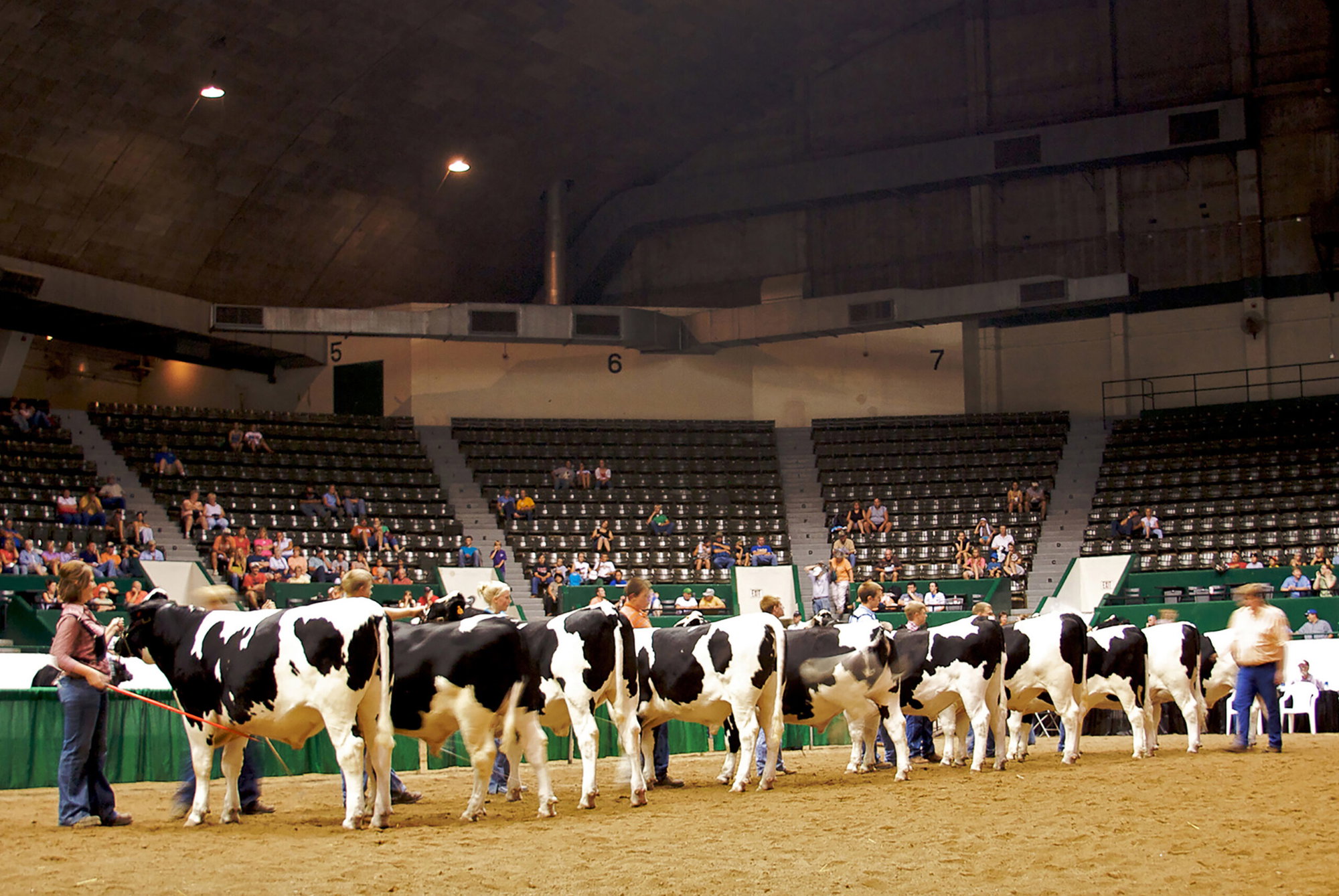
What really makes the Fair go is the people. There are multigenerational families who have shown cattle, swine, or poultry for generations. That also provides a wonderful greater Minnesota connection. The Fair is one of the few places where urban and rural Minnesota meet and coexist in a beautiful way.
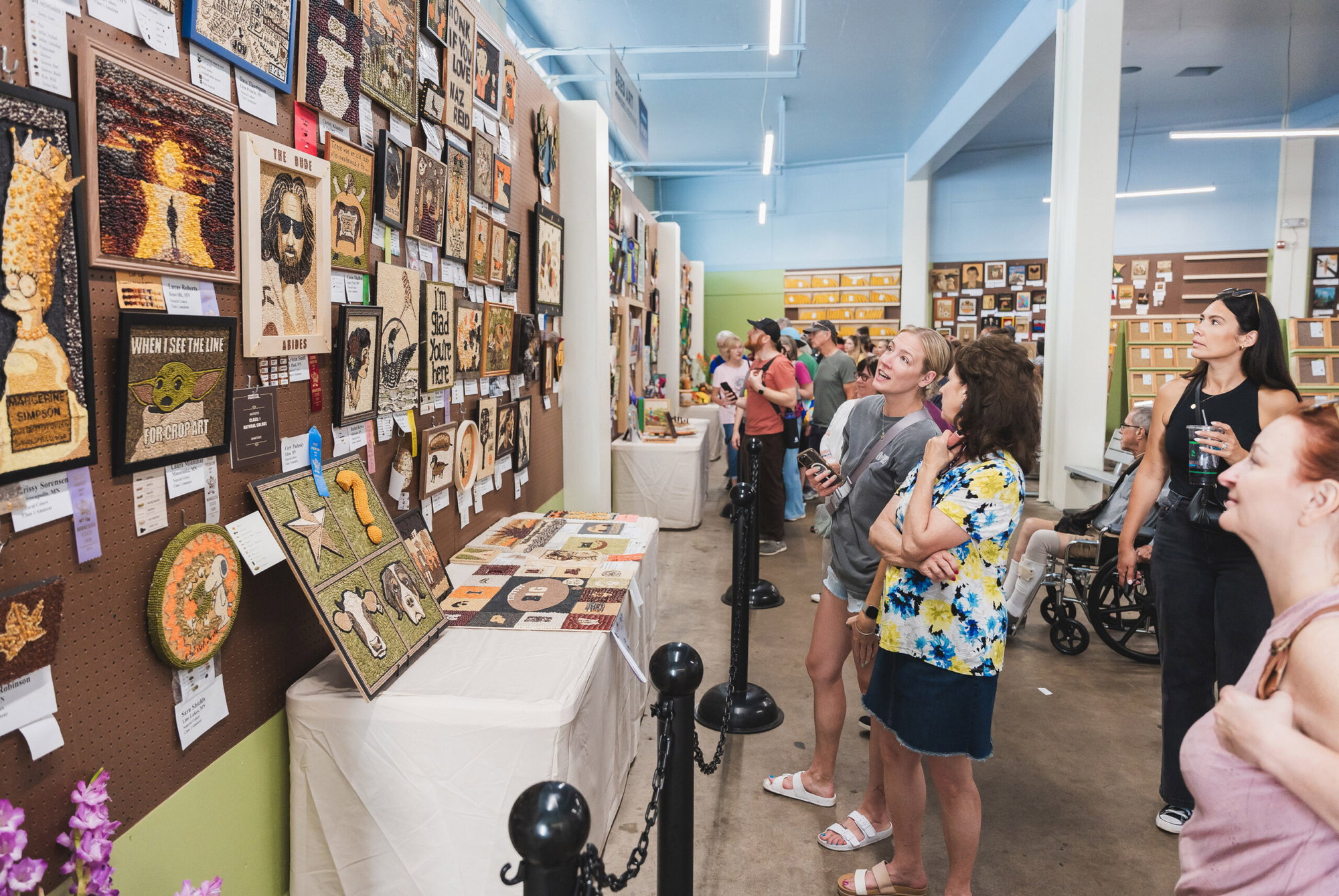
The same is true of Creative Activities and Fine Arts. There are people who have entered those competitions for generations. The Fine Arts exhibition has moved to different locations around the fairgrounds over the years, but it is the largest juried art show in Minnesota. We see more art submissions than any other art competition in the state, and there are so many different mediums represented. You also have to be a Minnesota artist—you can’t be from Wisconsin or Iowa. We’re showcasing Minnesota artists, and the response is incredibly strong. Artists also have the opportunity to sell their work. Every year now, I buy a piece from the Fine Arts show to add to my home. That has become one of my annual traditions in this role.
Then there’s the Grandstand, which was built in 1908. It originally had wooden bleachers on either side and started with a mile track for harness horse racing and Dan Patch. We have incredible old photographs of people packed around the track watching the races. The entertainment has evolved tremendously. There were thrill shows, train crashes, and major pyrotechnic shows. Around the mid-1960s, we started moving toward more of the musical entertainment you see today. Back then, many artists would perform an afternoon show and an evening show. Fairs were really the places to play because there weren’t arenas and amphitheaters like there are today. Then, on the other side of the Grandstand, you have this huge retail space. That dichotomy is fascinating. On one side you have incredible entertainment, and then you walk through another entrance and can buy a vegetable peeler, a mattress, or a pair of clogs. Based on its size, location, and marquee, the Grandstand really is an iconic landmark of the fairgrounds.
What role do longtime staples like Sweet Martha’s, Midwest Dairy, and other iconic attractions play in the Fair’s identity?
They play a tremendous role. In some ways, it’s about placemaking and tradition. You hear so many stories from people who say, “Every year, we have to do this,” or, “We always meet our friends or family at this particular place.” Those staples help root us in tradition. There’s a sense of comfort in having those iconic pieces you know you can count on year after year.
At the same time, we know we have to evolve. We may still be presenting many of the same things, but they can look a little different than they did 20 or 30 years ago. Sometimes it’s something as simple as a vendor who never accepted credit cards and now does. Sometimes change happens beyond our control. A longtime vendor might decide to leave the business without a succession plan. Or the needs of fairgoers change. The north end of the fairgrounds used to be Machinery Hill, filled with implement dealers. Today, far fewer fairgoers are coming to buy a combine. John Deere might now showcase riding lawn mowers rather than combines or hay balers. They’re still a longtime vendor, but what their business looks like at the Fair has evolved.
Courtesy Minnesota State Fair
How do you balance all that tradition with keeping the Fair new and exciting?
I like to refer to it as the 80/20 rule. About 80% is the standard—the things people have come to know, expect, and love, the things that are sacred for whatever reason. Then with the other 20%, we mix things up. Entertainment and programming are great ways to do that. What you see on the Bandshell stage is new and different every year. At the North End Event Center, which we built in 2019, we bring in new museum-quality exhibits every year. We also have roughly a thousand small businesses that make up our vendor population, so some come and some go. There’s always movement happening among our vendor partners.
Do the vendors that have stood the test of time have anything in common?
I think, first, they look at it as more than a business. They have a love for the Fair. It’s hard work. It’s 12 very long days, plus staffing, getting product onto the grounds, moving things around in a place with 200,000 people wandering around, and dealing with the weather. You really have to love it. We say it gets in your blood.
Many of the longtime vendors also hone in on what they do and do it extremely well. Sweet Martha’s is a great example. It’s a great product, and they focus on that product. The same is true of the Corn Roast or Giant Slide. The Giant Slide isn’t suddenly saying, “Now we’re going to add a zip line.” They focus on their craft and do it well. If you look at our top 10 grossing vendors each year, almost all of them have a single product or just a small handful of products. Fresh French Fries is another example. Midwest Dairy does dairy, and they do it well. It’s about focusing on your product, doing a really good job, and providing something consistently strong.
Where do you see the Minnesota State Fair 10 or 20 years from now?
Part of what makes the Fair so special is the sense of permanency the fairgrounds provide. We have these landmark, iconic places that create a sense of place, provide wayfinding, and serve as real anchors. As an organization, we’re making significant investments in our historic structures. We’re about to reopen the Coliseum after a $23 million renovation, and we’re launching a major renovation and fundraising campaign around the 4-H Building. What happens inside those buildings may fundamentally be the same as it was 40 or 50 years ago, but it looks different. We’re still showing livestock, but the level of competition has changed. 4-H kids are doing many more things than they did decades ago in terms of projects, knowledge, and what they’re building. One part of the renovation involves major electrical upgrades because devices and media are now part of what they do. Technology will continue to play a role, but we’re very much in the people business.
We’re also already seeing the food and activities at the Fair mirror the changes happening among Minnesotans. Union Hmong Kitchen is one example. We’re seeing foods from different cultures that are now a beautiful part of Minnesota, and we want to make sure those foods, entertainment, and merchandise are represented. The Fair should really be a mirror of Minnesota and its rich cultures.
What’s one of your favorite Fair memories?
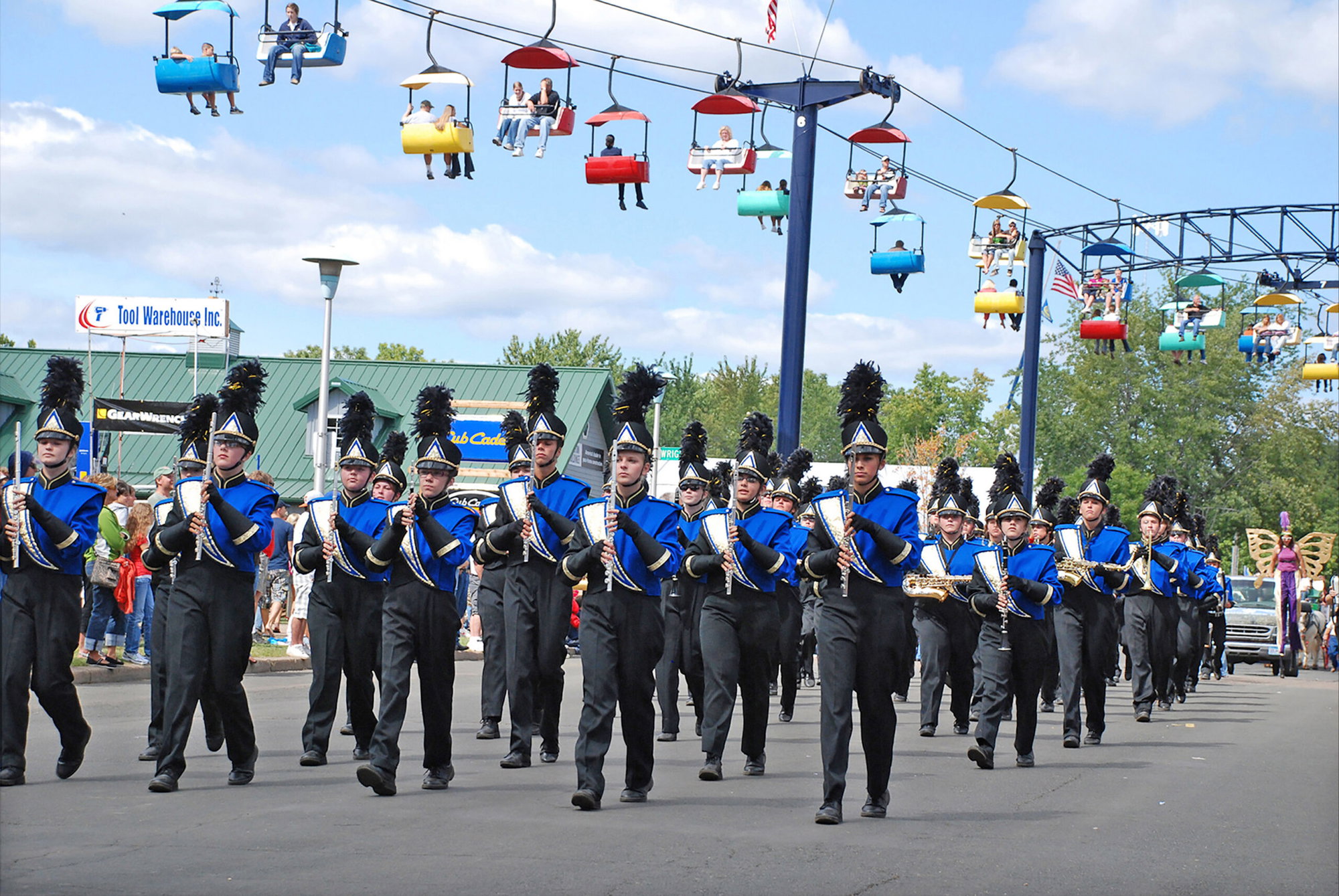
There are so many. As a kid, I remember sitting on the curb watching the parade come down the street. At the time, the parade was held at 6 p.m., rather than 2 p.m. like it is now. It was that golden-hour time of day, and I remember seeing a marching band in full uniform come around the corner. It felt larger than life to be that close to the parade. Every year, something gets added to the memory. After this long, you start wondering, “Was that last year or two years ago?” What continues to humble me is how meaningful the Fair is to people and how many have such strong connections, love, and traditions tied to it. I look at myself and our staff as merely the caretakers. Our job is to make sure this place continues so the generations following us can keep making their own memories and traditions, and so the Fair continues to be a key part of our state.
“I look at myself and our staff as merely the caretakers.”
-Renee Alexander
Courtesy Minnesota State Fair
Is there anything else that particularly embodies the spirit of the Fair for you?
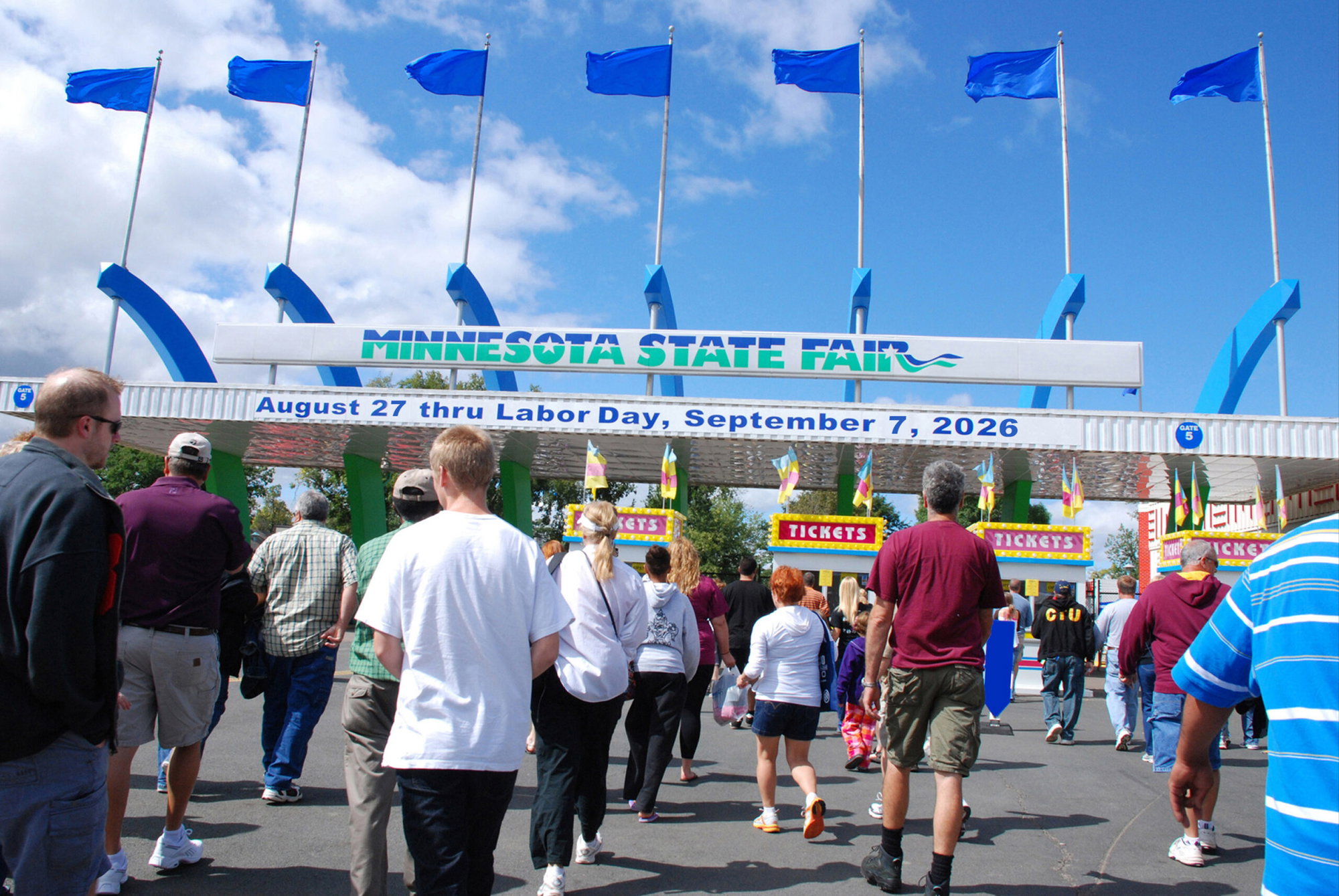
I think it’s the composition of all of it. It’s the fact that you have new next to old and this incredible juxtaposition of one thing against another throughout the Fair. That’s what makes it such a unique place. One of my traditions is being at the main gate on opening day when the Fair opens. Our marketing team is there, other staff members, vendors, and usually some politicians. For our staff, there’s this feeling of, “They came!” We threw this party, did all this work, and people actually came. It’s this wonderful moment of celebration.
A couple of years ago, we started a new tradition where I get to ring a cowbell to open the gates. I love it. Last year, I was standing near the main gate waiting to do a TV interview and just taking everything in. There were a couple of guys nearby, and it didn’t really strike me until later, when I saw photos, that one was dressed in a taco costume and the other was in a hot dog costume. Apparently, they came to the Fair like that multiple days because they kept showing up in photos. It made me think: This is a place where you can show up in a taco costume and nobody is going to look at you like you’re strange. It’s just what you did that day. Anybody can show up at the Fair as they are and find something that speaks to them. I think that’s an incredible thing.
Courtesy Minnesota State Fair
Drew Barrymore showed up at the Fair last summer. Is it common for celebrities to visit without people noticing?
Drew was here last year, and that’s part of the beauty of the Fair. It’s very easy to throw on a baseball hat and sunglasses and not look out of the ordinary. If you choose to, it’s very easy to blend in. We have Grandstand artists who go out and wander around the fairgrounds and nobody is the wiser. It happens more frequently than you would think. In Drew’s case, her team had reached out beforehand for some background information about foods, but they didn’t coordinate her actual visit with us. One of her producers is married to a woman from here, so she had someone on her staff with some insight into the Fair. But they just came to the Fair. Professional athletes do the same thing with their families. And, in true Minnesota fashion, for the most part, people leave them alone.