

Photo by Caroline Yang
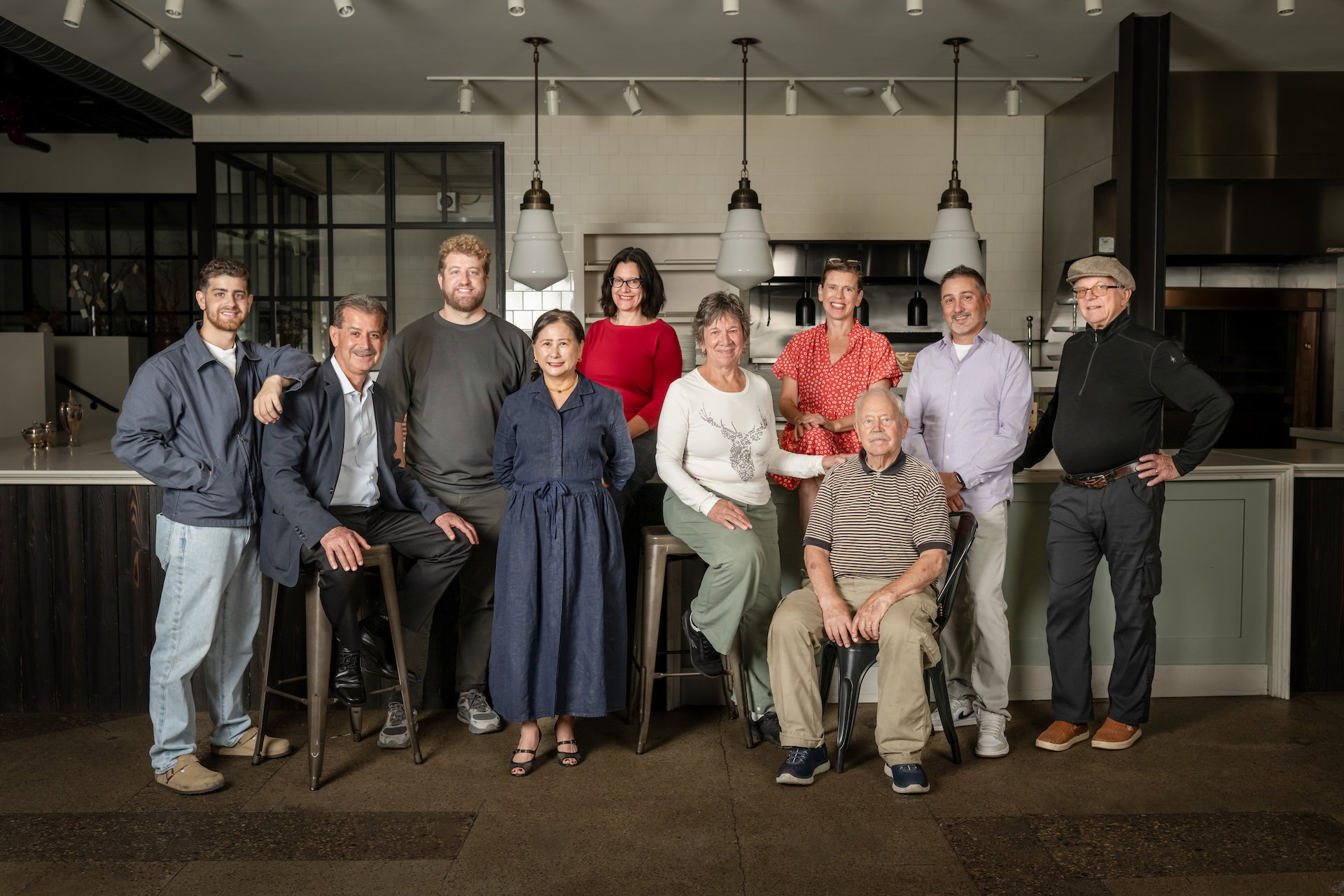
For generations, Minnesota restaurant families have introduced diners to flavors from around the world and made those flavors part of the way we eat. Behind their menus are stories of immigration, hard work, and traditions handed from one generation to the next. Across Minnesota, our culinary landscape is not merely built on brick, mortar, and menus. Rather, it is sustained by the profound grit, passion, and lineage of restaurant families who feed our communities and keep their heritage alive, one shared dish at a time. Together, five of those restaurants—Rainbow Chinese Restaurant, Black Forest Inn, Kramarczuk’s, Mediterranean Cruise Café, and Boca Chica Restaurante y Cantina—have shaped more than 281 years of our state’s restaurant history.
We brought members of these families together to talk about the dishes, memories, and relationships that have sustained their businesses—and what Minnesota has meant to them. Click here to read the full interviews with each restauranteur.
Rainbow Chinese Restaurant: A Family Dream
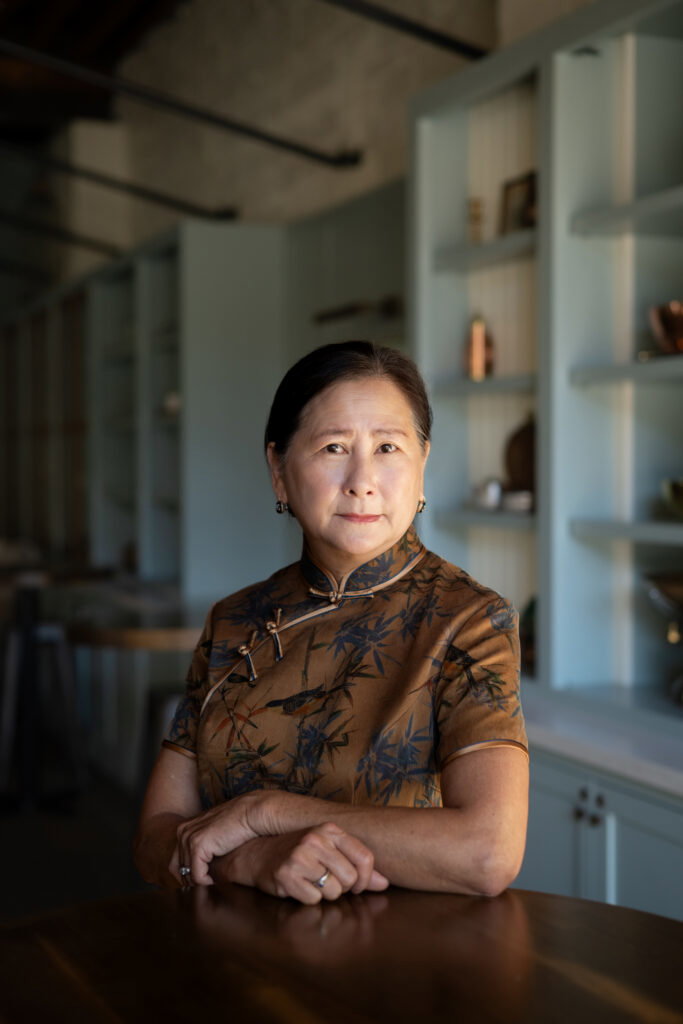
Photo by Caroline Yang
For these families, a restaurant is more than a place to eat. It holds memories of migration, long hours, and the determination to build something lasting. When Tammy Wong opened Rainbow Chinese Restaurant in 1987, she was a young woman and the eldest daughter in a family of nine children, taking on the responsibility of realizing her father’s dream.
“I always want to honor my parents. My father dreamed of owning a restaurant, and as the eldest daughter of nine children—number two in the family—with 100% Chinese heritage, stepping into that space wasn’t easy,” Wong says. “Being a woman comes with its own realities, and being the oldest sister meant the restaurant wasn’t just a business; it was a chore we simply had to do and take care of. I went from knowing nothing about running a restaurant to figuring out how to make a living. When you are young, it wasn’t about following a personal desire back then. It was pure pressure, the heavy feeling that you simply had to do this.” She handled every permit, every legal hurdle, and every late-night inventory check herself, guided by the quiet duty of family and ancestral cooking traditions.
In those early days, the dining room catered almost exclusively to an Asian clientele. Educating non-Asian diners who were unfamiliar with traditional Cantonese preparations took patience, empathy, and a whole lot of hospitality. Everything shifted when a pivotal review by food writer Jeremy Iger brought the crowds pouring through the doors, forcing a cultural collision that Tammy and her staff navigated with grace. “With that review, we had a line out the door and down the block,” Wong recalls. “We stayed open until 1 in the morning just to feed the people, all kinds of people who wanted to eat our food.”
Today, Wong’s cooking is a lesson in synthesis, blending classic Cantonese technique with the hyper-local realities of Minnesotan terroir. She looks at the changing seasons not as a limitation, but as an invitation to adapt. Her kitchen is a masterclass in zero-waste resourcefulness, where surplus market produce and flowers find new life on a community table, with every dollar of proceeds sent straight back to the growers. Dishes like her Szechuan wontons, Tammy Wong inspired in the late ’80s and early ’90s by family input and elevated with black bean sauce and spring onions, tell the story of an evolving palate. When she reflects on Minnesota and what keeps her tethered to work despite the relentless grind of the restaurant industry, her voice softens: “It is where I have lived most of my life and the beautiful place I call home.”
Black Forest Inn: Growing Up on Eat Street
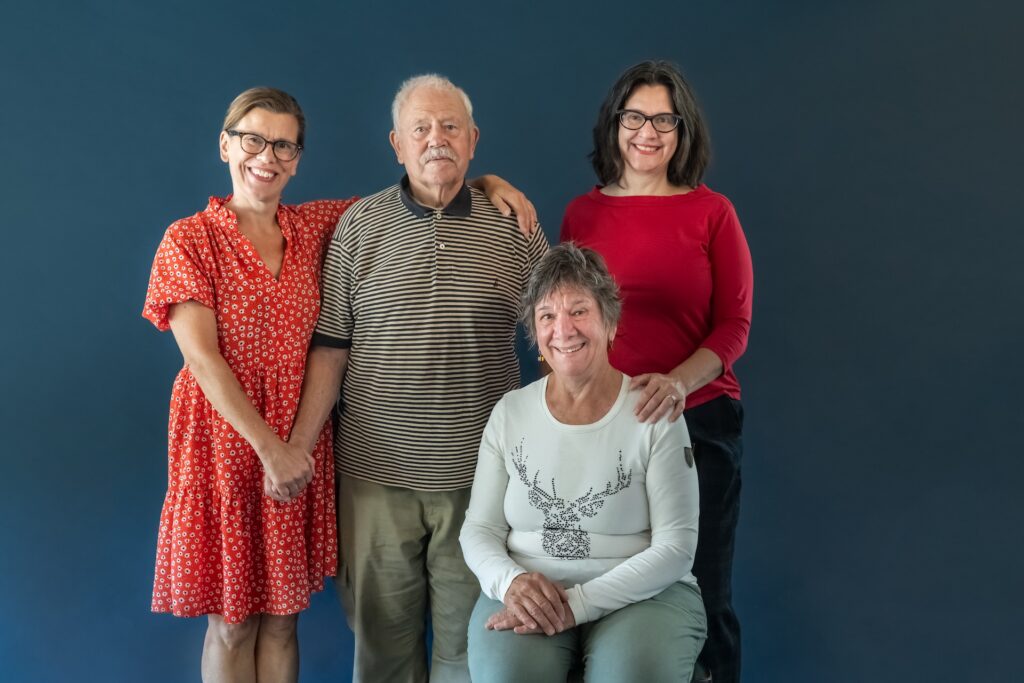
Photo by Caroline Yang
Farther along Eat Street, Black Forest Inn has served German comfort food since 1965. Erich Christ and his wife, Joanne, remain involved alongside their daughters, Erica and Gina. Erich now puts his faith in his daughters’ leadership and keeps his focus on serving the neighborhood.
For Erica and Gina, the restaurant wasn’t a formal establishment growing up; it was simply home. Erica laughs, remembering her early days as a notoriously picky kid demanding well-done hamburgers before she finally discovered the soulful depth of German cuisine. Gina reminisces sneaking French fries and apple strudel. After school and church, the office became their study hall, the bar served as a stage for imaginary “kiddie cocktails,” and architectural features like the restaurant’s beer chute served as prime playground.
“When I was very little, it was as much a bar as it was a restaurant,” Gina says. “I got plopped down on a bar stool, and I understood right away that food was always being made, people were always working, and the place was alive and busy. It was an adult world, and there we were right in the middle of it.”
“It is a good state to be in the food business,” Erica explains. “We are super lucky to be connected to farms that are really close.”
Bratwurst remains a menu staple, but the Christs also make room for experimentation. Currywurst and an Oktoberfest Reuben burrito show a playful side to a kitchen grounded in scratch cooking.
Sitting among the dark wood and glowing lights of Eat Street, the family speaks about the surrounding neighborhood with fierce affection. “This street, Eat Street, that we are sitting on, is an immigrant street, and historically, Minnesota has taken very good care of her immigrants,” Erich says. “We have been very blessed that Minnesota, as a state, goes all in. They have a moral center around immigrants. It is pretty great, and we feel so deeply connected to the immigrant families and that natural entrepreneurialism that comes out of being an immigrant.”
Kramarczuk’s: Preserving a Ukrainian Legacy
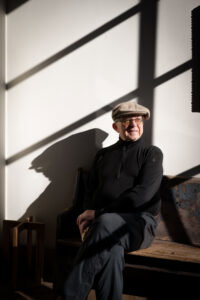
Photo by Caroline Yang
Across the river near Nicollet Island, Kramarczuk’s traces its roots to 1954, when Ukrainian refugees Wasyl and Anna Kramarczuk opened their business after World War II. Their son, Orest, remembers pushing Tonka trucks through sawdust on the floor of the original butcher shop on Marshall. Avenue. Though Orest pursued law school to appease parental expectations, the gravitational pull of the family trade proved inescapable. “I realized I did not really want to practice law. My true passion was in the business my parents started. My other concern was how hard they had worked,” he says. “By that time, I was in my 20s, and they had built a wonderful reputation in the community. I simply did not want to see all that hard work lost if the business failed to transition into the next generation.” Faced with the choice of letting a hard-earned community institution fade away or stepping into the fray, Orest chose continuity, treating the business as a sacred trust passed down through generations.
The menu evolved out of practical survival, shifting from quick-service sandwiches into deep eastern European staples. While the house-made sausages remain legendary, the humble cabbage roll has evolved into a fan favorite, affectionately dubbed a “Polish burrito” to help uninitiated diners cross the cultural threshold. It is a piece of culinary translation that respects the customer without ever dumbing down the tradition.
Orest has watched Twin Cities diners grow more curious about global cuisines. Along the way, he has helped introduce customers to Ukrainian food, history, and language.
That spirit of openness peaks in playful collaborations, like the now-famous Hmong sausage partnership with chef Yia Vang, which Orest views as a living snapshot of modern American identity. “What inspires me today is the deep respect for world cuisines from every culture,” he says. “In this business, you learn, and you have to be this way, to be nonjudgmental, embracing other cultures, ethnicities, and people without passing judgment. What inspires me now is seeing cutting-edge chefs embrace fusion, combining different culinary traditions to create something entirely new and interesting.”
Mediterranean Cruise Café: Hospitality Across Generations
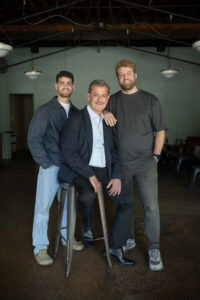
Photo by Caroline Yang
That same emphasis on welcoming guests extends to the suburbs, where Jamal Ansari helped build Mediterranean Cruise Café. The restaurant opened in Eagan in 1979 and later moved to Burnsville.
Born in Jerusalem to Palestinian parents, Ansari came to Minnesota after high school, following an older brother who was attending the University of Minnesota.
His earliest food memories come from his mother’s kitchen in Jerusalem: chopping parsley and mint for tabbouleh, adding feta to salads, and helping prepare lentil soup and stuffed grape leaves.
“When my mother used to make hummus, I always watched to see the ingredients and how she put it together,” he remembers. “Sometimes, she would call me over and say, ‘Come help now,’ and we would make it side by side.” He remembers the meditative process of soaking and cooking chickpeas from scratch, blending them with tahini, garlic, and freshly squeezed lemon juice for hummus that “tasted like sunlight.” On weekends, the grill fired up for kebabs, filling the neighborhood with the aroma of charcoal and spice.
Those flavors remain central to Mediterranean Cruise Café, where the menu includes chicken, kofta, and beef kebabs, as well as lamb shanks simmered for six hours. Ansari traces his approach to hospitality to merchants in Jerusalem’s Old City, who made guests feel welcome before they ordered.
“We always had people gathering around us, and watching business owners in the Old City showed me how wonderfully they welcomed guests,” Ansari says. “It feels like a natural calling because you make people happy, connect with them deeply, and get to know them so well.”
That philosophy has guided him throughout his decades in the restaurant business. Over the years, regular customers have become friends and extended family, returning weekend after weekend to exchange hugs, catch up on their children, and share a meal. Ansari still makes a point of greeting guests by name and personally walking them to their tables. For him, those relationships matter just as much as what comes out of the kitchen.
“Hospitality is not just one thing; it is everything,” he says. “Food is important, but they always remember you for your kindness, your hospitality, and your smiling face.”
The next generation is carrying on Ansari’s legacy through Baba’s, which launched its signature line in 2018, debuted at the Minnesota State Fair in 2021, and opened Baba’s Hummus House and Mana’eesh Bakery on Lyndale Avenue in 2023. “They learned from me, watching with their own eyes,” Ansari says. “Enjoying what you do makes you love to go back to work every day. That is what I taught them.”
After 50 years in America, Ansari remains grateful for the community that has embraced his family and its food. “Minnesota is a beautiful state with very friendly people and a good place to own a business,” he says. “My customers, who come from many different countries, are a key part of this experience.”
Boca Chica: A West-Side Tradition
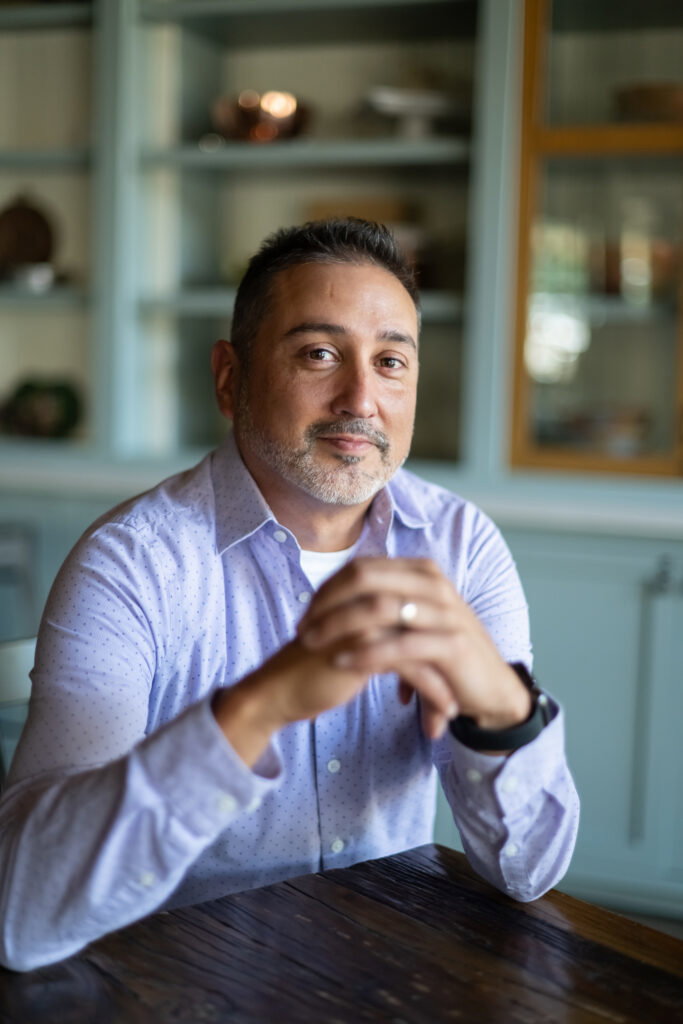
Photo by Caroline Yang
And then there is Boca Chica Restaurante y Cantina, serving St. Paul’s West Side since 1964, where José Frias grew up riding his tricycle across the dining room floor. With both parents working grueling hours to keep the dream afloat, Frias spent his weekends immersed in the restaurant’s bustling underbelly.
When the dining room was empty, he practiced his marksmanship by shooting rubber bands at imaginary targets and, occasionally, distracted customers. “I’d give a little shout-out from under the table,” he recalls. When the lunch rush hit, he and his siblings learned to steer their tricycles out of the way before their father’s exasperated shout brought traffic to a halt.
For Frias’ grandfather, who had lived through severe poverty in Mexico, opening a restaurant in Minnesota was about building something for his family and the community. More than a taco shop, he wanted to offer familiar dishes that would bring people through the door. “He did not want just a little taqueria,” Frias explains. “He wanted a sit-down restaurant, a place that felt elevated and dignified.”
Though he barely spoke English, his grandfather insisted that the restaurant’s first slogan appear in English on the sign: “Boca Chica Restaurante, a nice place to eat.” That foundational hospitality remains intact today, where meals still begin with traditional comfort courses like sopa de fideo, honoring the rhythm of a formal Mexican home.
The menu is famous for its deep-fried tacos and Don Guillermo enchiladas, dripping with yellow cheese and savory chili gravy. These Tex-Mex classics served as an approachable gateway for the mid-century Minnesota palate, paving the way for the family to introduce more traditional regional stews. Frias rejects food snobbery with a laugh, noting that while certain dishes might not trace back to a specific province in modern Mexico, “It may not be traditional, but it’s authentic to us, to my family.” If your grandmother made it that way for decades, it is as real as history gets.
Looking back over a lifetime spent under the Boca Chica roof, Frias summarizes what it means to anchor a community for generations: “This is where I spent my whole life. The spirit is community and culture, love and unity. It has always been accepting of my family, my culture, and our food.”
Together, these five families helped shape Minnesota’s palate—not through trends, but through decades of cooking, welcoming guests, and passing their traditions forward. Their restaurants offer more than a meal: They give generations of Minnesotans a place to discover new flavors and feel at home.